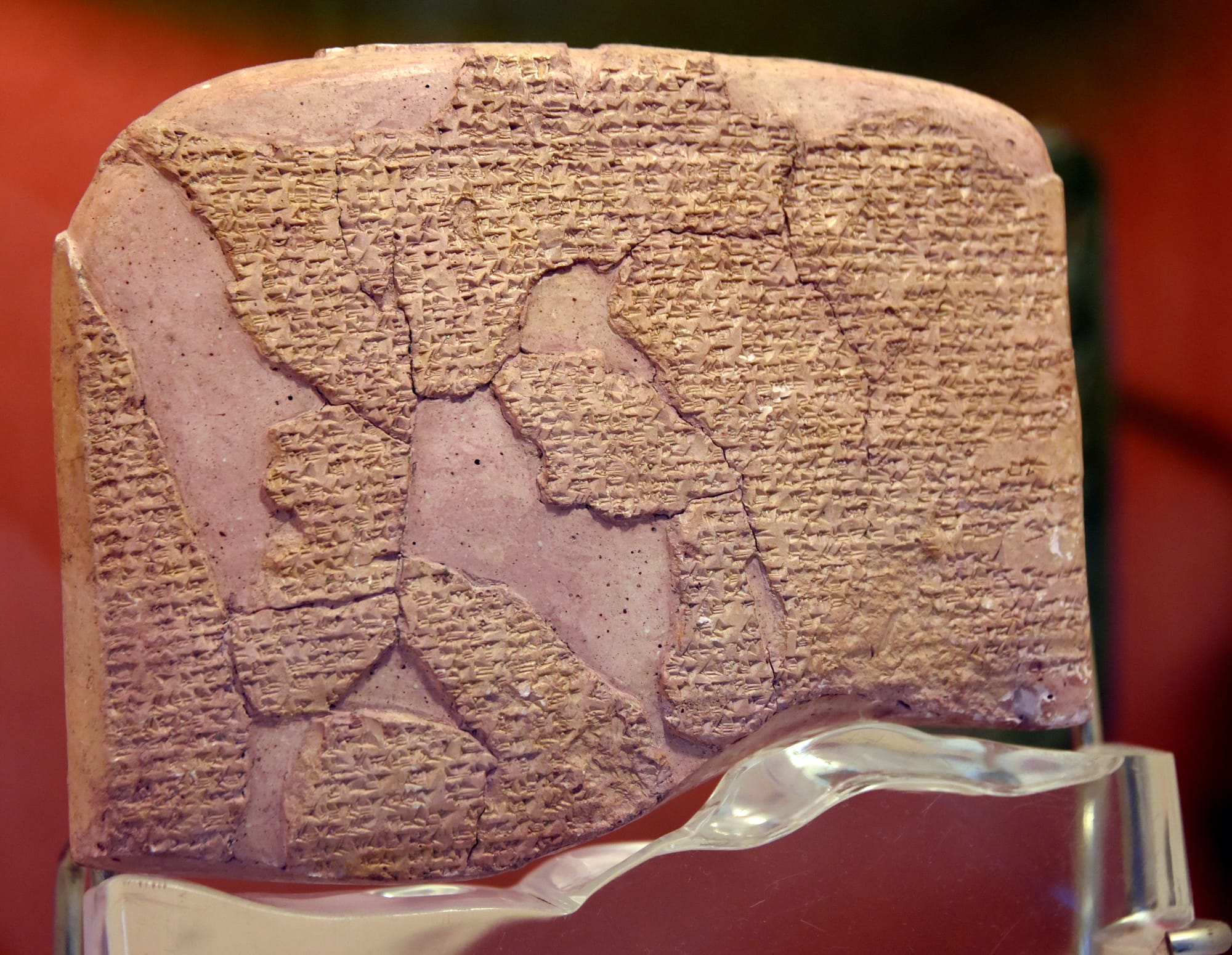
On 21 September 2026, World Peace Day, Turkey's Culture and Tourism Minister Mehmet Nuri Ersoy announced that a cuneiform tablet fragment from Hattusa has been identified as part of a surviving copy of the Treaty of Kadesh. The announcement, made on social media, said the piece came from Büyükkale at the ancient Hittite capital in Çorum province, central Türkiye (Türkiye Today, 2026; A Haber, 2026).
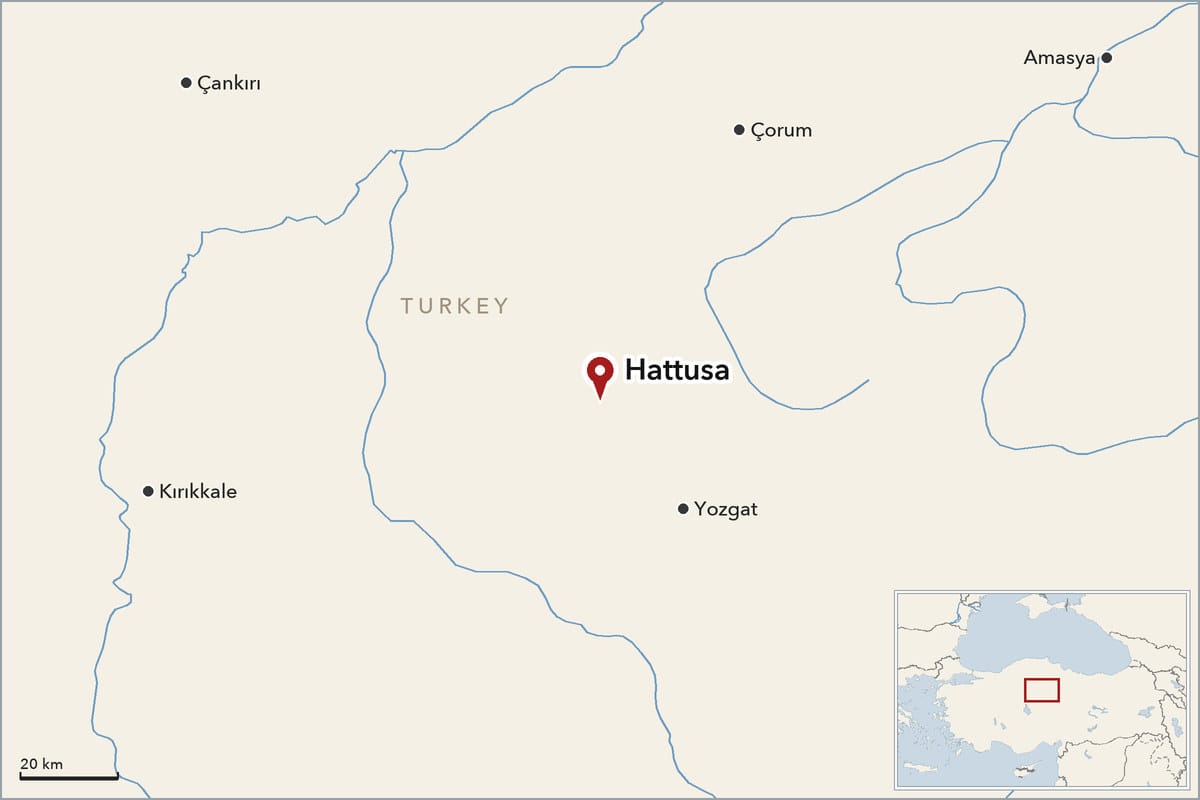
What was found
The fragment turned up near the "E" building at Büyükkale, the area of Hattusa where the Hittite royal palace stood. Türkiye Today reports that researchers examined it for about a year before its link to the treaty was confirmed. Hispanatolia, citing the ministry, adds that only one side of the piece survives.
According to A Haber and Ulusal Kanal, scientific study showed it to be the front face of one of the treaty's Akkadian cuneiform copies. The two Turkish outlets report that the studies found it belongs to one of the copies of the treaty made between the Hittite king Hattusili III and the Egyptian king Ramses II.
What the fragment says
Türkiye Today and Hispanatolia both report that the fragment corresponds to Articles 12 to 20 of the treaty. Those articles cover how each side was to treat people who fled their own country and took refuge in the other. The text is broken and incomplete. Its readable parts mention people fleeing from Egypt and from Hatti, and they include wording against destroying the fugitives' homes (Hispanatolia, 2026; Türkiye Today, 2026).
The Biblical Archaeology Society's Bible History Daily, in a piece by Lauren K. McCormick, writes that the passage "stipulates that refugees had to be extradited and includes a provision for the protection of their homes" (McCormick, 2026).
The minister's words
Hispanatolia quotes Ersoy, as carried by the Anadolu news agency, saying: "We have found traces of peace spanning thousands of years in the land of Anatolia." In the same statement, as Hispanatolia gives it, he said: "The provisions regarding the non-destruction of people's homes convey a powerful message that has resonated from thousands of years ago right up to the present day."
Türkiye Today reports that his statement also referred to developments in Palestine. In that report he described the ancient text as a reminder of the responsibility to protect human life and dignity, and said he hoped for a future in which people could live in safety and peace. A Haber and Ulusal Kanal carry the Turkish wording of that passage. Both also report that he congratulated the excavation team and the scientists involved.
A treaty that survives in pieces
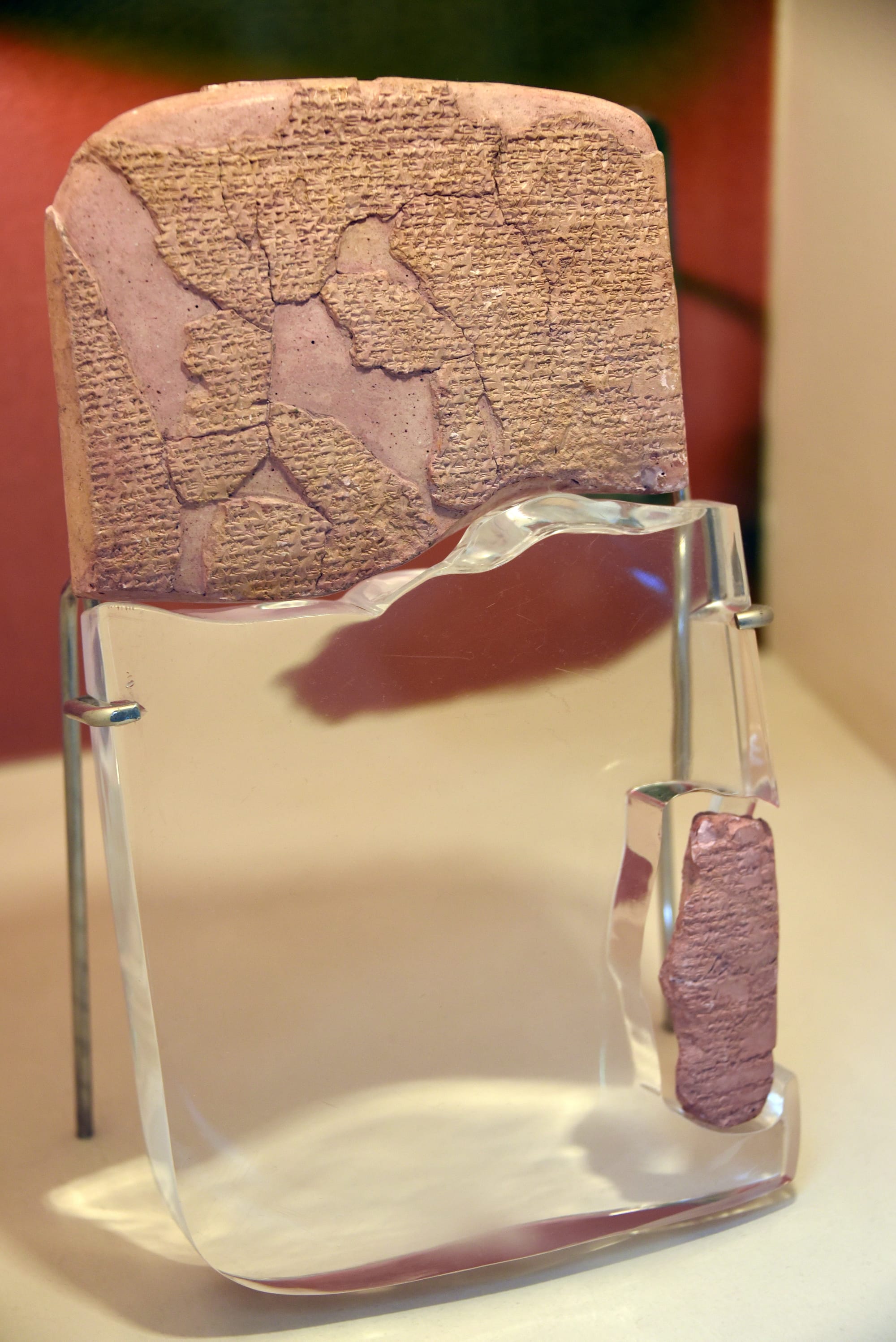
The treaty is preserved in more than one place. Türkiye Today reports that the Egyptian version was carved in hieroglyphs on temple walls in Egypt, while fragments of the Akkadian clay-tablet version came out of Hattusa during the first period of excavations, between 1906 and 1912. Those earlier fragments are now held in the Istanbul Archaeology Museums, the Museum of Anatolian Civilizations, the Vorderasiatisches Museum in Berlin and the Hermitage Museum in St Petersburg.
The Biblical Archaeology Society's article calls it the world's oldest surviving peace treaty and places it in the mid-13th century BCE, after the Battle of Kadesh, which it dates to around 1275 BCE. It says the agreement followed a long period of competition over Syria and the Levant and emerged from the recognition, after generations of fighting, that military force had failed. Hispanatolia dates the treaty to around 1259 BC, about 15 years after the battle, and describes it as considered the first peace treaty in history. Both are the outlets' own descriptions of the treaty's place in history.
What the fragment does and doesn't show
Science.Report's reading is cautious. It describes the fragment as evidence for the treaty's wording and transmission rather than a record of every movement between the two kingdoms. It says the piece does not by itself establish how many people fled, how often extradition happened, or how far the treaty ended the rivalry between Egypt and the Hittite Empire (Hassett, 2026).
That restraint seems right to me. A broken one-sided fragment adds wording to a manuscript tradition that is already scattered across four museums; it does not rewrite the story of the treaty. The find also adds a piece to a record that excavators were trying to complete: Türkiye Today and A Haber reported on 21 September that excavations at Büyükkale were continuing, with researchers hoping to find the treaty's other missing fragments.
Sources
A Haber (2026) 'Hattuşa'da tarihi keşif! Barışın binlerce yıllık izi gün yüzüne çıktı', A Haber, 21 September 2026, available at: https://www.ahaber.com.tr/gundem/2026/09/21/barisin-binlerce-yillik-izi-hattusada-gun-yuzune-cikti (Accessed: 17 October 2026).
Biçen Kaplan, Y. (2026) 'Barışın binlerce yıllık izi Hattuşa'da gün yüzüne çıktı', Ulusal Kanal, 21 September 2026, available at: https://www.ulusal.com.tr/kultur-sanat/barisin-binlerce-yillik-izi-hattusada-gun-yuzune-cikti-15102629 (Accessed: 17 October 2026).
Hassett, B. (2026) 'Hattusa Fragment Reconnects a Piece of the Kadesh Treaty', Science.Report, 21 September 2026, available at: https://science.report/discover/hattusa-fragment-reconnects-a-piece-of-the-kadesh-treaty-97086/ (Accessed: 17 October 2026).
Hispanatolia (2026) 'Fragment of the world's first peace treaty found in the ruins of Hattusa', Hispanatolia, 23 September 2026, available at: https://hispanatolia.com/en/fragment-of-the-worlds-first-peace-treaty-found-in-the-ruins-of-hattusa/ (Accessed: 17 October 2026).
McCormick, L.K. (2026) 'Fragment of World's Oldest Peace Treaty Found', Bible History Daily, Biblical Archaeology Society, 25 September 2026, available at: https://www.biblicalarchaeology.org/daily/ancient-cultures/fragment-of-worlds-oldest-peace-treaty-found/ (Accessed: 17 October 2026).
Türkiye Today (2026) 'Cuneiform fragment found at Hattusa identified as part of Kadesh Peace Treaty', Türkiye Today, 21 September 2026, available at: https://www.turkiyetoday.com/culture/cuneiform-fragment-found-at-hattusa-identified-as-part-of-kadesh-peace-treaty-3228616 (Accessed: 17 October 2026).
Picture credits
- Top picture: A file photo of an earlier-excavated fragment of the treaty, not of the new find. Fragment of the Treaty of Kadesh clay tablet (1269 BCE), from Boğazköy/Hattusa — photo: Osama Shukir Muhammed Amin, CC BY-SA 4.0, via Wikimedia Commons
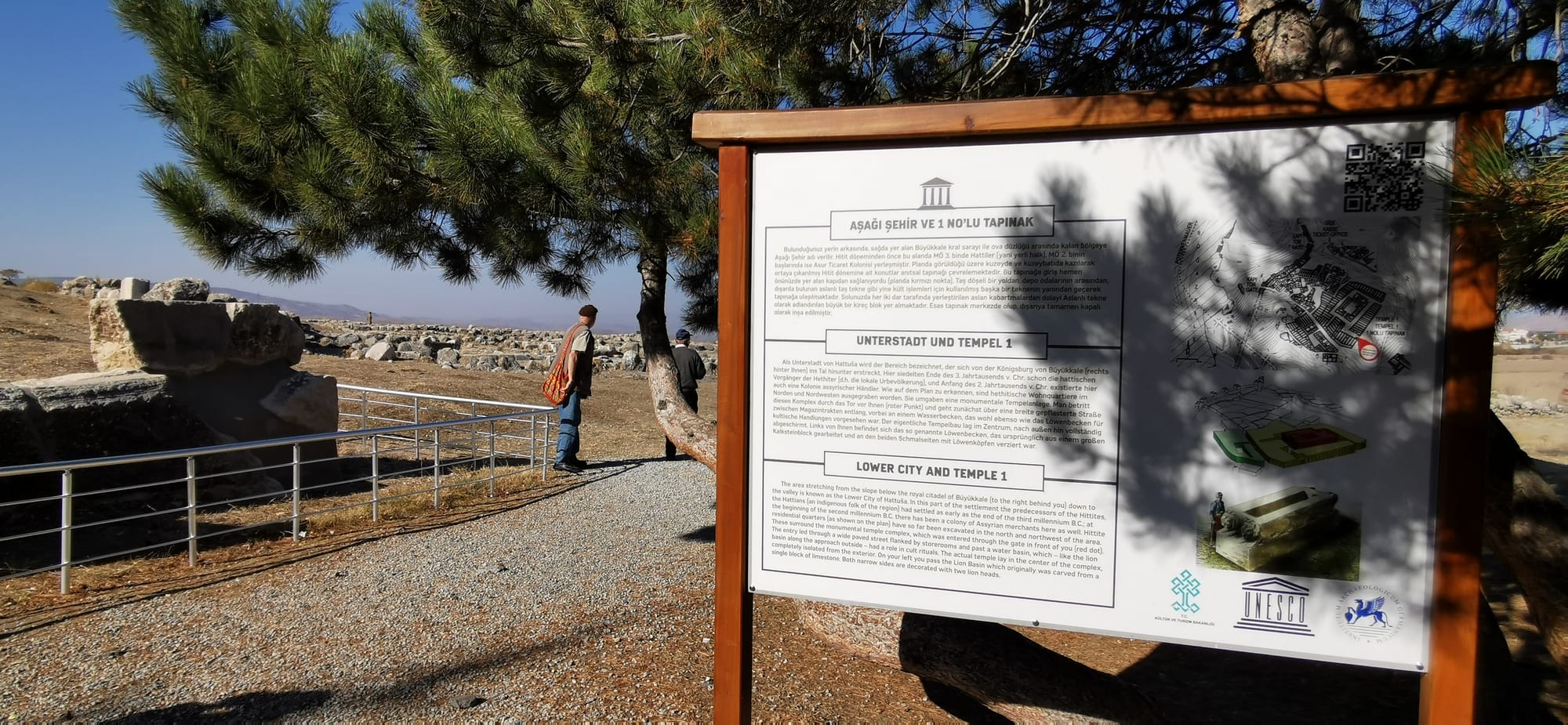
- A file photo of the Hattusa site, not of the new find. Lower City of Hattusa, Boğazkale, Çorum, Türkiye — photo: Murat Özsoy (1958), CC BY-SA 4.0, via Wikimedia Commons
- A file photo of an earlier tablet on display in Istanbul, not of the new fragment. Treaty of Kadesh clay tablet (1269 BCE), Museum of the Ancient Orient, Istanbul Archaeology Museums — photo: Osama Shukir Muhammed Amin, CC BY-SA 4.0, via Wikimedia Commons
- Map: drawn from Natural Earth (public domain) and Wikidata.


