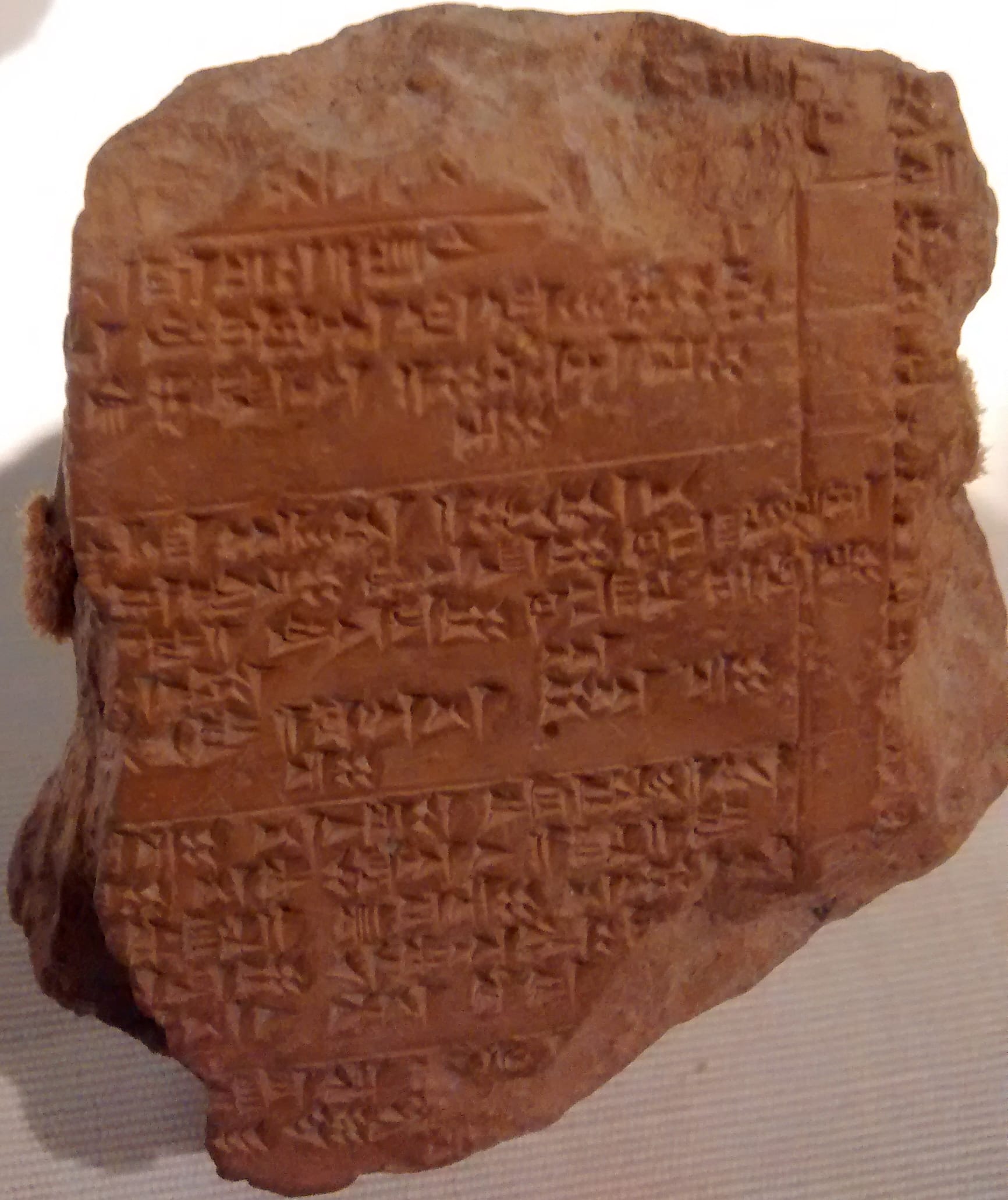
Above: A Hittite cuneiform tablet. Tablets of this kind make up the Kayalıpınar archive. (Photo: Mx. Granger)
A Hittite state archive from the reign of King Tudhaliya II has been found at Kayalıpınar in Sivas, according to Turkey's Kültür Varlıkları ve Müzeler Genel Müdürlüğü (General Directorate of Cultural Assets and Museums), part of the Ministry of Culture and Tourism. The directorate described the find in a post on X on 9 October 2026. It puts the archive's total at 184 cuneiform tablets and calls it "21. yüzyılda bulunan en kapsamlı Hititçe arşiv": the most comprehensive Hittite-language archive found in the 21st century. That description is the directorate's own, and the quotation and the other translations here are ours.
What the directorate says was found
The post says the excavations at Kayalıpınar, which it identifies with the ancient city of Šamuḫa, have run since 2021 with the ministry's permission. They are led by Assoc. Prof. Çiğdem Maner of Koç University's archaeology department.
On the numbers, the directorate says 53 cuneiform tablets reached in the 2025 season have now been established as belonging to this archive. With the 2026 discoveries, it says, the total has reached 184. The post does not break the 2026 finds down further.
The tablets are written in Hittite and Hurrian. The directorate says they open a window on the world of the 14th century BCE.
Four glimpses of the archive
The directorate picks out four groups of texts.
An epidemic. The royal court's concern about a high-fever epidemic that spread from city to city. According to the post, it killed children and also affected the health of young princes, princesses and the children of high-ranking Hittite officials.
A baby princess. Records about an infant princess. One tablet mentions her health with concern, another says she fell ill in the city of Ziulila, and a third describes her death along with a funeral ritual.
A plea from the generals. A letter in which Hittite generals in western Anatolia ask the king for urgent horses, chariots and soldiers against an enemy siege. The post says the letter warns that otherwise the army would be destroyed.
Bird-augur practice. Previously unknown information on the routes followed by bird augurs, who read omens from birds, and on how they interpreted those omens.
Why it matters, in the directorate's words
The directorate says the texts offer extraordinary new data on the history of Tudhaliya II's reign and on its religious and scholarly practices. It says they also bear on the development of the Hittite language and on scribal culture.
The directorate's post is a short social-media statement, not a publication. It does not say how the tablets were read or dated, or when full editions might appear. The records of a sick baby and a besieged army are what make the post worth reading: the archive holds the paperwork of a 14th-century BCE state under strain from disease and war.
Sources
Kültür Varlıkları ve Müzeler Genel Müdürlüğü (2026) 'Kayalıpınar'da Hitit Kralı II. Tudhaliya Dönemine Ait Devlet Arşivi Keşfedildi', X (@kvmgm), 9 October 2026, available at: https://x.com/kvmgm/status/2108535193845793235 (Accessed: 9 October 2026).