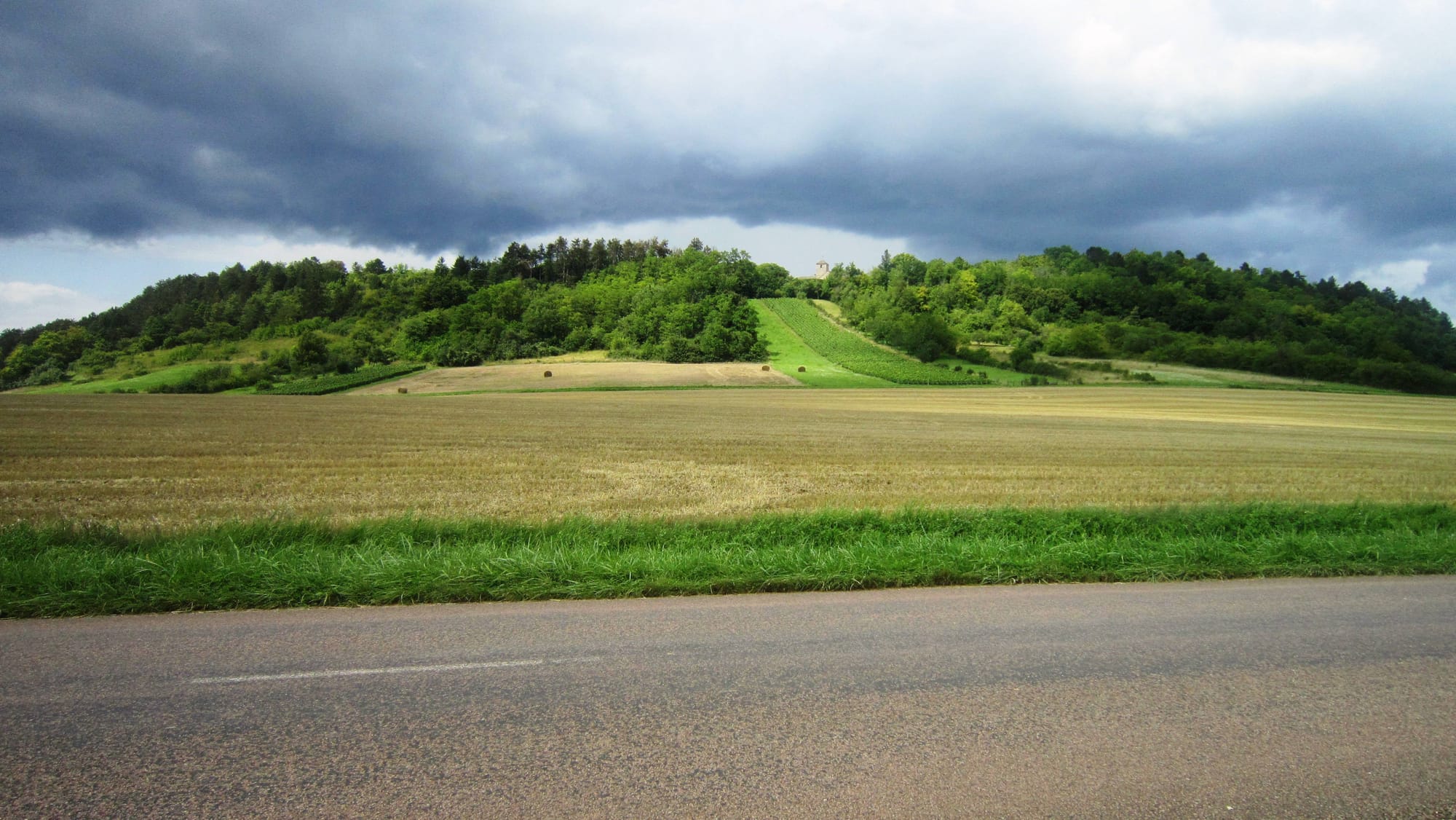
According to Arkeonews, researchers have determined that a coral fragment, once bright red, may have belonged to one of the decorations around the Medusa figures on the handles of a giant Greek krater. Arkeonews, in an article dated 16 November 2026, says Bastien Dubuis, an archaeologist at the National Institute for Preventive Archaeological Research (Inrap), set out the results of a re-examination of the Vix tomb in a detailed interview with Inrap.
The tomb and its krater
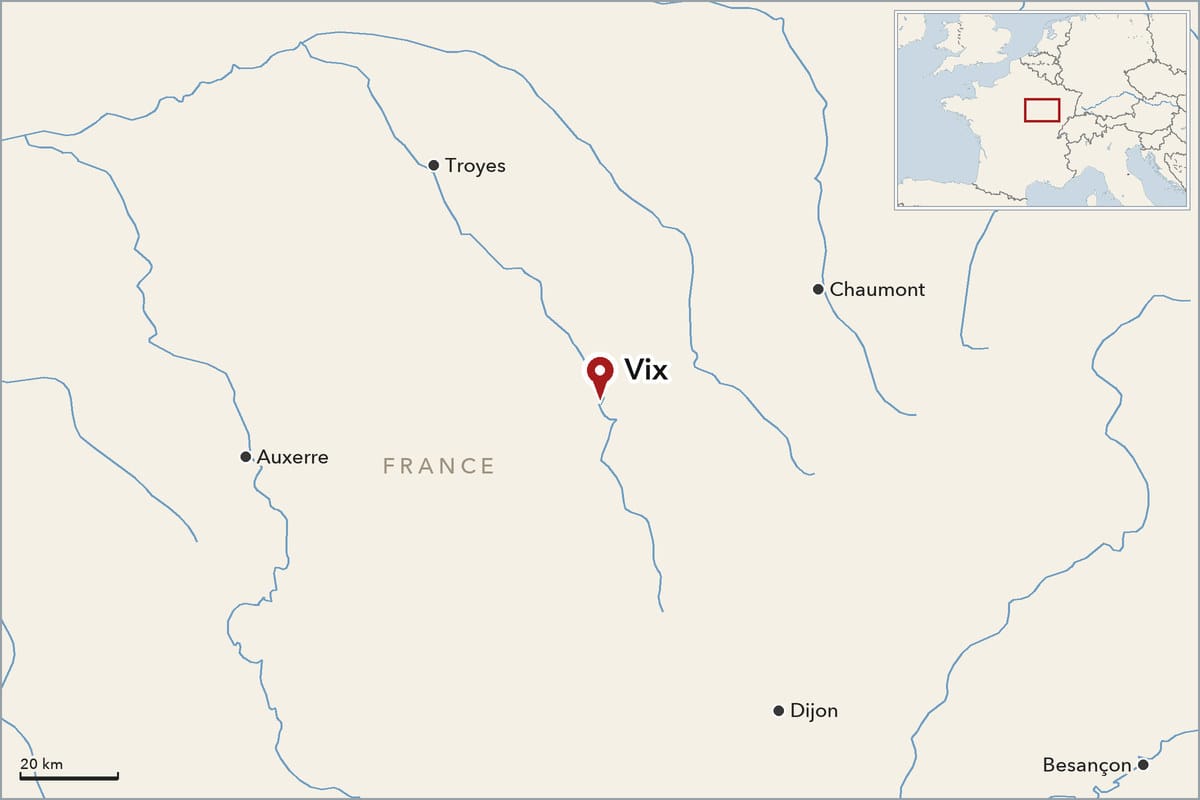
Arkeonews describes the Vix tomb as lying near Mont Lassois in the Côte-d'Or region of France, and as renowned after excavations in 1953. It says the burial chamber contained a gold torc, a four-wheeled ceremonial chariot, precious vessels and the remains of a high-status woman. Its most striking find, Arkeonews says, was a giant Greek bronze krater about 1.64 metres high.
On who was buried, Wikipedia says the individual has been interpreted as female because of the jewellery and the absence of weaponry, and that some have questioned that traditional identification. It says Knüsel's 2002 osteological analysis concludes the person was likely female, though with some androgynous features.
Wikipedia describes the krater as an elaborately decorated bronze volute krater weighing 208.6 kilograms, and notes that kraters were vessels for mixing wine and water, common in the Greek world and usually made of clay. According to Wikipedia, the burial mound was discovered by Maurice Moisson and excavated in early 1953 by him and René Joffroy. Wikipedia also says new excavations by Inrap were authorised, beginning on 20 August 2019. The same page says the gold torc was stolen from Châtillon Museum on 24 July 2026.
The coral and Medusa's blood
Arkeonews says each handle of the krater carries two spiral ornaments with a round socket at the centre of each, four sockets in all, and that these contain drilled holes to secure decorative pieces. It reports that archaeologists have known since 1953 that the sockets were empty, but were initially unable to tell which material had filled them. Then, according to Arkeonews, Dubuis's team found a small semi-circular piece of coral while re-examining soil screened after the 2019 excavation. The fragment, which Arkeonews says is slightly over one centimetre across, fits the round sockets on the krater's handles. Arkeonews adds that the coral now looks off-white, but that Inrap's photo descriptions say it was once a brilliant red.
Arkeonews reports Dubuis's view that the red coral flanking the Gorgon heads may have represented Medusa's petrified blood. Arkeonews notes, though, that nothing found so far, such as an inscription, settles what the coral was meant to signify. Dubuis also proposes a possible semantic link between red coral, blood and red wine, according to Arkeonews.
A seven-millimetre fragment and the figure on the lid
Arkeonews says Dubuis, while examining hundreds of small bronze fragments, noticed one only seven millimetres long with parallel lines, and identified it as the fingers of the left hand of the small female figurine on the lid. He later found the missing thumb of the same hand in museum storage, Arkeonews reports. On that basis, Arkeonews says, the woman was not holding an offering vessel, as previously thought, but extending both hands forward, open. According to Dubuis, the gesture could signal welcome, greeting or farewell.
Arkeonews says connection marks and rivet holes that survive indicate that other figures once stood on the lid. Dubuis believes, per Arkeonews, that the other figurines may have been deliberately removed at some point. Dubuis also states that the krater was made around 540 BCE, while the Vix princess may have lived several generations later, according to Arkeonews.
Soil sieved for fragments, and a later date
Arkeonews says archaeologists re-examined the area excavated by Joffroy and Moisson in 1953. The team collected approximately 72 large bags of soil and passed them through three-millimetre sieves, which Arkeonews says produced approximately 2,000 new fragments. Arkeonews reports that the number of known fibulae (brooches) in the tomb increased as a result.
Arkeonews says previous studies placed the tomb around 500 BCE, while Dubuis indicates that the new findings suggest the burial did not occur before 470 BCE. Arkeonews says this moves the tomb at least one generation later. Wikipedia's page on the grave dates it to c. 470 BC.
Arkeonews also reports fragments of black sapropelite bracelets determined to have come from the Dorset coast of England. It says DNA from a tooth showed that the Vix princess was not the mother or grandmother of the prince buried in the nearby Lavau tomb.
Where it was made, and whether it held wine
Arkeonews says one view associates the krater with workshops around the Greek city of Poseidonia in Southern Italy, while another points to Northern Ionia near Phokaia on the western coast of present-day Turkey. If the eastern-origin proposal is correct, Dubuis considers, the lid figure could be linked to a historical person, and one possible candidate is the priestess Aristarche, who appears in the migration narratives of the Phokaians, according to Arkeonews. Arkeonews adds that this remains a hypothesis and that no evidence has yet confirmed the figure's identity.
Arkeonews says chemical analyses of bronze fragments thought to come from the krater found traces of pitch and black grapes, but no fermentation markers that would confirm wine. Dubuis points out that the fragments were heavily washed in the past, which may have affected the chemical residues, so it cannot be said with certainty that the Vix krater held wine, Arkeonews reports. By contrast, analyses on the large cauldron at Lavau revealed residues associated with red wine, according to Arkeonews.
Sources
Altuntaş, L. (2026) 'Medusa's Blood May Solve the Mystery of a 2,500-Year-Old Celtic Princess's Tomb', Arkeonews, 16 November 2026, available at: https://arkeonews.net/medusas-blood-may-solve-the-mystery-of-a-2500-year-old-celtic-princesss-tomb/ (Accessed: 16 November 2026).
Wikipedia (2006) 'Vix Grave', Wikipedia, 23 November 2006, available at: https://en.wikipedia.org/wiki/Vix_Grave (Accessed: 16 November 2026).
Picture credits
- Top picture: Mont Lassois, near which the Vix tomb lies. Mont Lassois, photo by Claude PIARD, CC BY-SA 4.0 (Wikimedia Commons)
- Map: drawn from Natural Earth (public domain) and Wikidata.
