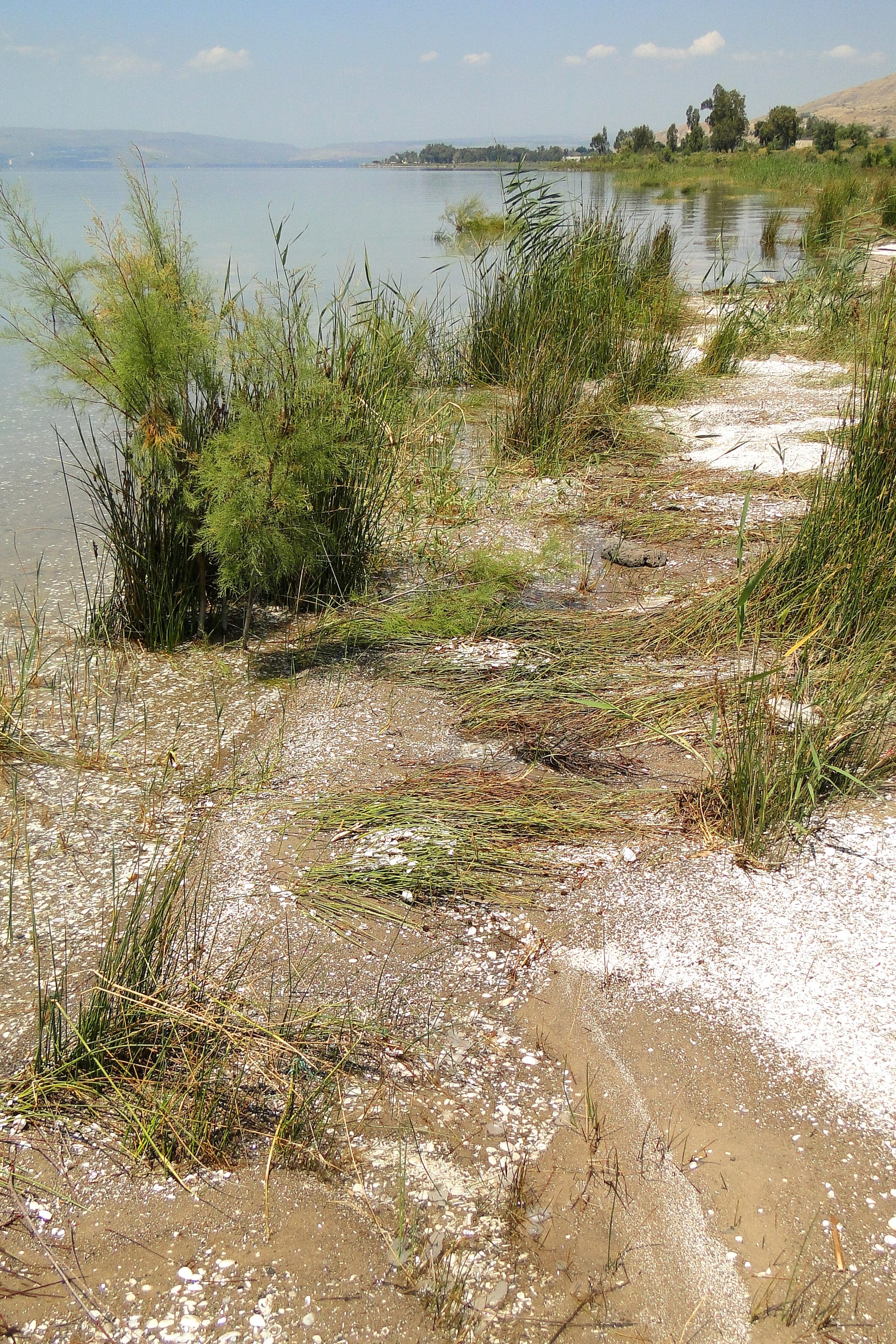
A prehistoric site in Israel's Jordan Valley may be hundreds of thousands of years older than archaeologists have long believed. A study published in Quaternary Science Reviews in 2026 argues that 'Ubeidiya, which lies about three kilometres south of the Sea of Galilee, is at least 1.9 million years old. The Hebrew University of Jerusalem's account of the work was carried by ScienceDaily on 26 October 2026, after the university's release first appeared in February.
What changed
For years, most researchers placed 'Ubeidiya between 1.2 and 1.6 million years ago. The Hebrew University release says that figure rested on relative chronology, not on direct measurement. John Hawks, who wrote about the new work on 9 May 2026, says the age of the site had relied almost entirely on comparing its fossil animals with those from other sites in Europe and Africa.
According to the Hebrew University, the study was led by Prof. Ari Matmon of the Hebrew University of Jerusalem, Prof. Omry Barzilai of the University of Haifa and Prof. Miriam Belmaker of the University of Tulsa. The team returned to the site, took fresh samples and combined three dating techniques.
Three clocks
The first is cosmogenic isotope burial dating. Cosmic rays create rare isotopes in rock at the surface, and once the rock is buried those isotopes decay at known rates, so what remains indicates how long the rock has been underground.
The second is magnetic. Lake sediments at the site preserved the direction of Earth's magnetic field as they settled. Matching that record to known reversals showed the layers formed during the Matuyama Chron, a period that began more than two million years ago.
The third is uranium-lead dating of fossilised shells of Melanopsis, a freshwater snail found in the sediment. This sets a minimum age for the layers that hold the stone tools, not a precise one.
Together, the release says, the results pointed to a considerably earlier date than previously assumed.
The three-million-year problem
The first cosmogenic readings did not fit. They suggested some rocks were about three million years old, which contradicted the magnetic, fossil, geological and archaeological evidence.
The researchers' explanation is that the sediments have a long history of recycling within the Dead Sea rift. In their words, "The exposure-burial history that emerges from the model implies recycling of sediments previously deposited and buried in the rift valley… and then redeposited along the 'Ubeidiya paleo lake shoreline." Put simply, some of the sediment had been buried long before it was moved and laid down again beside the ancient lake, so certain rocks record a history reaching much further back than the archaeological layers themselves.
Alongside Dmanisi
On the revised date, the Hebrew University release puts 'Ubeidiya at roughly the same age as Dmanisi in Georgia, and says our ancestors were spreading across different regions at a similar time.
The release also draws a conclusion about tools. 'Ubeidiya is known for early Acheulean material, large bifacial tools including hand axes, found with animal fossils of both African and Asian origin, some of them now extinct. The release suggests that the simpler Oldowan tradition and the more advanced Acheulean may have left Africa at the same time, carried by different groups of hominins. The Brighter Side of News described this as a possibility the study raises, not a settled finding.
How far to trust it
Hawks, who works at cave sites in South Africa where complex burial histories can complicate cosmogenic dating, asks directly whether the new date should be believed and is open about the debate around the method. He writes that some fossil experts do not believe cosmogenic ages unless they are confirmed by other methods such as argon-argon dating. Summarising the authors' reasoning, he writes that ages older than two million years are very hard to reconcile with the faunal evidence, and that they concluded an age of around 1.9 million years was "the best compromise among the different lines of evidence". In his view, there is very little evidence pointing specifically to a lower age for the site.
He also puts the claim in context. 'Ubeidiya, he writes, is far from the oldest archaeological site in Eurasia, and he names earlier artefacts from Shangchen in China and the Dawqara Formation in Jordan, and cutmarked bone from Grăunceanu in Romania. That is why wording matters. In its body the Hebrew University release says 'Ubeidiya is "among the oldest known sites" of early humans outside Africa, though its opening paragraph goes further, placing the site together with Dmanisi as "the oldest evidence of early humans outside of Africa". Given the earlier sites Hawks lists, "among" seems to me the safer word.
For readers following the site, the practical point is simple. The authors' claim is a floor ("at least 1.9 million years") built from several imperfect clocks that had to be reconciled, not a single measured date. My view is that the sediment-recycling explanation is what makes the case persuasive, because it accounts for the one result that did not fit instead of discarding it.
Sources
Steigman, A. (2026) 'Evidence at the Archaeological site 'Ubeidiya in the Jordan Valley Pushes Back Human Presence in the Region by Hundreds of Thousands of Years', BFHU, 23 February 2026, available at: https://www.bfhu.org/2026/02/23/evidence-at-the-archaeological-site-ubeidiya-in-the-jordan-valley-pushes-back-human-presence-in-the-region-by-hundreds-of-thousands-of-years/ (Accessed: 27 October 2026).
Hawks, J. (2026) 'A new age for 'Ubeidiya', John Hawks, 9 May 2026, available at: https://www.johnhawks.net/p/a-new-age-for-ubeidiya (Accessed: 27 October 2026).
The Hebrew University of Jerusalem (2026) '1.9-million-year-old discovery rewrites the story of human evolution', ScienceDaily, 26 October 2026, available at: https://www.sciencedaily.com/releases/2026/10/261025073042.htm (Accessed: 27 October 2026).
Shavit, J. (2026) '1.9 million-year-old finding points to the earliest evidence of humans outside of Africa', The Brighter Side of News, 19 February 2026, available at: https://www.thebrighterside.news/post/1-9-million-year-old-finding-points-to-the-earliest-evidence-of-humans-outside-of-africa/ (Accessed: 27 October 2026).
Picture credits
- Top picture: The Sea of Galilee, south of which the 'Ubeidiya site lies. Shore of the Sea of Galilee (Lake Kinneret) — photo: Adam Jones, CC BY-SA 2.0, via Wikimedia Commons
