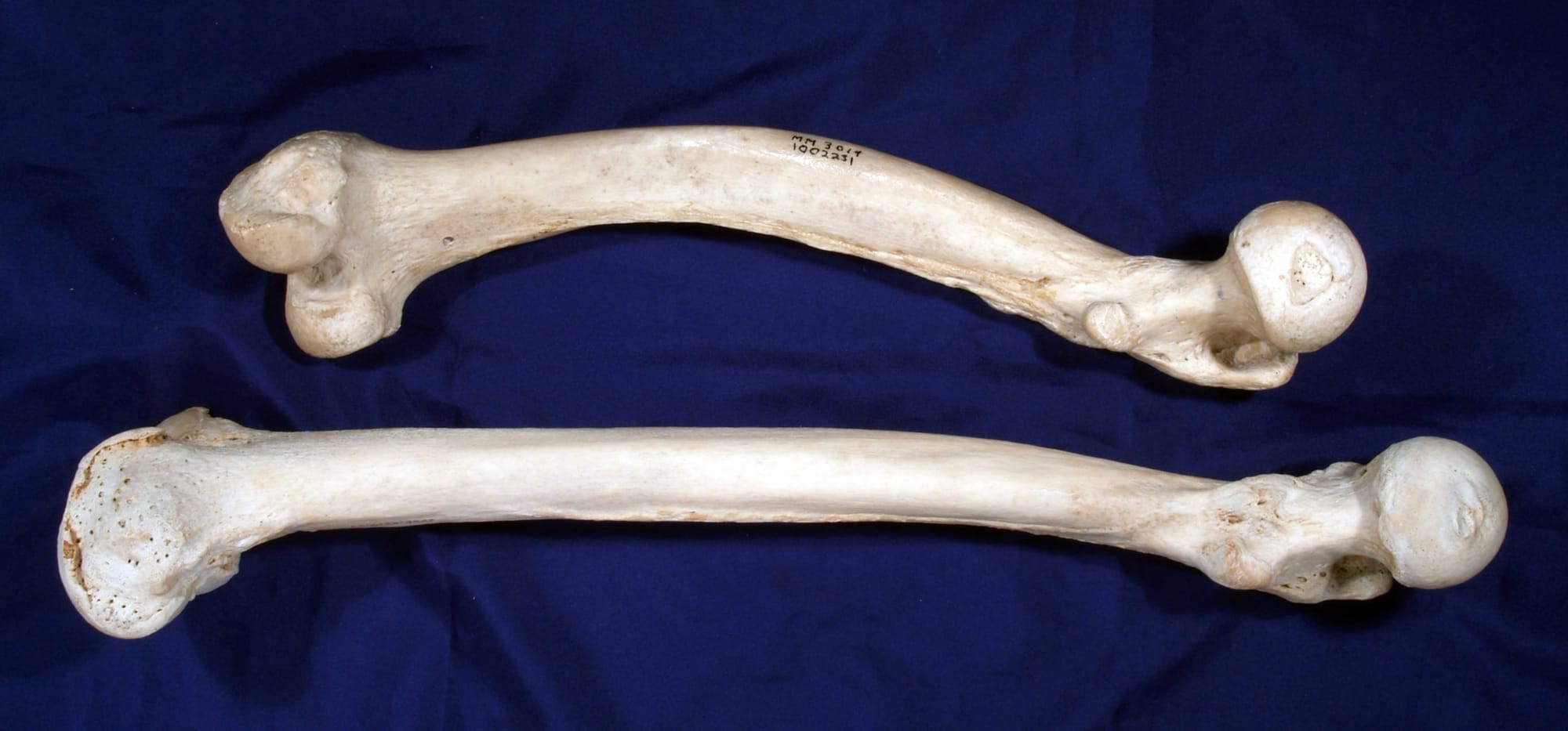
New research from the University of Tübingen and the Max Planck Institute of Geoanthropology in Jena uses ancient and historical thighbones to follow changes in height over generations. Researchers evaluated 18,457 skeletal remains from 45 countries across Europe and Asia. The study has been published in the journal PNAS, and the Max Planck institute announced it in a press release dated 16 November 2026. The release describes it as the most comprehensive analysis to date of such data from Asia and Europe, and says the changes in height it reveals reflect diet and general health.
Why the team turned to bones
Manon Stephan, a researcher in economic history at the University of Tübingen, says that in many parts of the world, written sources that would allow conclusions about economic development "appear quite late on our timeline and are patchy in their distribution." "That’s why we rely on bones," she says. The length of the femur was used to estimate the height of the body. Most of the bones come from the graves of ordinary people, from both densely populated areas and rural regions, and from women and men.
Stephan says that when children and adolescents have access to sufficient, high-quality food, they grow taller, within the constraints of genetic factors. Height, she says, therefore enables conclusions about living standards.
What the measurements show
In southeast Asia, men were quite tall 7,000 years ago, averaging 1.78 metres, according to the study. Over the millennia their height became more like that of men elsewhere, the researchers say, until in the 19th century it came to just over 1.60 metres. Chinese women averaged 1.57 metres 7,000 years ago; their height decreased fairly steadily over the millennia until, by the 19th century, they averaged only 1.48 metres.
In northern Europe, men 5,000 years ago were on the short side, averaging 1.62 metres. Pastoralist peoples migrating in from the steppes of eastern Europe and western Siberia then brought more advanced dairy farming and the hereditary trait of lactose tolerance. Greater consumption of dairy products was one of the factors that led to increased height. From the early Middle Ages (500 to 1,000 CE), height began to decline again until the end of the 19th century, in Europe and most of the other regions in the study.
The trend in women's height follows roughly the same pattern as that of men. Only in China and Japan does it decline more sharply, and in Europe it rises less steeply than men's from prehistoric times through the Middle Ages.
Technology did not mean taller
Jörg Baten, professor of economic history at the University of Tübingen, says the study confirmed that technological progress does not automatically lead to greater height. His example is China, where, he says, higher-yielding rice varieties and other innovations were introduced in the 11th century CE. Baten says the higher yields enabled the empire to remain the dominant power but did not lead to a better standard of living for the general population. In his account, population density increased because people had more children, seen as a form of security in old age. Each individual, he says, therefore had less to eat, and the quality declined, for example in high-quality protein.

Where the data came from, and what it cannot yet explain
The study used thighbones from a region that today covers 22 countries in Asia, from Cambodia and China to Turkey and Vietnam. In Europe, the researchers included data from 23 countries, including Greece, Italy, Germany and the United Kingdom.
The authors have not been able to explain all changes in height through shifts in social conditions or developments in agriculture. "This requires further research," says archaeologist Mark Hudson of the Max Planck Institute of Geoanthropology in Jena. He adds that the statistical data reveals trends and provides clues as to when these changes occurred. Baten's Chinese rice example is a useful caution against reading a new farming technique as a sign that ordinary people were better fed.
Sources
Max-Planck-Gesellschaft (2026) 'Stature trends reveal 7,000 years of economic history', Max-Planck-Gesellschaft, 16 November 2026, available at: https://www.gea.mpg.de/252586/stature-trends-reveal-7-000-years-economic-history?c=192964 (Accessed: 17 November 2026).
Picture credits
- Top picture: Two adult femora. Image: Two adult femora (one exhibiting childhood rickets), National Museum of Health and Medicine, CC BY 2.0 (source)
- The University of Tübingen, home to Stephan and Baten, two of the study's researchers. Image: Bonatzbau (main building / university library), University of Tübingen, photo Felix König, CC BY 3.0 (source)

