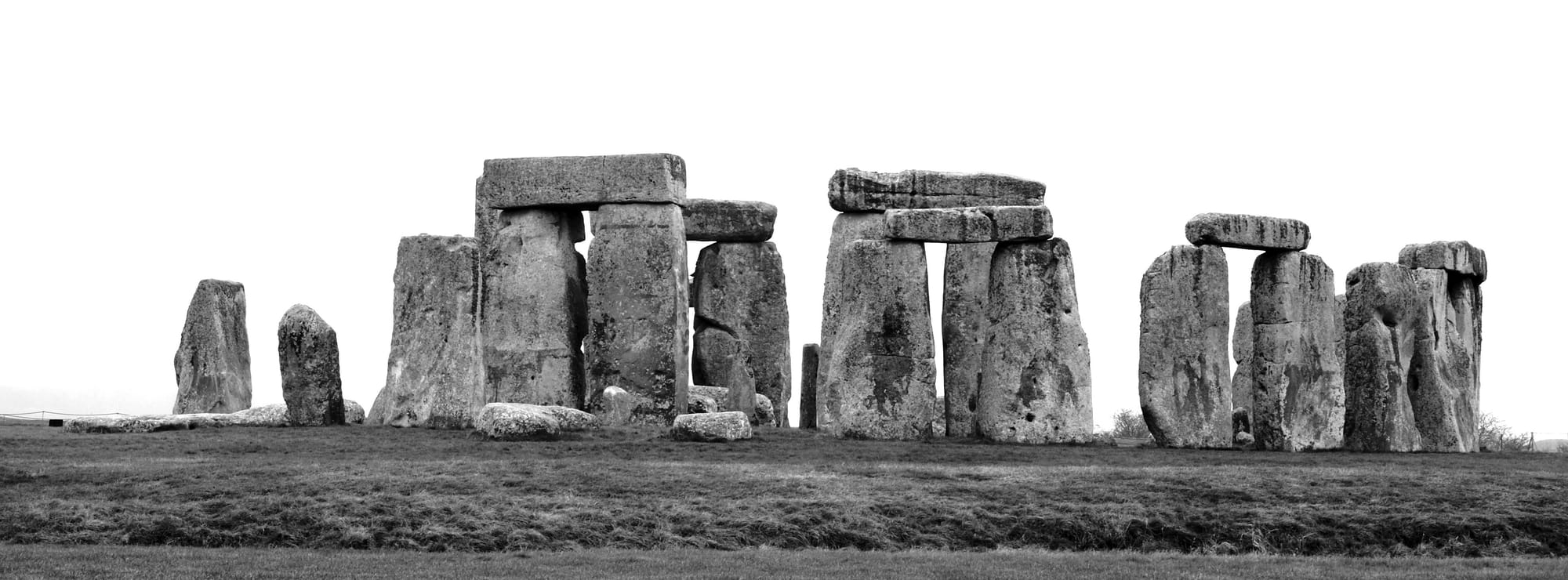
Two separate pieces of Stonehenge research have been reported this year. One is a pair of post-holes near the village of Bulford, whose wooden posts have long since rotted away. The other is a computer-modelling study of how a six-tonne stone may have travelled from Scotland. Each comes with caveats, and the teams' own words show where the evidence stops and the speculation starts.
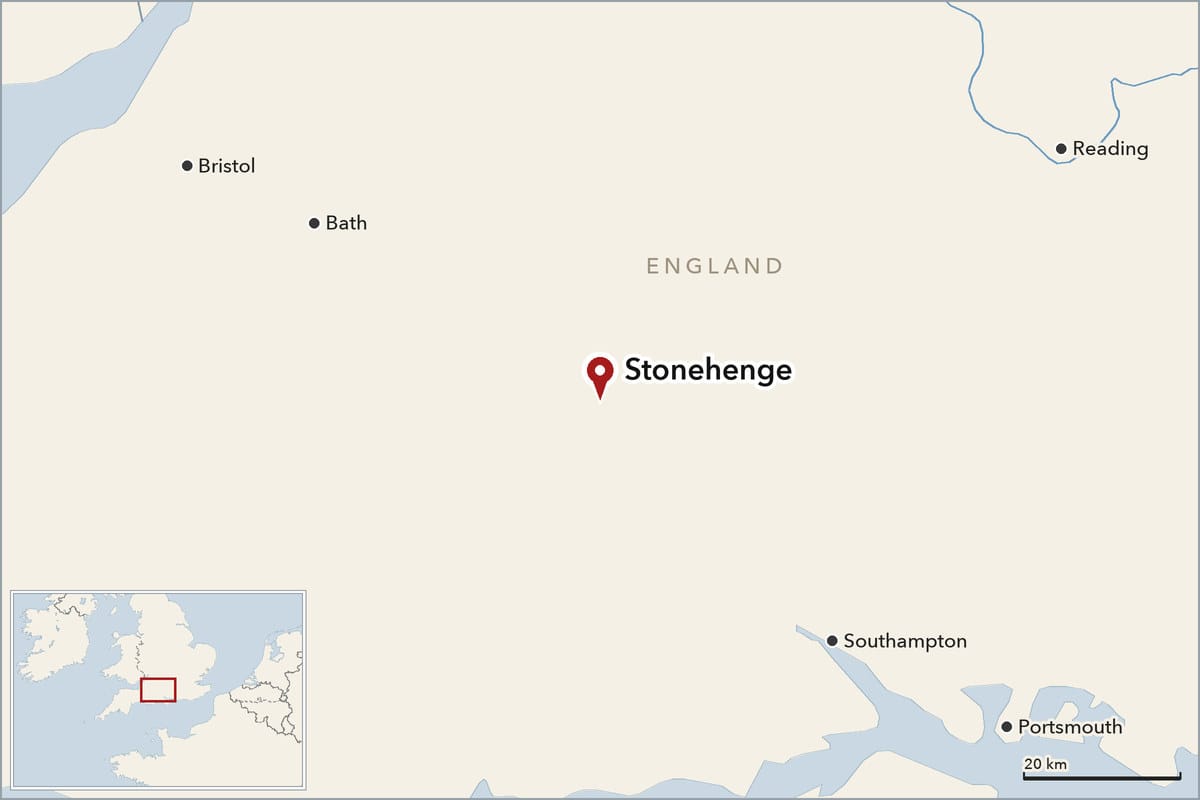
Two holes, 5km away
In June 2026, BBC News reported that archaeologists believe they have found an earlier, much simpler version of Stonehenge about 3 miles (5km) from the monument. All that remains are two holes in the ground. The team says they held wooden posts that lined up with the Sun on the summer and winter solstices, as Stonehenge does.
According to BBC News, the posts stood 120m (394ft) apart. The site has been dated to about 5,000 years ago, which BBC News says is 500 years before the stones at Stonehenge were placed. Live Science reported that Wessex Archaeology's Phil Harding, who led the excavation, described the find at a news conference on 17 June, and that the team's findings were announced publicly on 18 June.
The Guardian reported that the structure was carbon dated to around 3000BC, the same time as the earliest phase of construction at Stonehenge. It said the posts left only two large post pits, surrounded by smaller rubbish pits. In Wessex Archaeology's announcement, Harding called the discovery "probably one of the greatest finds of my career".
How the alignment was found
The traces came to light about a decade before the announcement, according to BBC News, when ground was cleared for new army housing. The Guardian reported that Harding had not recognised what he had at first. He noticed the line only later, when he drew it between the two larger post-holes on the site plan. BBC News quoted him: "I got my pencil and ruler, and I joined them up, and I was aware that they were kind of pointing in the general direction of the sunrise on midsummer."
A fuller analysis then reconstructed the ancient sky. Dr Fabio Silva, the skyscape archaeologist who carried out the alignment analysis for Wessex Archaeology, told BBC News: "If you take into account the width of the posts… then the alignment is exactly, exactly right." Live Science reported in June that a report on the team's research would be peer-reviewed and published.
What it does and doesn't tell us
Harding's team suggests the Bulford structure may have served as an early "prototype" for Stonehenge's solar alignment. The Guardian reported Dr Matt Leivers, senior research manager at Wessex Archaeology and one of the team behind the find, saying it would not surprise him if the site was "one of the campsites of the builders of the first phase of Stonehenge", and that he thought this "entirely plausible". Live Science reported that no human remains have been found at the Bulford site.
Live Science spoke to two archaeologists who were not involved in the research. Susan Greaney of the University of Exeter said: "It is intriguing to think that simple posts were erected here to align with the solstices around 500 years before Stonehenge was built." Amanda Chadburn, an independent archaeologist, suggested the monument may have been a temporary "model" for Stonehenge: "If you were designing a very complicated piece of engineering like Stonehenge," she said, "you would have had to understand how to make it before starting."
My view: the dating and the alignment are the solid parts of this announcement, and the Guardian, citing experts, calls the Bulford structure the earliest solstice-aligned structure in the Wiltshire landscape. "Prototype" and the idea of a builders' campsite are interpretations. The researchers offered them themselves, and they are worth testing rather than taking as settled.
The Altar Stone and the glacier
The second story concerns the six-tonne Altar Stone. ScienceDaily describes it as a sandstone megalith that researchers now believe came from northeast Scotland, roughly 700km (435 miles) from Stonehenge. How it got to Salisbury Plain has been widely debated; Dr Remy Veness of Sheffield Hallam University, co-lead author of the new paper, said as much in ScienceDaily's report.
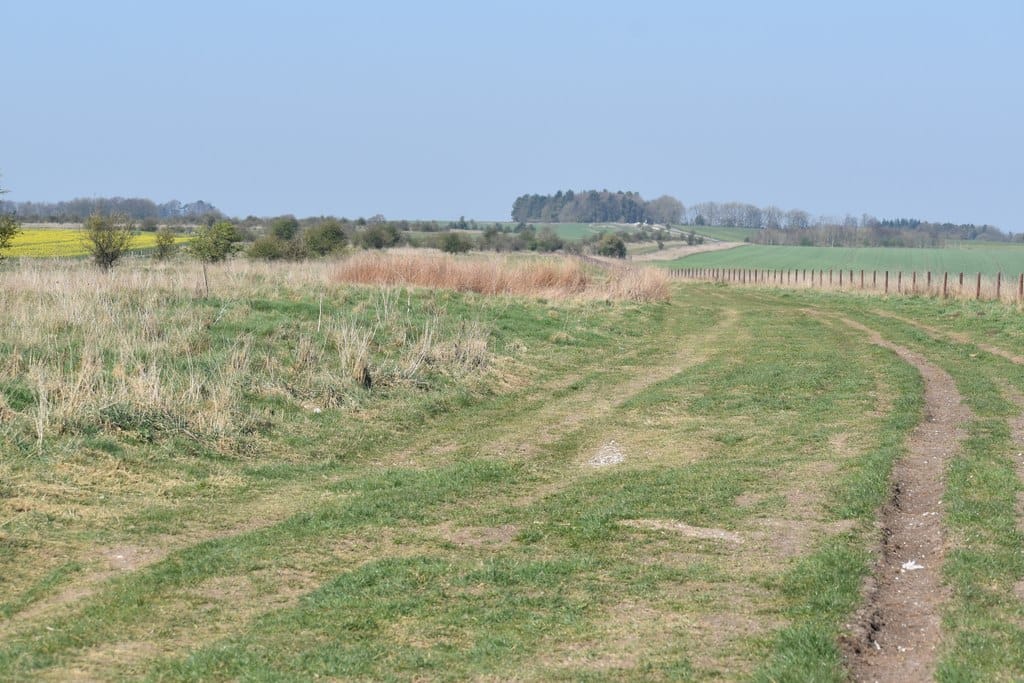
A team from Sheffield Hallam University and Curtin University in Australia combined mineral grain dating with computer models of ancient ice sheets. ScienceDaily reports that they concluded glaciers during Britain's last ice age may have carried the stone from Scotland's Orcadian Basin as far as Dogger Bank in the North Sea. BBC Newsround reported the same finding on 4 June 2026, describing the stone as possibly carried to Doggerland, a prehistoric landscape that once connected Britain to mainland Europe.
The ice only explains part of the route. Co-lead author Dr Anthony Clarke of Curtin University said, as quoted by ScienceDaily: "Our modeling shows glaciers may have transported rocks part of the way during the last Ice Age -- potentially as far as Dogger Bank in the North Sea -- but not into southern England, meaning the stone would still have needed to be moved hundreds of kilometers by people." ScienceDaily reports the team suggesting that, from Doggerland, the stone could have been moved towards the Berkshire Ridgeway, regarded as the oldest road in Europe.
Veness called the glacier idea "a new plausible explanation for part of the journey to Salisbury Plain". He also raised a further possibility, which he framed hypothetically. People in Doggerland might have attached cultural significance to the stone long before it reached Stonehenge, and might have moved it at least twice, once perhaps to save it from rising seas.
The word "may" runs through all of this. It is a modelling study that proposes a route, and the team says it hopes to narrow down the stone's precise source in northeast Scotland and examine the routes prehistoric communities might have used.
Sources
BBC Newsround (2026) 'Stonehenge altar stone may have travelled via glacier, study suggests', BBC Newsround, 4 June 2026, available at: https://www.bbc.co.uk/newsround/articles/c2l2lnnlggyo (Accessed: 25 October 2026).
Francis, A. and Morelle, R. (2026) 'Simpler, older version of Stonehenge found three miles from famous site', BBC News, 18 June 2026, available at: https://www.bbc.co.uk/news/articles/clyxw8550y8o (Accessed: 25 October 2026).
The Guardian (2026) 'Solstice-aligned 5,000-year-old monument 'once in a lifetime find', say archaeologists', The Guardian, 18 June 2026, available at: https://www.theguardian.com/uk-news/2026/jun/18/solstice-aligned-monument-archaeology-wiltshire-stonehenge-prototype (Accessed: 25 October 2026).
Metcalfe, T. (2026) '5,000-year-old 'prototype' Stonehenge aligning with solstices discovered near the famous Stone Age monument', Live Science, 17 June 2026, available at: https://www.livescience.com/archaeology/this-was-a-pioneering-achievement-stone-age-people-put-up-posts-to-observe-the-solstices-near-stonehenge-long-before-the-stones-of-sacred-site-were-placed (Accessed: 25 October 2026).
ScienceDaily (2026) 'Stonehenge's 6-ton altar stone may have traveled from Scotland by glacier', ScienceDaily, 23 September 2026 (materials provided by University of Vienna), available at: https://www.sciencedaily.com/releases/2026/09/260922005715.htm (Accessed: 25 October 2026).
Wessex Archaeology (2026) 'Discovery led by Phil Harding reveals 5,000-year-old ‘prototype’ for Stonehenge solar alignment', Wessex Archaeology, available at: https://www.wessexarch.co.uk/Prototype-stonehenge-solar-alignment (Accessed: 25 October 2026).
Picture credits
- Top picture: Stonehenge on Salisbury Plain. Image: Peter Trimming / Stonehenge / CC BY-SA 2.0 (source)
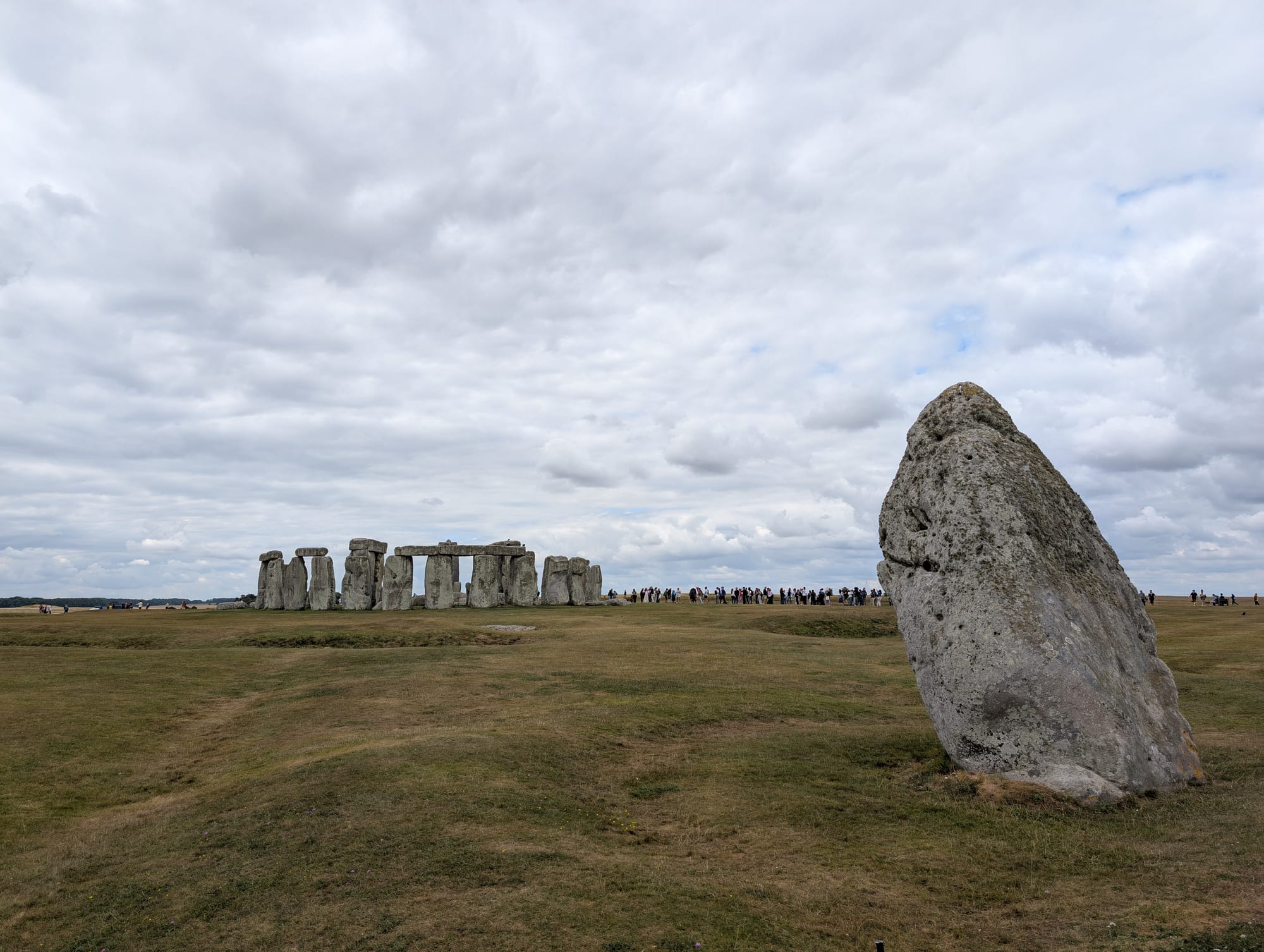
- The Heel Stone, to the north east of the circle at Stonehenge. Photo: Andy Li (CC0) (source)
- The Ridgeway in Berkshire. Image: David Martin / The Ridgeway Path westward from West Ilsley / CC BY-SA 2.0 (source)
- Map: drawn from Natural Earth (public domain) and Wikidata.


