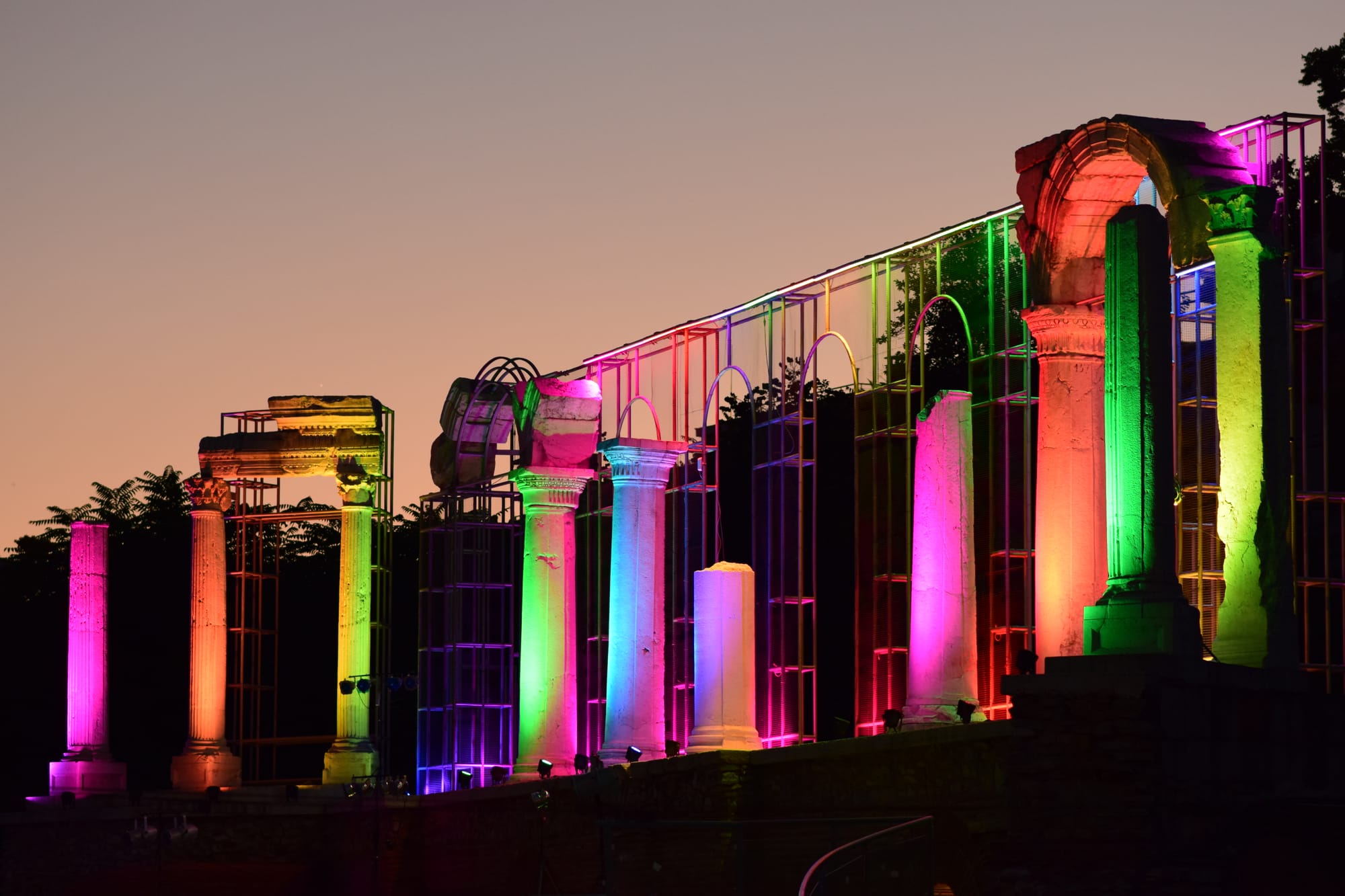
A rescue excavation on a building plot in Stara Zagora, Bulgaria, has recorded a Roman-era necropolis of 135 burial structures. The Regional History Museum (RIM) in Stara Zagora, which carried out the work, says the cemetery dates from the end of the 2nd century AD to the 5th. The Bulgarian News Agency (BTA) reported on 14 October 2026 that the museum's press centre had announced the find.
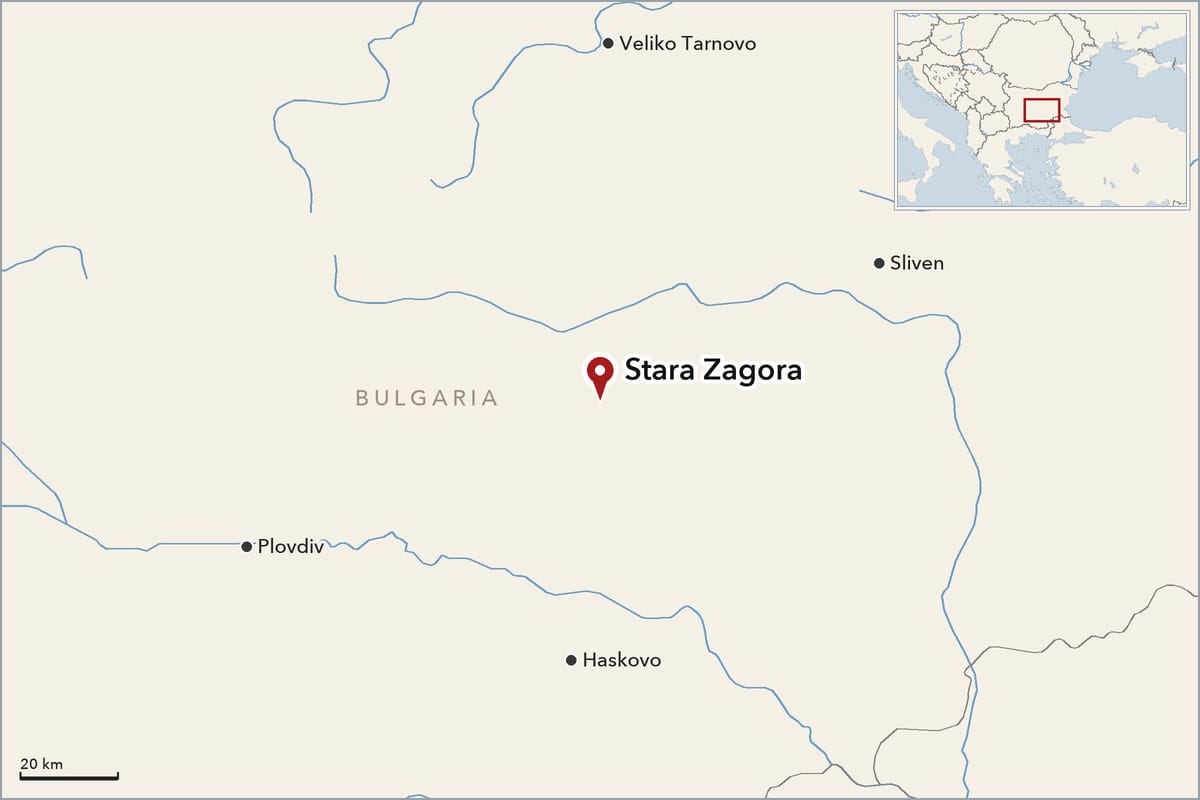
Where the dig took place
According to the museum, the work was done on land set aside for a residential building with garages at 91 Tsar Ivan Asen II Street. The plot lies in the south-western part of the Augusta Trayana–Vereya–Stara Zagora Architectural Reserve, outside the fortress walls of the ancient city.
The museum also reports remains from several construction periods on the plot: the end of the 2nd to the 4th century, the 4th to 5th century, the 17th to 18th century, and the end of the 19th century into the 20th. The necropolis is what the museum calls the find of greatest interest.
What the graves look like
The museum lists five types of grave: simple pits with cremation, simple pits covered with tegulae (roof tiles), simple pits covered with bricks, simple pits covered with stone slabs, and simple pits with no cover. It says two burial rites were practised. Four of the burials involved cremation, and the rest were inhumations.
The museum's account gives only the plain tally, and it does not say what drove the choice between the two rites.
The child's grave
One grave stands out in the museum's account. Arkeonews put it in its headline and opening sentence. The museum says it was a child's grave, with the head to the west and the feet to the east. The grave goods were one coin and two gold earrings.
The museum identifies the coin as an antoninian of the emperor Aurelian, struck at Serdica in AD 274-275, and it dates the grave to the same period. Arkeonews, reporting on 16 October, adds that Serdica is modern Sofia and that Aurelian ruled from AD 270 to 275. It also points out that the coin means the burial cannot have taken place before the coin was produced, though it says the precise date of interment remains uncertain.
On the child, Arkeonews reported that the child's identity and circumstances of death were unknown. It says the gold jewellery suggests valuable possessions accompanied the burial, but that this is not enough to establish the family's social standing. The museum's own account says nothing on either point.
Arkeonews also raises the possibility that the coin was placed in the grave as payment to Charon, the mythical ferryman of the dead in Greek and Roman tradition. It notes that, as of its report, the coin's purpose in this particular burial was unknown. That is a suggestion, not a finding.
The coin is what the museum uses to date the grave; to this writer, it tells us roughly when the child was buried, not who the child was.
The city outside the walls
Arkeonews places the cemetery in the context of Augusta Traiana, which it says developed under the emperor Trajan in the early 2nd century AD and was traditionally ranked second in prominence to Philippopolis, modern Plovdiv. It adds that under Marcus Aurelius the city gained the right to issue its own bronze coinage.
BTA also recalled an earlier discovery: at the end of the previous year, a total of 17 skeletons with elongated skulls were found in the Eastern Necropolis of Augusta Traiana. BTA's report gives no further detail on that find, and the museum places this plot in the south-western part of the reserve.
Sources
Buyukyildirim, O. (2026) 'Gold Earrings and Roman Emperor's Coin Found in 1,750-Year-Old Child's Grave in Bulgaria', Arkeonews, 16 October 2026, available at: https://arkeonews.net/gold-earrings-and-roman-emperors-coin-found-in-1750-year-old-childs-grave-in-bulgaria/ (Accessed: 18 October 2026).
Dudeva, P. (2026) 'Некропол, състоящ се от 135 гробни съоръжения, е открит при археологически проучвания в Стара Загора', BTA, 14 October 2026, available at: https://www.bta.bg/bg/museums/stara-zagora/rim/1224445-nekropol-sastoyasht-se-ot-135-grobni-saorazheniya-e-otkrit-pri-arheologicheski (Accessed: 18 October 2026).
Regional History Museum – Stara Zagora (n.d.) 'НОВИ ОТКРИТИЯ ПРИ СПАСИТЕЛНИ АРХЕОЛОГИЧЕСКИ ПРОУЧВАНИЯ НА РИМ-СТАРА ЗАГОРА', Regional History Museum – Stara Zagora, available at: https://www.rimstz.eu/%D0%BD%D0%BE%D0%B2%D0%B8%D0%BD%D0%B8/%D0%BD%D0%BE%D0%B2%D0%B8-%D0%BE%D1%82%D0%BA%D1%80%D0%B8%D1%82%D0%B8%D1%8F-%D0%BF%D1%80%D0%B8-%D1%81%D0%BF%D0%B0%D1%81%D0%B8%D1%82%D0%B5%D0%BB%D0%BD%D0%B8-%D0%B0%D1%80%D1%85%D0%B5%D0%BE%D0%BB%D0%BE%D0%B3%D0%B8%D1%87%D0%B5%D1%81%D0%BA%D0%B8-%D0%BF%D1%80%D0%BE%D1%83%D1%87%D0%B2%D0%B0%D0%BD%D0%B8%D1%8F-%D0%BD%D0%B0-%D1%80%D0%B8%D0%BC-%D1%81%D1%82%D0%B0%D1%80%D0%B0-%D0%B7%D0%B0%D0%B3%D0%BE%D1%80%D0%B0 (Accessed: 18 October 2026).
Picture credits
- Top picture: File photo: the ancient forum of Augusta Traiana, in present-day Stara Zagora. It is not the excavation site. Image: Antique Forum Augusta Trayana in Stara Zagora Bulgaria.jpg by LZ1ALT, CC BY-SA 4.0, via Wikimedia Commons
- Map: drawn from Natural Earth (public domain) and Wikidata.
