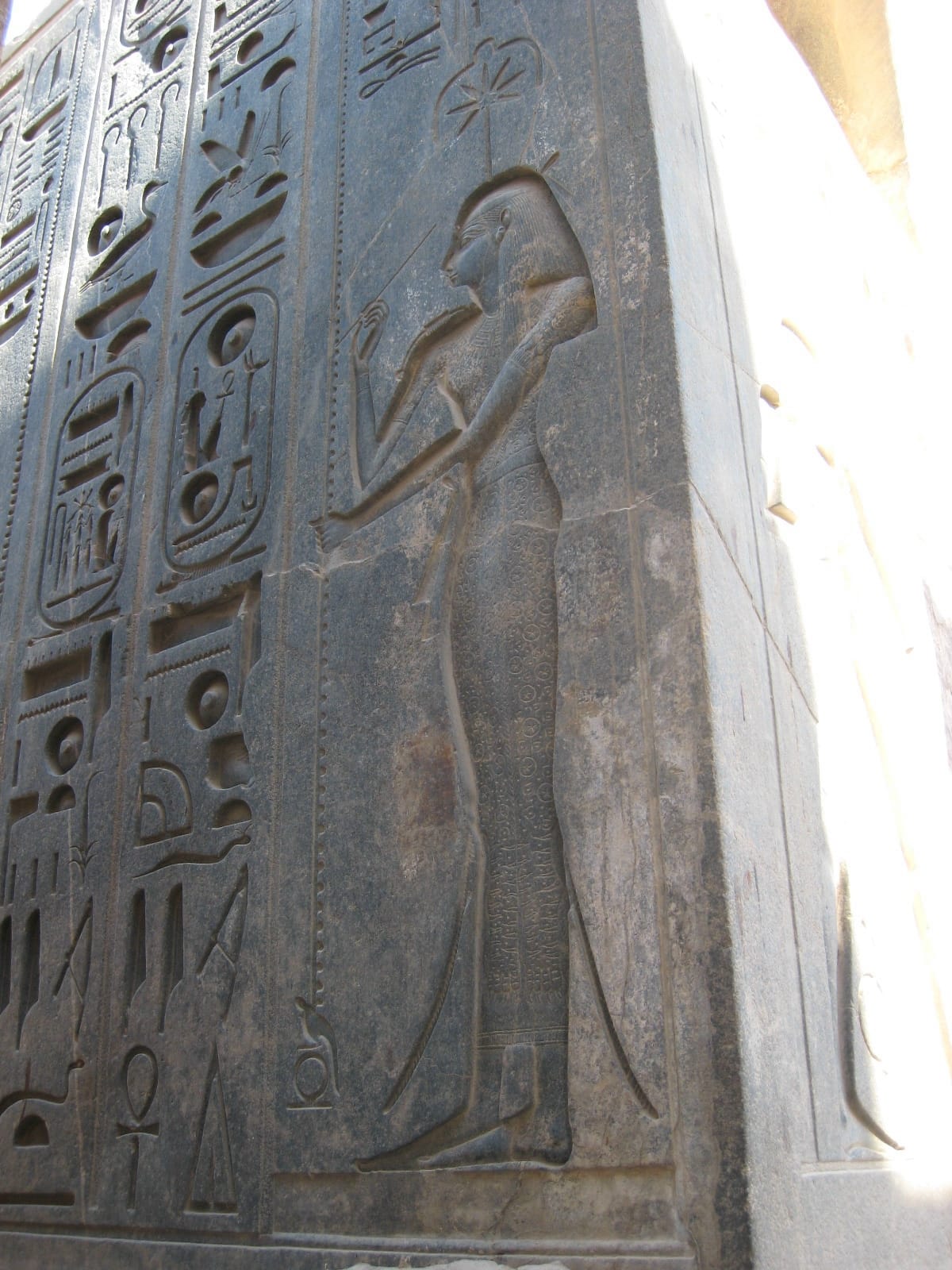
A slab of white limestone, carved on one face with hieroglyphs and a figure of the Egyptian goddess Seshat, spent time on the floor of the Mediterranean as a ship's anchor. A 2025 Israel Antiquities Authority report places it in the Newe Yam anchorage, on Israel's Mediterranean coast. It is a reused piece of Egyptian temple-style art.
A swimmer's find
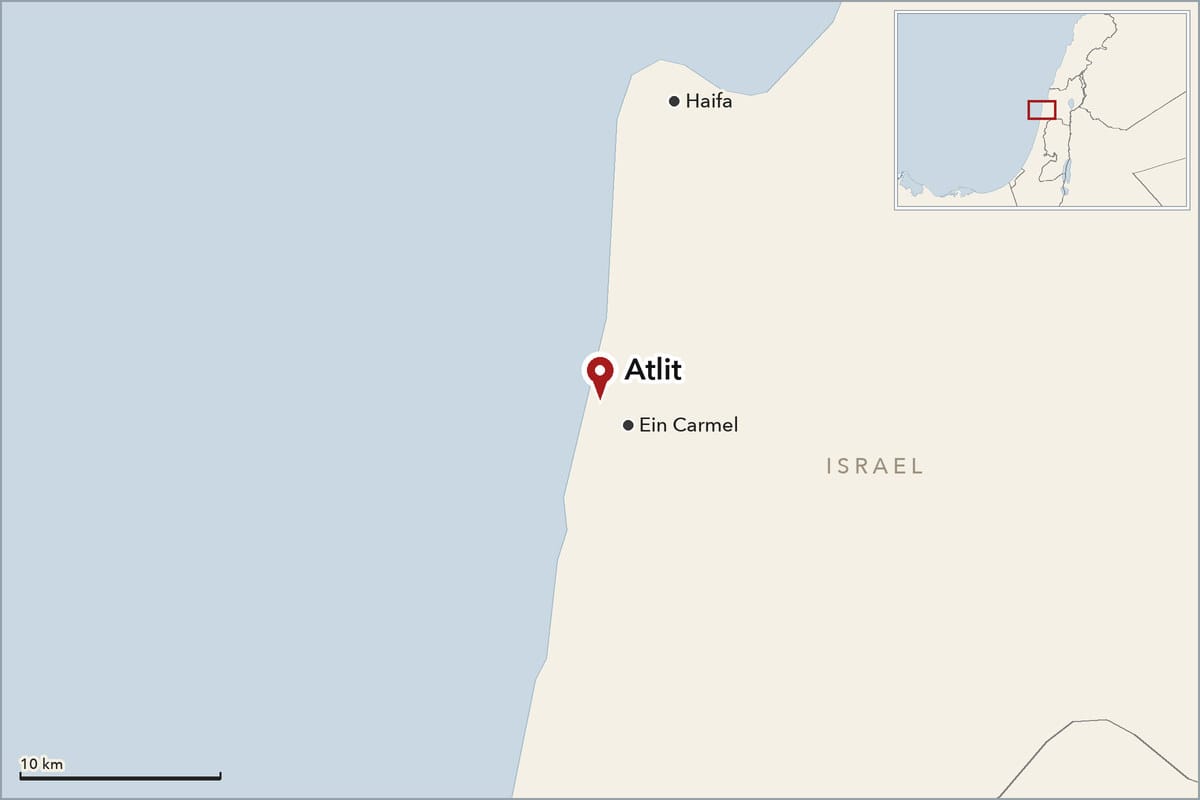
In February 2020, ABC News reported that Rafi Bahalul had been taking a morning swim off the shores of Atlit, Israel, when he spotted hieroglyphs on the seabed. ABC, citing Haaretz, reported him as saying: "I saw it, kept on swimming for a few meters, then realized what I had seen and dived down to touch it." He added: "It was like entering an Egyptian temple at the bottom of the Mediterranean."
Ancient Origins, in a piece dated 3 February 2020, described Bahalul as a 55-year-old veterinarian and artist from the village of Ein Hod. It said the find came "one morning last year" and that he called the Israel Antiquities Authority (IAA). It also reported that a team of underwater archaeologists recovered the stone "last January".
ABC named Jacob Sharvit, head of the IAA's maritime archaeology unit, as the person who confirmed it was a 3,400-year-old Egyptian stone anchor. At the time it was on loan from the IAA to the Israel Museum in Jerusalem. It was on show in the exhibition Emoglyphs: Picture-Writing from Hieroglyphs to the Emoji, which ABC said was running until 12 October 2020.
What the 2025 report describes
In 2025 the IAA's journal Hadashot Arkheologiyot published a final report on an underwater survey of the Newe Yam anchorage, by Jacob Sharvit, Dror Planer, Yael Gorin-Rosen and Ofra Barkai. It describes one of four stone anchors found in a small area ("Square 2") as a slab of dense white limestone. The measurements given are:
- length 0.63 m
- maximum width 0.4 m
- thickness 0.14 m
- a perforation 9 cm across
One face of the slab was smoothed, polished and incised with hieroglyphs in registers, with a figure at the bottom. The other face was roughly hewn and bears diagonal chisel marks. The authors say the slab may have been attached to a large relief that lined a wall in a temple or another public building. The anchor was found with the hieroglyph face down, and the report records no marks of damage or wear on it from use or from marine creatures. The carving shows meticulous care in keeping a uniform depth, which the report calls "a mark of professional work".
The report says the inscription "has not been deciphered yet". The authors do say the carved figure "can be definitively identified". It is the goddess Seshat, whom they describe as the goddess of writing, wisdom and knowledge, holding a clay tablet in one hand and writing with a stylus in the other.
That fits what Shirly Ben-Dor Evian, the exhibition's curator, said in ABC News's 2020 report. She said the stone would first have been part of a larger, ornate wall relief, and was cut from it and drilled with a hole for a rope. Ancient Origins reported her as saying the "amount and quality" of the decoration makes it unusual among anchors.
The defaced face
Seshat's face has been ravaged. The IAA report says this was "perhaps as a result of the iconoclasm that was common during the el-Amarna period (eighteenth dynasty; fourteenth century BCE)", and notes similar defacing at the Egyptian temple of Deir el-Bahri.
The 2020 coverage floated other ideas. Ancient Origins reported that the face had been chiselled away and said it was being considered that she was erased as an act of respect, because a sacred object must be made non-sacred before secular reuse. Curiosmos, which published on the anchor on 3 November 2026, says the curator raised in 2020 the possibility that the image was deliberately altered before the stone was reused. It adds that the anchor itself does not show who damaged the figure or when.
Atlit or Newe Yam? 2019, 2020 or 2021?
The accounts conflict in places:
- Location. ABC, Ancient Origins and The Jerusalem Post all put the find off Atlit. The IAA report places the Seshat anchor in the Newe Yam anchorage, a coastal strip 3.5 km long between Kibbutz Newe Yam and the Dor Ha-Bonim Beach Nature Reserve. Wikipedia describes the village of Newe Yam as in Atlit's immediate vicinity, but no account of the find explains how the report's anchorage relates to the press's location off Atlit.
- Timing. Ancient Origins, writing in February 2020, said Bahalul found it "one morning last year" and that archaeologists recovered it "last January". The IAA report says the survey was carried out "during 2021" under permit S-1109/2021, and lists "R. Bahalul" among the assisting divers.
- Inscription. In 2020, ABC reported that an accompanying inscription reads "mistress of the house of books", and Ancient Origins gave a similar title for Seshat. The IAA's 2025 report says the inscription has not been deciphered yet.
Curiosmos notes that the 2025 report describes a 2021 survey and does not explain how it relates to the earlier recovery and display.
An anchorage with a long history
The report describes Newe Yam as a place of natural anchorages formed by the remains of a flooded ridge. It says the Middle and Late Bronze Age anchors there point to maritime trade in the area, probably through the trading post at nearby Tel Nami. The survey also turned up finds from the Roman, Byzantine and Crusader periods.
The report doesn't say which ship the Seshat anchor belonged to or how it ended up there. The 2020 coverage offered ideas. Ben-Dor Evian proposed it came from an Egyptian ship, perhaps lost in a shipwreck, and Ancient Origins reported Sharvit's unit was still searching the area for other remains. Curiosmos says the original building and the route the stone took to the coast remain open questions.
Sources
Cowie, A. (2020) 'Morning Swim Leads to Discovery of 3400-Year-Old Egyptian Artifact', Ancient Origins, 3 February 2020, available at: https://www.ancient-origins.net/news-history-archaeology/egyptian-artifact-0013240 (Accessed: 3 November 2026).
Petricevic, I. (2026) 'The Egyptian Goddess Carved Into a Stone Anchor', Curiosmos, 3 November 2026, available at: https://curiosmos.com/seshat-egyptian-stone-anchor/ (Accessed: 3 November 2026).
Wikipedia (2026) 'Atlit (modern town)', Wikimedia Foundation, available at: https://en.wikipedia.org/wiki/Atlit_(modern_town) (Accessed: 3 November 2026).
Sherrin, H. (2020) 'Man finds 3,400-year-old Egyptian anchor during his morning swim', ABC News, 7 February 2020, available at: https://abcnews.com/International/man-finds-3400-year-egyptian-anchor-morning-swim/story?id=68820677 (Accessed: 3 November 2026).
Sharvit, J., Planer, D., Gorin-Rosen, Y. and Barkai, O. (2025) 'Newe Yam, Underwater Survey', Hadashot Arkheologiyot – Excavations and Surveys in Israel, Vol. 137, Israel Antiquities Authority, 6 July 2025, available at: https://hadashot.iaa.org.il/Report_Detail_Eng.aspx?id=26682 (Accessed: 3 November 2026).
Tercatin, R. (2020) '3,400-year-old Egyptian artifact uncovered in Israel on display in Jerusalem', The Jerusalem Post, 3 February 2020, available at: https://www.jpost.com/israel-news/3400-year-old-egyptian-artifact-uncovered-in-israel-on-display-in-jerusalem-616337 (Accessed: 3 November 2026).
Picture credits
- Top picture: Seshat in an Egyptian temple relief; a different carving from the anchor. Image: Karen Green, CC BY-SA 2.0, via Wikimedia Commons
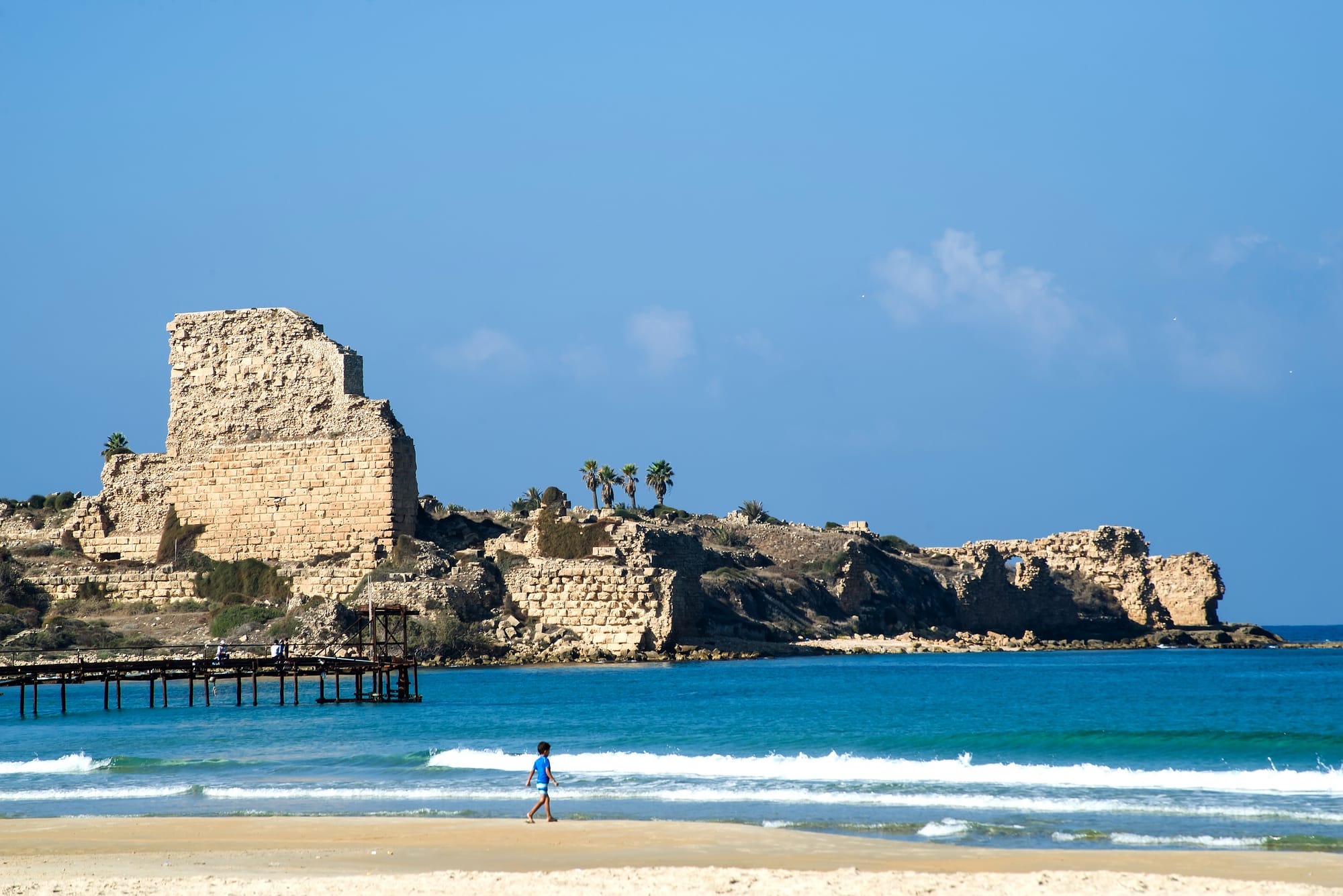
- The Crusader fortress at Atlit. Image: Yoss Stybel, CC BY-SA 3.0, via Wikimedia Commons
- Map: drawn from Natural Earth (public domain) and Wikidata.
