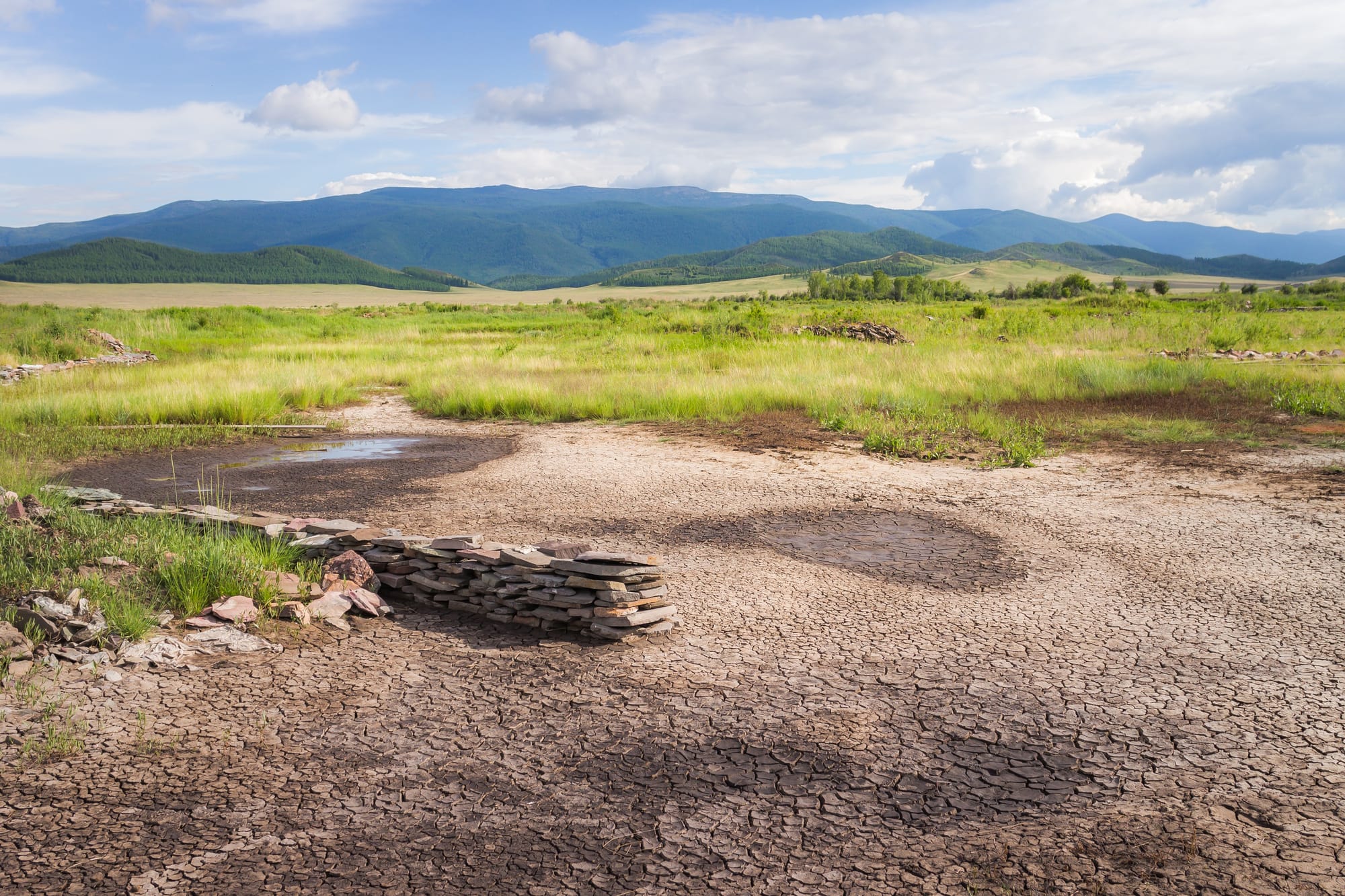
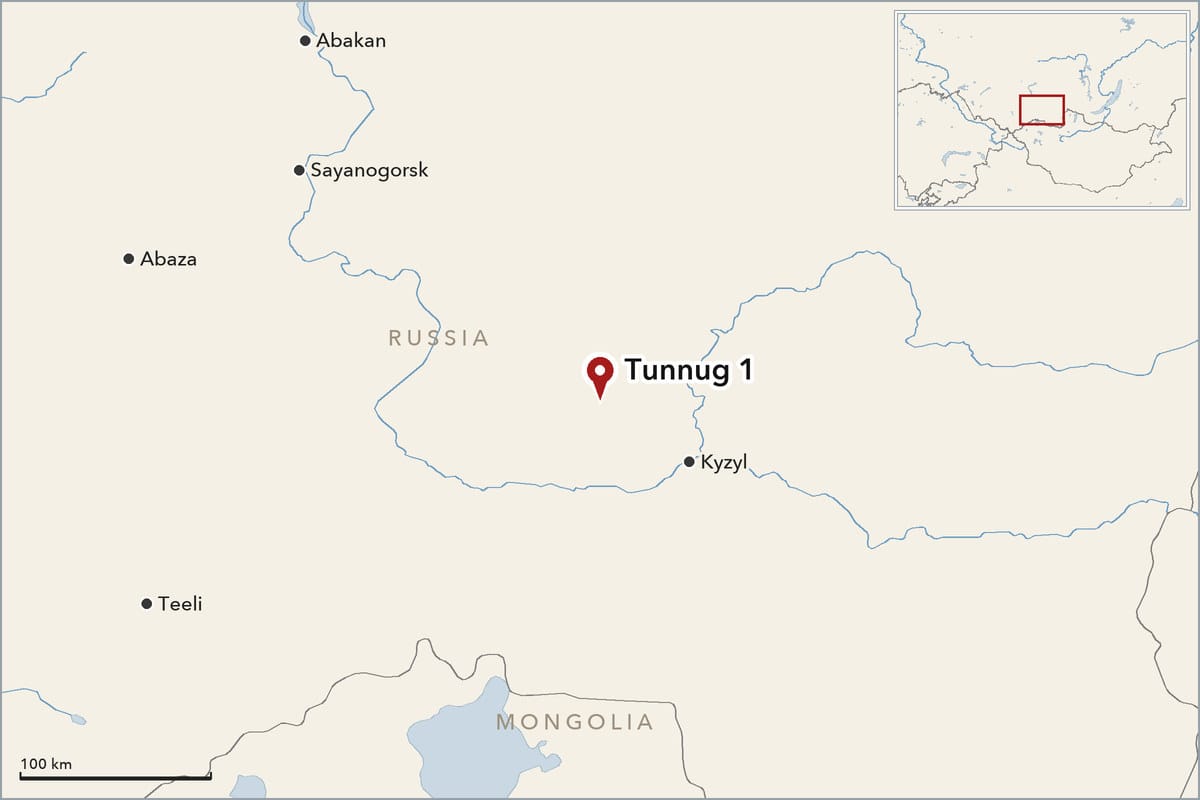
An international research team led by the University of Bern has reported cannabis seeds and molecular traces of psychoactive cannabis compounds in human hair from a princely tomb in Siberia. The tomb is at the excavation site Tunnug 1 in the Republic of Tyva in southern Siberia. According to the research team, this is the oldest directly dated evidence to date for the intoxicating use of cannabis. The study was published in the journal Science.
A royal tomb of the early Scythians
ScienceAlert described Tunnug 1 as lying in the Uyuk Valley of southern Siberia, a region sometimes called the Valley of the Kings for the huge number of ancient Scythian burial mounds there. According to ScienceAlert, the monument dates to around the early eighth century BCE and is among the earliest known royal tombs associated with the Scythians, the horse-riding peoples whose cultures eventually spread across much of the Eurasian steppes. ScienceAlert also reported that the mound measures roughly 140 metres (460 feet) across and concealed wooden burial chambers, along with bronze ornaments, beads, weapons and horse-riding equipment.
The University of Bern says the tomb belongs to high-ranking members of Scythian society. ScienceAlert reported that the new investigation focused on six individuals buried in four wooden structures within the mound.
What the seeds and the hair show
The University of Bern says about 1,000 cannabis seeds were recovered from the tomb, and six were dated directly by radiocarbon. Together with other dating results, the Max Planck Society says, this shows the seeds were placed in the tomb in the early 8th century BCE. DongA Science puts the number at more than 1,400 seeds. Gizmodo, quoting the paper, said the dating narrowed the seeds to the first decade of the eighth century BCE, coinciding with the construction of the funerary complex.
Seeds alone were not the evidence for intoxication: the Bern release says their presence in a grave does not, in and of itself, prove psychoactive use, that they likely stem from wild plants, and that it cannot be determined whether they were specifically cultivated for their psychoactive properties. The hair is what changed that, the Max Planck Society says: in several samples the researchers found clear signals consistent with cannabinol (CBN), which is produced, among other things, by the oxidation of THC, the most important intoxicating compound in cannabis. The team also detected weak signals that, based on their mass, are consistent with THC, and high-resolution mass spectrometry, among other methods, was used on the hair. Gizmodo reported an average cannabinol content of 560 parts per billion per sample.
“The molecular traces in the hair and the cannabis seeds come from the same grave and suggest that cannabis was used for its intoxicating properties,” says Gino Caspari, the study's lead author.
What the evidence cannot say
The Max Planck Society says it is not possible to determine with certainty how the active compounds entered the body, for example through inhalation or ingestion, so the analyses do not confirm a specific method of consumption. New Scientist reported Caspari as saying it cannot be said how the person consumed the drug: it might have been smoked, or the seeds could simply have been ingested. Popular Mechanics called inhalation the best guess. The findings also do not allow any conclusions about the THC content of the plants of the time.
Popular Mechanics, quoting the Associated Press, reported that Volker Auwärter, head of forensic toxicology at the University Medical Center Freiburg in Germany, called the hair analysis “scientifically weak.” He also said the hair may have absorbed traces of cannabis from the seeds buried nearby, according to the same report. That is a direct challenge to the hair evidence, and it sits beside the research team's own limits rather than replacing them.
Where it sits in the record
Popular Mechanics wrote that, if the results hold up, they push back the earliest known psychoactive use of cannabis by at least 300 years. It said the previous record came from a roughly 2,500-year-old site in western China. DongA Science described a June 2019 paper in Science Advances reporting 2,500-year-old vessels from a cemetery on the Pamir Plateau of China in which THC residues were detected.
Ritual, sacrifice and a Greek witness
“In this princely tomb, the burials were accompanied by extensive horse sacrifices and, most likely, human sacrifices as well,” says Caspari. In a previous publication the team had found the remains of 18 horses once arranged on the burial mound, and several dozen additional horse sacrifices and scattered human bones have since come to light. Caspari says the seeds show that cannabis played an important role in the rituals surrounding the burial.
The researchers floated a darker possibility, which ScienceAlert quoted them as writing: that the likely involvement of human sacrifice would have potentially made the plant a useful agent to calm individuals who were to be included in the rituals. New Scientist quoted Caspari saying that if you are trying to sacrifice a human, it might be easier if they are not quite as resisting, and cannabis could be used to sedate people quite heavily. Adam Brumm, an archaeologist at Griffith University in Australia, told New Scientist the suggestion is intriguing but “remains highly speculative.”
DongA Science reported that Herodotus, writing around 440 BCE, noted that the Scythians used cannabis during funerary rites. In DongA's rendering, Herodotus wrote that when the Scythians threw cannabis seeds onto red-hot stones, a smoke and vapor arose that surpassed any Greek steam bath.

Popular Mechanics gave its own version of Herodotus's account, describing Scythians throwing hemp seeds onto red-hot stones inside felt tents and howling with pleasure in the smoke. DongA Science added a caution: it is possible that they burned cannabis seeds simply to mask the smell of decomposing bodies at burial sites. A Greek text and a Siberian grave now meet on the same plant, and what the hair can and cannot prove is the part still being argued.
What the team is doing next
The Max Planck Society quoted Caspari saying: “We have already begun sequencing some of the plant samples.” Timur Sadykov of the Russian Academy of Sciences' Institute for the History of Material Culture and his coauthors wrote, according to Gizmodo, that the data add to the growing global repertoire of archaeological evidence for ancient people using plants as mind-altering or mood-altering drugs.
Sources
Max-Planck-Gesellschaft (2026) 'Cannabis as an intoxicant', Max-Planck-Gesellschaft, 5 November 2026, available at: https://www.mpg.de/27075762/cannabis-was-used-as-an-intoxicant-as-early-as-2-800-years-ago (Accessed: 19 November 2026).
Moon, S. (2026) 'Ancient Scythian nomads in Siberia inhaled cannabis 2,800 years ago', DongA Science, 6 November 2026, available at: https://www.dongascience.com/en/news/80744 (Accessed: 19 November 2026).
Newcomb, T. (2026) 'Archaeologists Drug-Tested a 2,800-Year-Old Nomad—and Found the World’s Earliest Stoner', Popular Mechanics, 10 November 2026, available at: https://www.popularmechanics.com/science/archaeology/a74359739/worlds-oldest-cannabis-use/ (Accessed: 19 November 2026).
Phelan, M. (2026) 'Archaeologists Excavated a 2,800-Year-Old Siberian Burial Mound. It Was Packed With Cannabis', Gizmodo, 5 November 2026, available at: https://gizmodo.com/horseback-riding-siberian-nomads-got-high-on-cannabis-2800-years-ago-the-oldest-evidence-yet-2000835823 (Accessed: 19 November 2026).
Simms, C. (2026) 'Tomb in Siberia reveals humans were using cannabis 2800 years ago', New Scientist, 5 November 2026, available at: https://www.newscientist.com/article/2597653-tomb-in-siberia-reveals-humans-were-using-cannabis-2800-years-ago/ (Accessed: 19 November 2026).
Starr, M. (2026) '2,800-Year-Old Siberian Sacrificial Tomb Reveals Earliest Known Evidence of Cannabis Intoxication', ScienceAlert, 6 November 2026, available at: https://www.sciencealert.com/2800-year-old-siberian-sacrificial-tomb-reveals-earliest-known-evidence-of-cannabis-intoxication (Accessed: 19 November 2026).
University of Bern (2026) 'Cannabis was used as an intoxicant as early as 2,800 years ago', University of Bern, 5 November 2026, available at: https://mediarelations.unibe.ch/media_releases/2026/media_releases_2026/cannabis_was_used_as_an_intoxicant_as_early_as_2800_years_ago/index_eng.html (Accessed: 19 November 2026).
Picture credits
- Top picture: The Tunnug 1 excavation site in the Republic of Tyva, southern Siberia. Image: Alexander Novikov, CC BY-SA 4.0, via Wikimedia Commons
- Herodotus, the ancient Greek historian. Photo: Metropolitan Museum of Art (source)
- Map: drawn from Natural Earth (public domain) and Wikidata.

