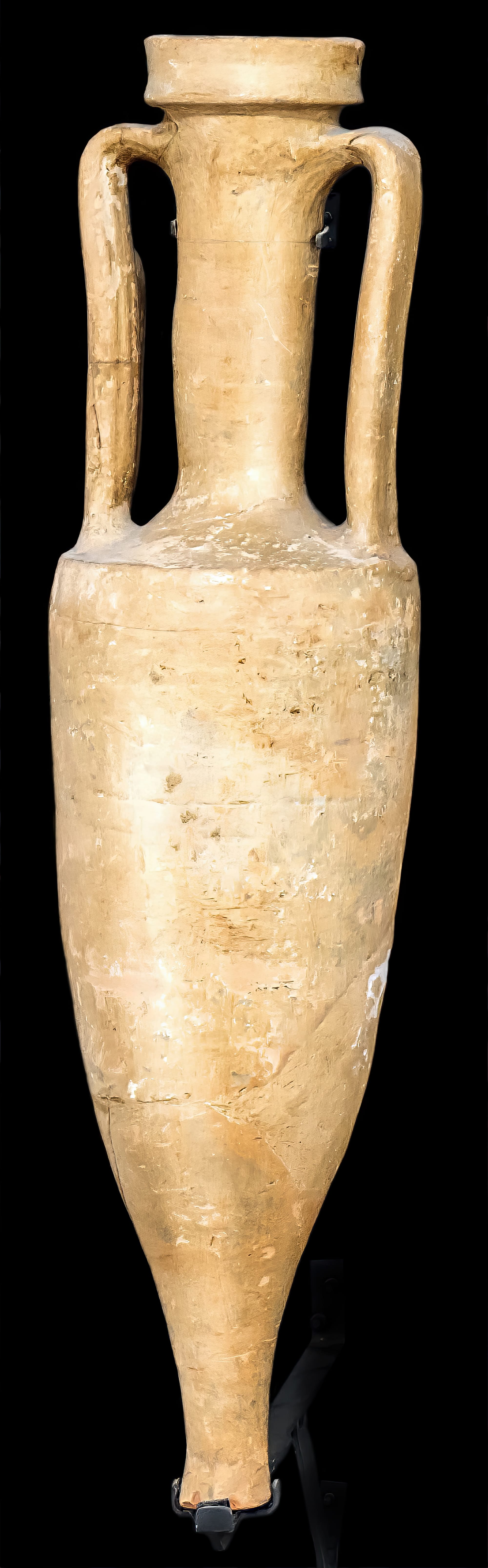
In 1959 a pioneering Italian diver reported a field of Roman amphorae on a cliff off Punta Chiappa, in Camogli, on the Ligurian coast. A re-check the following year found no trace of the main pile. After the case was presented at a conference in 1961, the site dropped out of the record. This October, Italian outlets reported that Carabinieri divers had found amphorae there again, and the question is whether it is the same wreck.
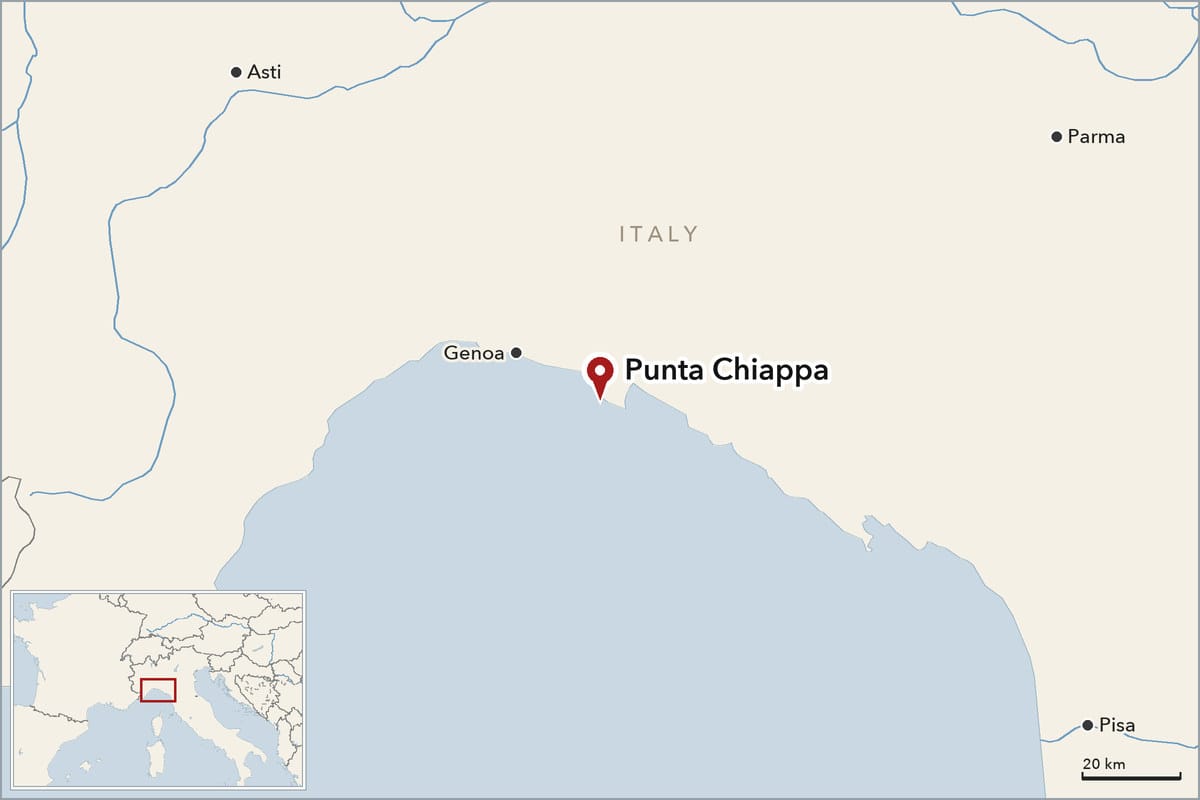
What the divers found
According to Storie & Archeostorie and Genova Quotidiana, divers of the Carabinieri's Genoa diving unit found an intact Roman amphora at a depth of over 40 metres during a training dive. The water lies within the Portofino Marine Protected Area. RaiNews gives the depth as 45 metres.
The find was reported to the Soprintendenza Archeologia, Belle Arti e Paesaggio per la Liguria. Later dives, supported by the Soprintendenza's technical service for underwater archaeology, counted nine amphorae. They lie close together along crevices in the cliff face. Genova Quotidiana says they are fixed to the rocky seabed and covered by thick coral-like concretions. That, it says, made them hard to see even on past surveys.
Two of the amphorae were lifted. Genova Quotidiana says they were the more exposed ones, and so more vulnerable in an area busy with divers; Finestre sull'Arte and Storie & Archeostorie say they were lifted because they were at greater risk of theft.
What the cargo says
According to Genova Quotidiana, the amphorae examined form a uniform cargo of wine containers of the Dressel 1A type, made in the Tyrrhenian area. It reports that their shape dates the cargo to between the end of the 2nd century BC and the first decade of the 1st century BC. Storie & Archeostorie gives the same type and origin, dating the cargo to between the end of the 2nd century BC and the early years of the 1st century BC.
Both outlets reported limits to what is known. As of 25 October, Genova Quotidiana said it was not yet possible to establish the size of the vessel or to say with certainty whether other finds lie there, and that new research would be needed. Storie & Archeostorie reported the same on 26 October.
The 1959 file
The case begins with Duilio Marcante, whom Genova Quotidiana calls a leading figure in Italian diving history. It reports that on 10 November 1959 he wrote to the Ligurian Superintendence of Antiquities and to the Experimental Centre for Underwater Archaeology at Albenga. He said that on a dive with Carabinieri divers he had found two amphorae wedged between rocks and cemented by marine concretions. On a quick look around he had noticed other finds, and a possible pile at the foot of the cliff hidden by mud. Genova Quotidiana says the team went back a few days after that first dive and recovered two intact amphorae, fearing they would be taken. Finestre sull'Arte dates the first dive to 7 November and the recovery to 9 November, the day before Marcante's letter.
On 8 and 9 May 1960, Gianni Roghi, a collaborator at the Albenga centre directed by Nino Lamboglia, checked the site with Marcante and the Carabinieri. They found no trace of the mud-covered pile. They did find one amphora tied with a rope, perhaps ready to be stolen, and three fragmentary amphorae embedded in concretions.
Lamboglia, whom both Genova Quotidiana and Finestre sull'Arte describe as the father of Italian underwater archaeology, presented the case at an international conference in Barcelona in September 1961. Finestre sull'Arte, quoting his account, has him placing the amphora field at a depth of 45 metres and concluding that the site had probably been visited by looters in the meantime. Genova Quotidiana reports that nothing more was heard of the wreck after that.
Is it the same site?
Italian outlets differ on this. RaiNews, on 22 October, called it a site "perhaps" the same as the one Marcante identified in 1959, and said the amphorae lead back "with every probability" to a wreck whose existence was already known. Those are our translations of "forse" and "con ogni probabilità".
Simon Luca Trigona, who heads the Soprintendenza's technical service for underwater archaeology, goes further. Genova Quotidiana and Storie & Archeostorie both report him saying that the match between the site found now and the one Marcante reported can be confirmed. Genova Quotidiana adds that the coordinates of the find allowed archaeologists to link the two.
In my view, that is where the file stands. A specialist of the Soprintendenza says the link can be confirmed, while the television report on the discovery stopped at a strong likelihood.
Protecting the site
Genova Quotidiana reports that the Soprintendenza says the find makes constant monitoring and regulation of diving necessary. Storie & Archeostorie says the site is now under surveillance and monitoring. It adds that further surveys should establish the extent of the deposit and whether more of the wreck survives.
Genova Quotidiana also reports that Vincenzo Tiné, the Soprintendenza's superintendent for Liguria, said the rediscovery reopens a nearly forgotten file and shows how much there is still to learn about submerged heritage, even in areas thought to be well known.
Sources
Finestre sull'Arte (2026) 'Nine amphorae on the seabed: a long-lost Roman shipwreck resurfaces in Camogli (Genoa)', Finestre sull'Arte, 22 October 2026, available at: https://www.finestresullarte.info/en/archaeology/nine-amphorae-on-the-seabed-a-long-lost-roman-shipwreck-resurfaces-in-camogli-genoa (Accessed: 28 October 2026).
Genova Quotidiana (2026) 'Punta Chiappa, dopo 65 anni ritrovato il relitto romano "fantasma": nove anfore sul fondale – VIDEO', Genova Quotidiana, 25 October 2026, available at: https://genovaquotidiana.com/2026-10-25/punta-chiappa-dopo-65-anni-ritrovato-il-relitto-romano-fantasma-nove-anfore-sul-fondale-video/ (Accessed: 28 October 2026).
Gregori, V. (2026) 'Ritrovato il "relitto perduto" di Punta Chiappa', RaiNews, 22 October 2026, available at: https://www.rainews.it/tgr/liguria/video/2026/10/ritrovato-il-relitto-perduto-di-punta-chiappa-ac3cfff9-6e9a-4cb9-b77d-2cfed79a3381.html (Accessed: 28 October 2026).
Percivaldi, E. (2026) 'Camogli, ritrovato il relitto romano "fantasma" di Punta Chiappa', Storie & Archeostorie, 26 October 2026, available at: https://storiearcheostorie.com/2026-10-26/camogli-relitto-romano-punta-chiappa/ (Accessed: 28 October 2026).
Picture credits
- Top picture: A Dressel 1 wine amphora, the family of type found at Punta Chiappa. This is not one of the Punta Chiappa amphorae. Dressel 1 B wine amphora, Musée Saint-Raymond, Toulouse — photo: Didier Descouens (Wikimedia Commons, CC BY-SA 4.0)
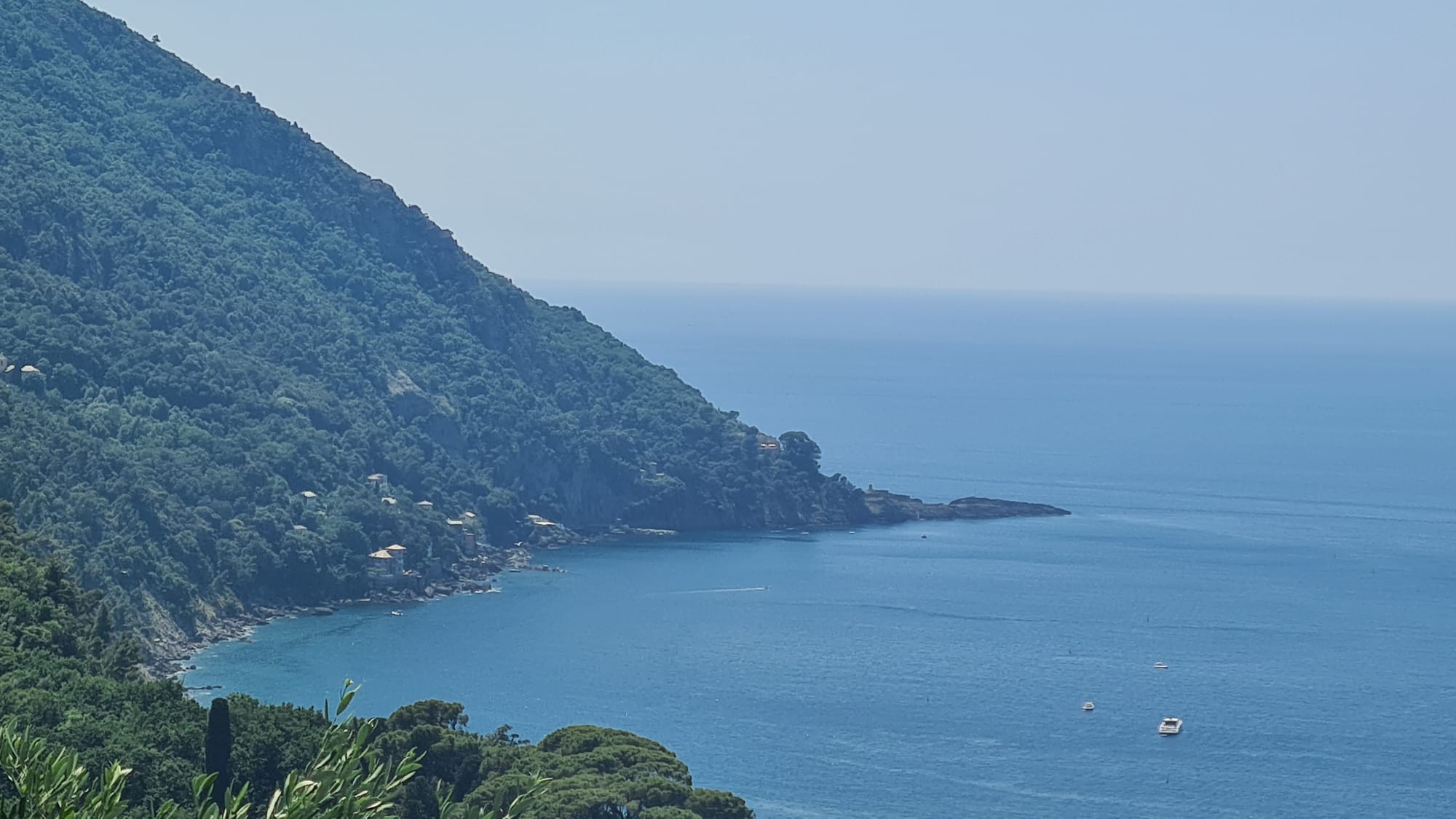
- Punta Chiappa, Camogli, on the Ligurian coast. Punta Chiappa, Camogli, Liguria — photo: PiccardoSann-a (Wikimedia Commons, CC BY-SA 4.0)
- Map: drawn from Natural Earth (public domain) and Wikidata.

