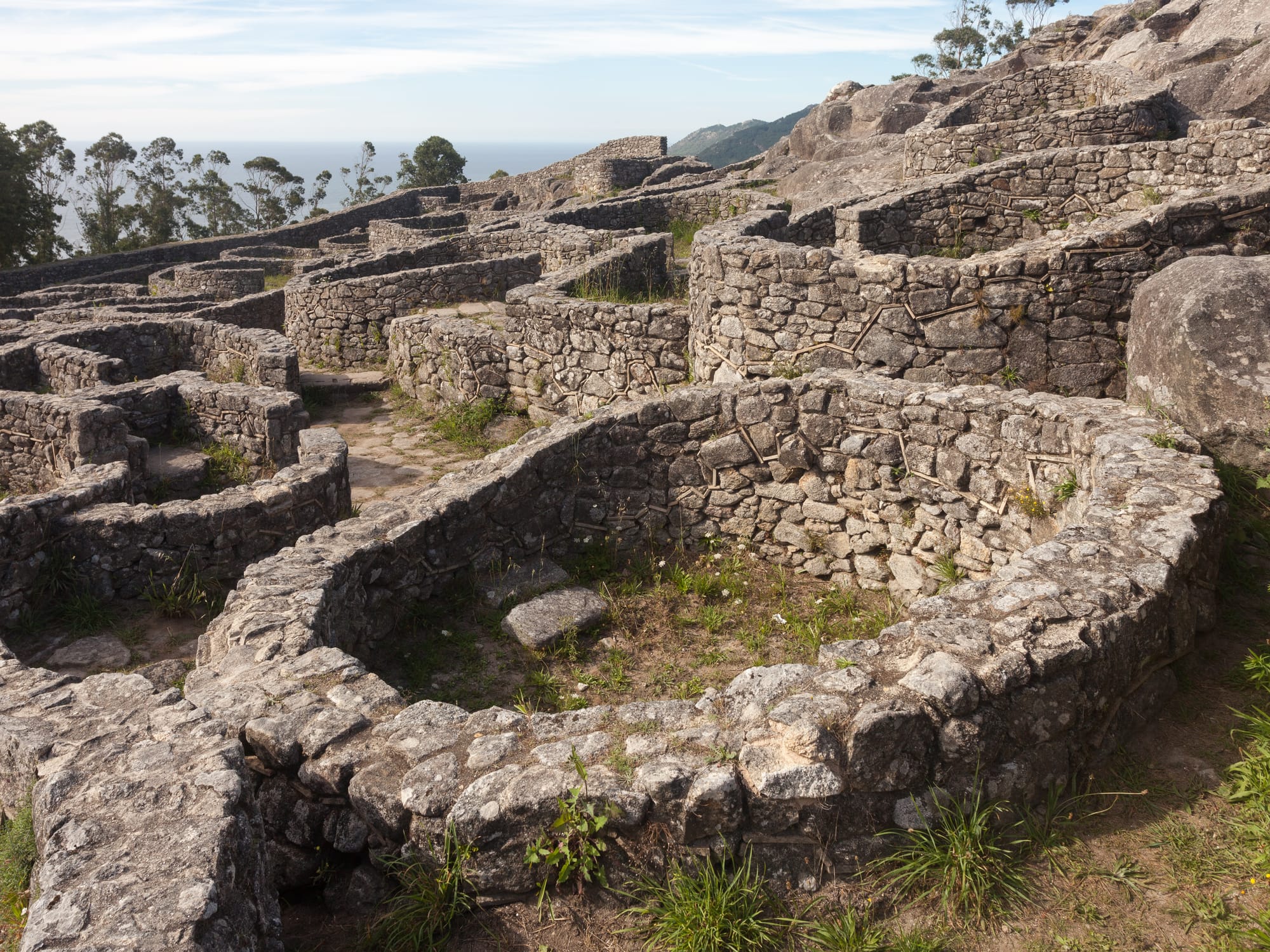
A small granite stone from a hillfort in Galicia has the archaeologists who found it asking an awkward question: who carved what, and when?
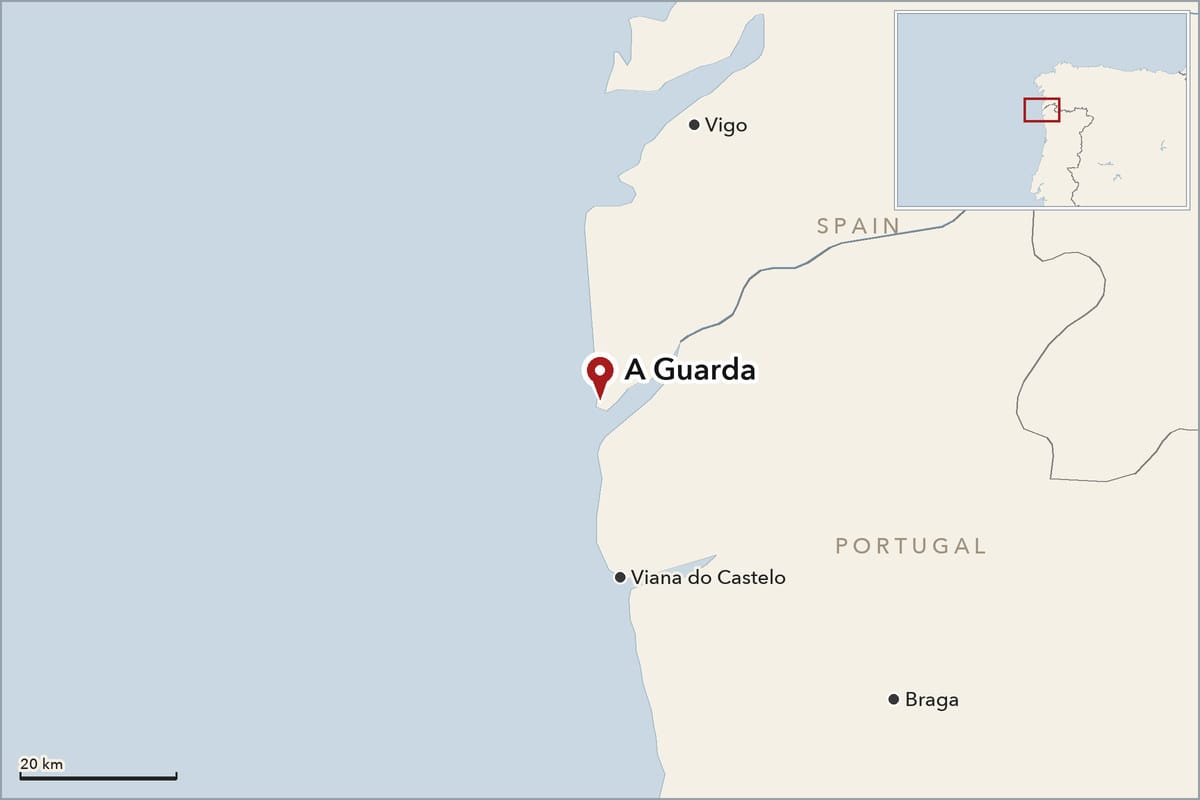
The stone comes from Castro do Pico da Bandeira, on Mount Torroso at A Guarda. One face carries a triskelion, a motif of three curved arms around a centre. The other carries a rougher petroglyph. Benito Vilas, an archaeologist with the Árbore Arqueoloxía cooperative, told the regional science site GCiencia that, as far as the team knows, no other stone in Galicia has both on opposite faces.
How it came out of the ground
The dig is directed by archaeologist Nerea Vilariño and promoted by the Comunidade de Montes de Salcidos. According to Historia de Galicia, which dates the find to 16 October 2026, the stone had been lifted from a rubble zone linked to a large circular building several days earlier. It drew little attention at first. Then morning light picked out engraved marks on one surface. They were geometric motifs the team could not yet identify, and one preliminary idea was a chain-like ornament.
The triskelion appeared only at the end of the campaign, when the team turned the stone over. Historia de Galicia reports that the carving had left a negative impression in the soil beneath it. Vilas told GCiencia the triskelion looks practically new. He attributes this to the face having fallen onto the ground, which kept other debris from striking it. He describes the petroglyph, also well preserved, as less worked and more rudimentary.
The stone measures about 25 or 26 by 33 centimetres (published reports give slightly different measurements).
A bigger house than the others
The building that yielded the stone is circular and about four metres across, according to Historia de Galicia. That is larger than the two huts documented in 2025, which measured roughly two and three metres. The team has also identified an entrance area that keeps part of its original layout, along with flat stones forming a paved surface that may belong to the area outside the new building or to its entrance.
Finds include many Roman amphora fragments and stone elements identified as amarradoiros. On 20 October, Historia de Galicia said how these relate to activity in or around the building will have to be determined by archaeological analysis. The team's preliminary reading of the finds places the occupation between the late 1st century BC and the late 1st century AD.
Vilas told GCiencia that the new building contains many things the earlier huts lacked, and that the team thinks it had more prestige. He also said more than half of it is still unexcavated. Historia de Galicia reports that the paving, the hut's size and its entrance make the team think it may have been a building of particular function or importance, though the final reading depends on finishing the dig and studying the materials.
Carved together, or reused?
The open question is the stone's history. Vilas told GCiencia that working out its original use depends on knowing whether the two symbols were carved at the same time or belong to different contexts. He floated one possibility: the petroglyph may already have been there, and the stone was later broken up and used as building material. Only a time machine, he said, would settle it for certain. More examples might show a pattern, but he said that for now this stone is the only one with these features, so a link between the symbols cannot be confirmed.
Arkeonews reports that the carvings themselves have not been securely dated. Vilariño, answering questions from Above The Norm News, said the chronology is hard to establish, and that the second carving consists of geometric forms that cannot yet be linked to any specific period. She also said: "the fact that it was carved on both sides is quite unusual."
Neither the stone's original position in the building nor the meaning of the symbols is settled. Historia de Galicia reports Vilariño saying that in other settlements, ornamental elements of this type are associated with the architecture of prominent buildings, and that this stone might come from a more singular structure; the report adds that Castro decorations could be built into door jambs or lintels. It also says such motifs cannot automatically be given a religious, symbolic or social function.
Parallels, and their limits
Vilas pointed GCiencia to Briteiros in Portugal, where the Pedra Formosa, part of a castro sauna, has a petroglyph on its reverse. He added that it does not have the same characteristics as the Galician piece. Arkeonews describes the comparison as a possible line of enquiry rather than evidence that the objects served the same purpose.
Closer to home, Vilariño sees a resemblance between the new triskelion and a decorative motif on one end of a torque from the Santa Trega hillfort. Santa Trega has also produced four-armed motifs, called tetraskeles. Historia de Galicia reports that this allows artistic comparison but does not by itself show a direct relationship between the two sites.
What happens next
The site has a long history. Historia de Galicia says it was excavated in the 1920s, and work resumed in 2022 through an initiative of the Concello do Rosal with the Comunidade de Montes. The 2025 and 2026 campaigns followed. The same report says the investigation is at an early stage and only a limited part of the settlement has been explored.
As of 20 October, Historia de Galicia reported that no date or scale had been set for a third consecutive campaign, though the Comunidade de Montes de Salcidos wanted to keep investigating. Above The Norm News, in a piece dated 23 October, also reported the sponsors' continuing interest. In GCiencia on 22 October, Vilas said the stone would go to the Museo Quiñones de León in Vigo once the work is finished. Before that, he said, it would be taken on guided visits so local people can see it.
My view: the cautious line the excavators themselves take is the right one. It is a striking object in a documented excavation context. The question of whether the two carvings are contemporary is, for now, genuinely open.
Sources
Altuntaş, L. (2026) 'Unique 2,000-Year-Old Stone with Two Mysterious Symbols Discovered in Galicia', Arkeonews, 23 October 2026, available at: https://arkeonews.net/unique-2000-year-old-stone-with-two-mysterious-symbols-discovered-in-galicia/ (Accessed: 24 October 2026).
Freeman, D. (2026) 'Mysterious 2,000-Year-Old Stone Found With Two Different Symbols Carved Into Opposite Sides', Above The Norm News, 23 October 2026, available at: https://www.abovethenormnews.com/2026/10/23/mysterious-stone-discovered-in-spain/ (Accessed: 24 October 2026).
Gallego, N. (2026) 'Descuberto un trisquel cun gravado petróglifo na Guarda, unha peza única en Galicia', GCiencia, 22 October 2026, available at: https://www.gciencia.com/retro/descuberto-un-trisquel-cun-gravado-petroglifo-na-guarda-unha-peza-unica-en-galicia/ (Accessed: 24 October 2026).
Sobrino Platas, D. M. (2026) 'Pico da Bandeira: o castro do Baixo Miño que sorprende os arqueólogos cos seus achados', Historia de Galicia, 20 October 2026, available at: https://historiadegalicia.gal/2026/10/pico-da-bandeira-o-castro-do-baixo-mino-que-sorprende-os-arqueologos-cos-seus-achados/ (Accessed: 24 October 2026).
Picture credits
- Top picture: Santa Trega, the better-known hillfort a few kilometres from Pico da Bandeira. Image: Santa Trega hillfort, by Luis Miguel Bugallo Sánchez (Lmbuga), CC BY-SA 4.0 (source)
- Map: drawn from Natural Earth (public domain) and Wikidata.
