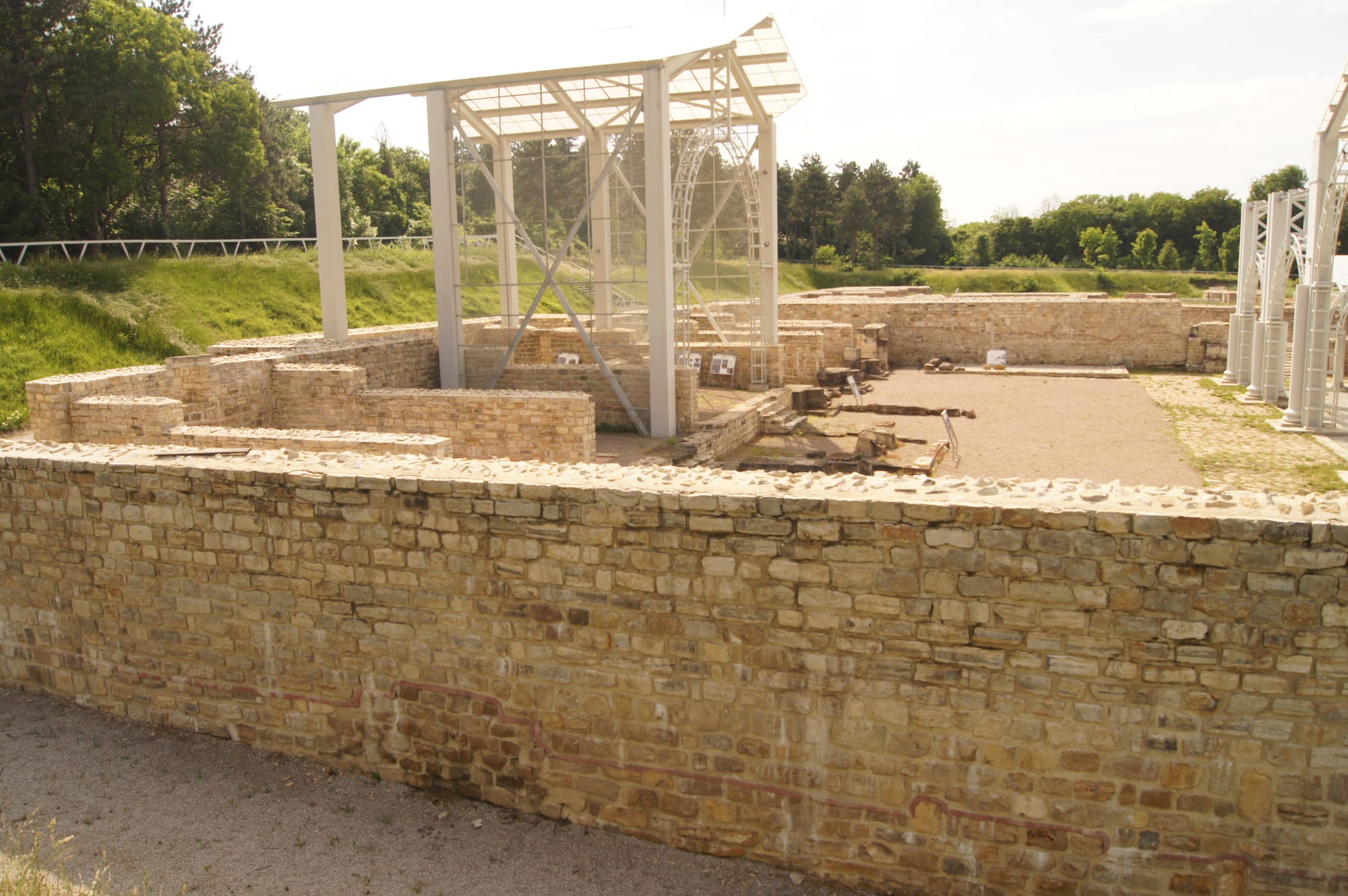
A Polish team digging at the Roman legionary fortress of Novae in northern Bulgaria says it has uncovered a monumental building that may have been a praetorium, the residence of the legion's commander. The team itself treats that as a working identification, not a closed question.
The University of Warsaw announced the results of its 2026 campaign on 17 September 2026. The excavators are from its Centre for the Study of the Antiquity of South-Eastern Europe, directed by Professor Piotr Dyczek. The university's announcement said that everything indicates the building was a rich residence, and that more than 3,000 square metres of it have now been exposed.
What was found
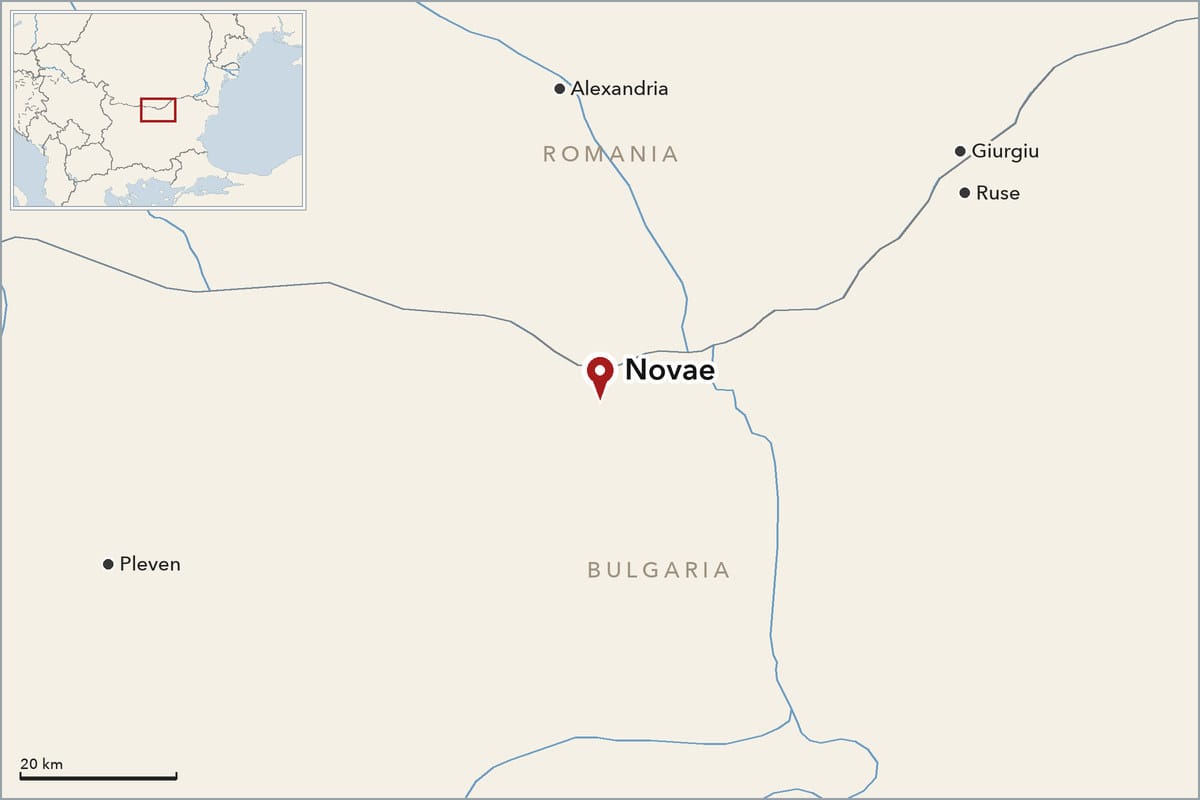
Novae lay in northern Bulgaria and, in Roman and Byzantine times, was an important military centre. It was the seat of the First Italian Legion (legio I Italica) and also a civilian town of the province of Moesia Inferior. A joint Polish-Bulgarian team has dug there continuously since 1960, and three Polish expeditions now work at the site, one of them the Warsaw centre.
According to the university, this season's work produced:
- further pools belonging to a bath complex;
- fragments of plaster decorated with paintings;
- a floor made of small multicoloured bricks;
- two inscribed altars, one of them almost intact and carrying a full inscription;
- the head of the god Mithras;
- a fragment of a marble head from an official imperial portrait;
- a pinecone-shaped architectural finial, an element the university describes as rarely found along the Lower Danube.
The announcement singles out a small bronze figurine of the god Priapus. Only five similar objects are known from the Lower Danube area. In comments to PAP's Science in Poland service, Dyczek said that remains of Egyptian cults at Novae may indicate that people in the legion at that time had come into contact with the Middle East.
Why "praetorium"?
The case for the identification rests on size, baths and furnishings. Dyczek told Science in Poland that the building was originally about 4,500 square metres. That would make it the third-largest structure in the camp by area, after the headquarters and the hospital. Archaeology Magazine, relaying the Science in Poland report on 26 October 2026, gives the figure as "more than 4,500 square feet" instead. The Warsaw announcement and the Polish agency's report both put the exposed area in square metres.
On the baths, Dyczek is quoted in Archaeology Magazine as saying: "Few people had private baths in Roman fortresses." He continued that there were communal baths for the entire legion and that "In principle, only the legate could have his own large bathhouse." He added that the furnishings were luxurious, citing fragments of bronze furniture, figurines and precious ceramics.
The caution is his own. In the same quotation he said "Although this will have to be confirmed, everything points to a residence." In the Science in Poland report he called a praetorium the most probable explanation, and described the legate as the legion's commanding general, whom he characterised as Caesar's eyes and ears, watching for any sign of mutiny.
Dyczek also set out what is at stake. Science in Poland notes that many legionary camps are known, including in Bulgaria, but that a large share lie under modern towns, so only fragments can be excavated. Large residences attributable to legates, he said, are very few, and in effect none has been uncovered in full, because they are always reconstructed from pieces. If the team's supposition is confirmed, he added, it would be the first fully excavated building of this type. By the team's own figures, about 3,000 of an original 4,500 square metres have been exposed so far.
That is a strong claim made conditionally, and the conditions are the team's own. An unconfirmed praetorium is still a large, richly appointed building with its own baths, which is a notable thing to find in a legionary fortress.
Avar remains
The campaign also exposed, for the first time at the site, remains of late-antique buildings linked to the Avars. The Science in Poland report describes them as a nomadic people who appeared in Europe in the middle of the 6th century. The university says the find offers new arguments in the debate over the Avars' migration south of the Danube.
Dyczek described one very large house, most probably a leader's, and several small houses of about 5 square metres, all with hearths. He also reported a rare Avar earring. He told Science in Poland it was essentially the first find of its kind in northern Bulgaria.
The Danube at low water
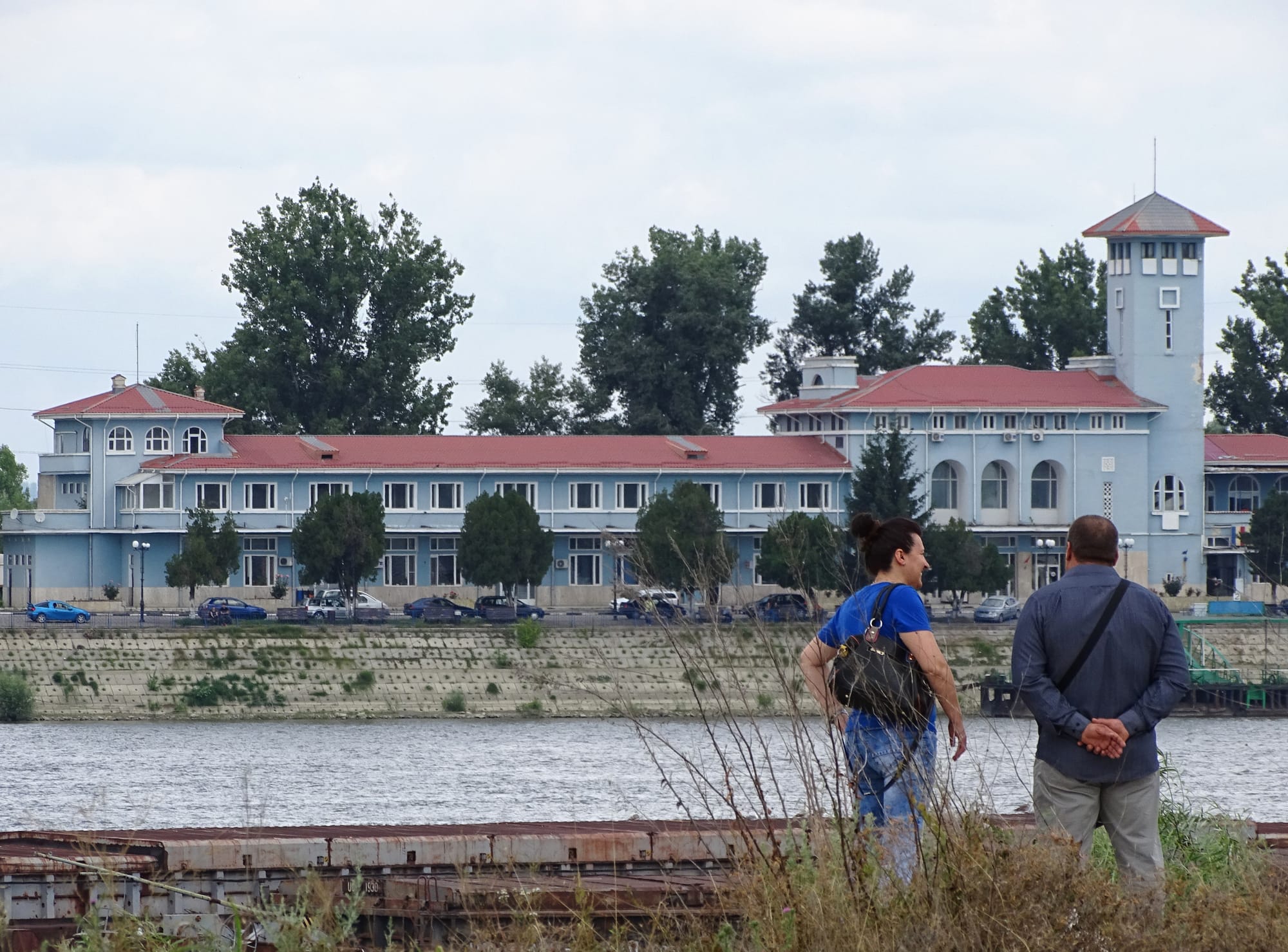
The low water in the Danube also gave the team an exceptional opportunity to carry out a survey. Archaeologists documented exposed ancient architectural elements, vessel fragments and roof tiles. The university says the data may help solve one of the important puzzles about Novae, the location of its ancient port.
What to watch
The Warsaw announcement and the Science in Poland report both say everything points to the building having been a residence. Only the second ties it to the legate, and there it is preliminary. A full publication of the inscriptions on the two altars and of the building's plan would be the natural place to test the praetorium reading against the evidence.
Sources
Archaeology Magazine (2026) 'Possible Praetorium Found at Roman Fortress in Bulgaria', Archaeology Magazine, 26 October 2026, available at: https://archaeology.org/news/2026/10/26/possible-praetorium-found-at-roman-fortress-in-bulgaria/ (Accessed: 26 October 2026).
Krajczyńska-Wujec, E. (2026) 'Pozostałości ogromnej, luksusowej rezydencji odkryli archeolodzy w twierdzy Novae', Nauka w Polsce (PAP), 26 September 2026, available at: https://naukawpolsce.pl/aktualnosci/news%2C115061%2Cpozostalosci-ogromnej-luksusowej-rezydencji-odkryli-archeolodzy-w-twierdzy (Accessed: 26 October 2026).
Uniwersytet Warszawski (2026) 'Rezydencja i kolejne zabytki w Novae', Uniwersytet Warszawski, 17 September 2026, available at: https://www.uw.edu.pl/rezydencja-i-kolejne-zabytki-w-novae/ (Accessed: 26 October 2026).
Picture credits
- Top picture: The site of Novae, northern Bulgaria. Novae Principia, photo by Rjdeadly (CC BY-SA 4.0), via Wikimedia Commons
- The Danube. Danube at Ruse, Bulgaria, photo by Adam Jones (CC BY-SA 2.0), via Wikimedia Commons
- Map: drawn from Natural Earth (public domain) and Wikidata.

