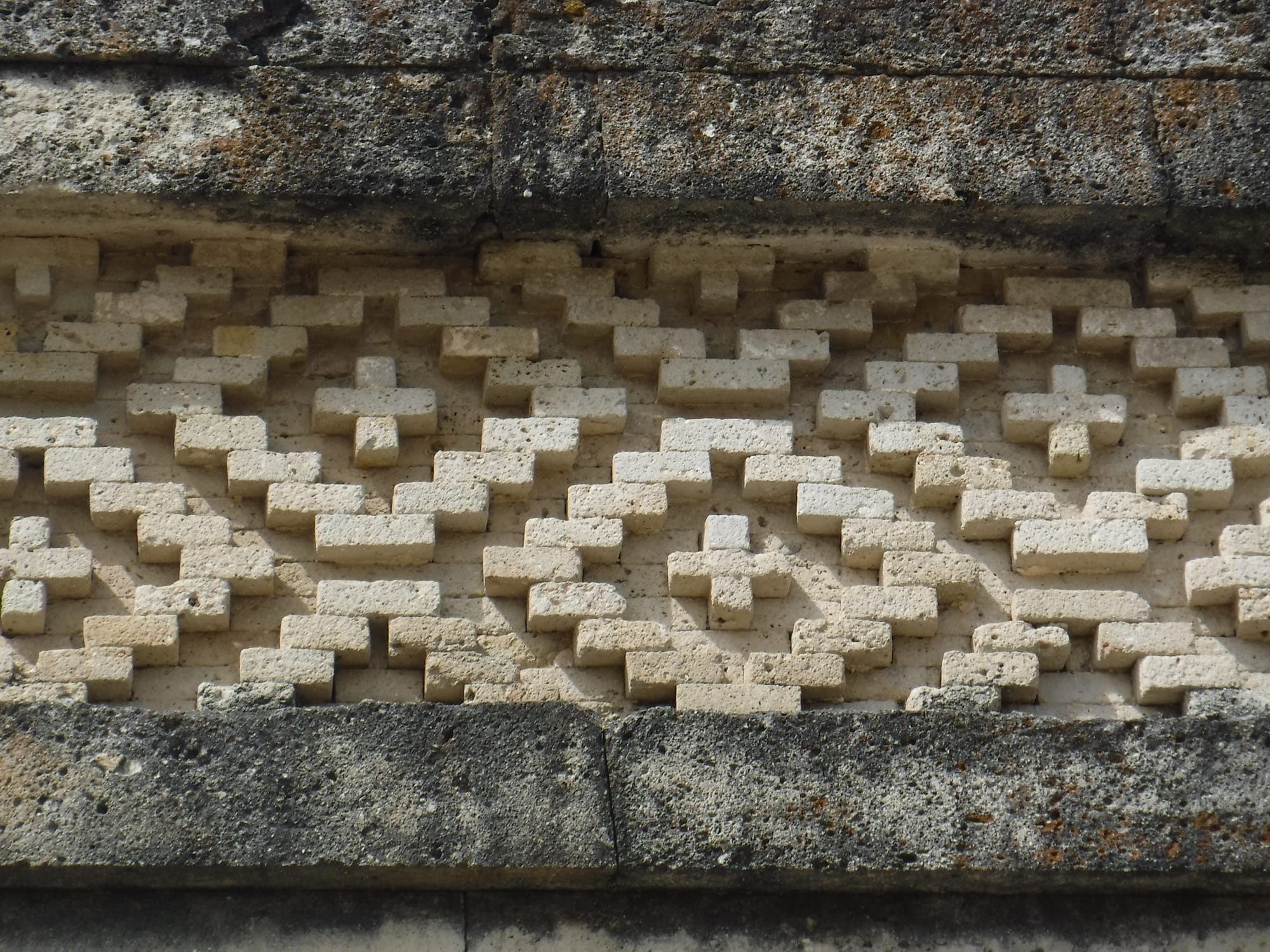
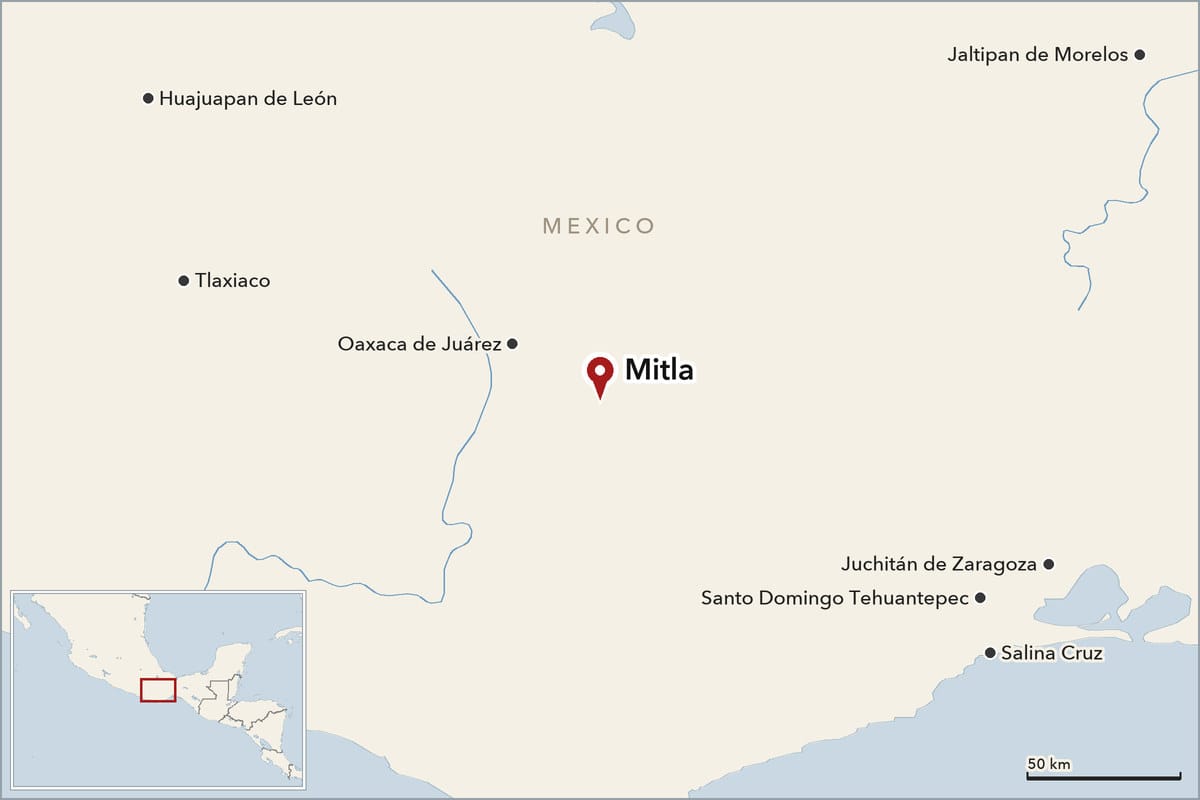
A study published online on 3 November 2026 reconstructs what it describes as a previously undocumented Zapotec system of architectural measurement at Mitla, in Oaxaca, Mexico. It appears in the journal Ancient Mesoamerica, published by Cambridge University Press, under the title 'Measurement as Cultural Practice: Cosmogonic Order in the Architecture of Mitla, Oaxaca'. The author is Genevieve Lucet of the Instituto de Investigaciones Estéticas at UNAM, Mexico, and the article is Open Access under a CC BY 4.0 licence.
A system built on the palm
According to the study, the system rests on a common anthropometric core, the palm, reproduced through generative bases. That core unit is approximately eight centimetres, which Arkeonews describes as the width of four fingers held side by side. From that core a family of units was generated, the most frequent being about 1.84 m and 1.92 m. The study identifies the primary unit as P23, at 1.84 m.
Challenging an older reading
The study challenges earlier interpretations that no coherent measurement system existed at Mitla. Corner (1899) had read the apparent irregularities of the Hall of the Columns as evidence that precise measurement was absent from the site. Arkeonews, reporting on the study on 5 November, framed the debate as having continued for more than a century.
What was measured
Three architectural groups were analysed: the Church, the Arroyo and the Columns. Arkeonews reports that their doorway openings, columns, courtyards and other architectural elements were examined across nine structural complexes. The Adobe and South groups could not be included because of their poor state of conservation. The analysis rests on architectural plans made by aerial and terrestrial photogrammetry, supplemented by direct measurements of the three groups.
Time, death and the 52-year cycle
The study says the combination of units and numerical entities incorporated concepts associated with ritual time, death, renewal and cosmic order. It says recurrent dimensional relationships involving the 52-year Mesoamerican cycle indicate that measurement formed part of a broader symbolic framework. Arkeonews states that the 365-day solar and 260-day ritual calendars realign after 18,980 days, the 52-year cycle. Arkeonews reports that the total width of the doorway openings and the columns on the facade of Hall 21, in the Columns Group, corresponds to 156 times the eight-centimetre unit, three times 52. Mitla is known in Zapotec as Lyobáa, meaning the place where souls rest.
Arkeonews reports that the altar in Complex E is not located exactly in the centre of the courtyard, and that, according to the researcher's calculations, its distances to the north and south are based on measurement units associated with the numbers 9 and 13. It adds that in some Mesoamerican traditions these numbers are linked to the nine lords of the night and the thirteen lords of the day.
How far the claims go
The study says its interpretations rest on recurring patterns documented in multiple contexts, not on isolated numerical coincidences. Arkeonews notes that the connection does not definitively prove the intentions of the ancient architects. Arkeonews also says the researcher identified traces of similar measurement units at Atzompa and Suchilquitongo. In our view, resting on repeated patterns rather than single numbers is a sensible way to build such an argument, though the symbolic readings remain interpretation.
Sources
Altuntaş, L. (2026) 'Ancient Measurement System Linking Time, Death, and the Cosmos Discovered', Arkeonews, 5 November 2026, available at: https://arkeonews.net/ancient-measurement-system-linking-time-death-and-the-cosmos-discovered/ (Accessed: 5 November 2026).
Lucet, G. (2026) 'Measurement as Cultural Practice: Cosmogonic Order in the Architecture of Mitla, Oaxaca', Cambridge Core, 3 November 2026, available at: https://www.cambridge.org/core/journals/ancient-mesoamerica/article/measurement-as-cultural-practice-cosmogonic-order-in-the-architecture-of-mitla-oaxaca/0366051D6AC2851DD373EFF634661102 (Accessed: 5 November 2026).
Picture credits
- Top picture: The stone buildings of Mitla, Oaxaca, Mexico. Image: Leonardo Vazquez (Gohni), CC BY-SA 4.0, via Wikimedia Commons
- Map: drawn from Natural Earth (public domain) and Wikidata.
