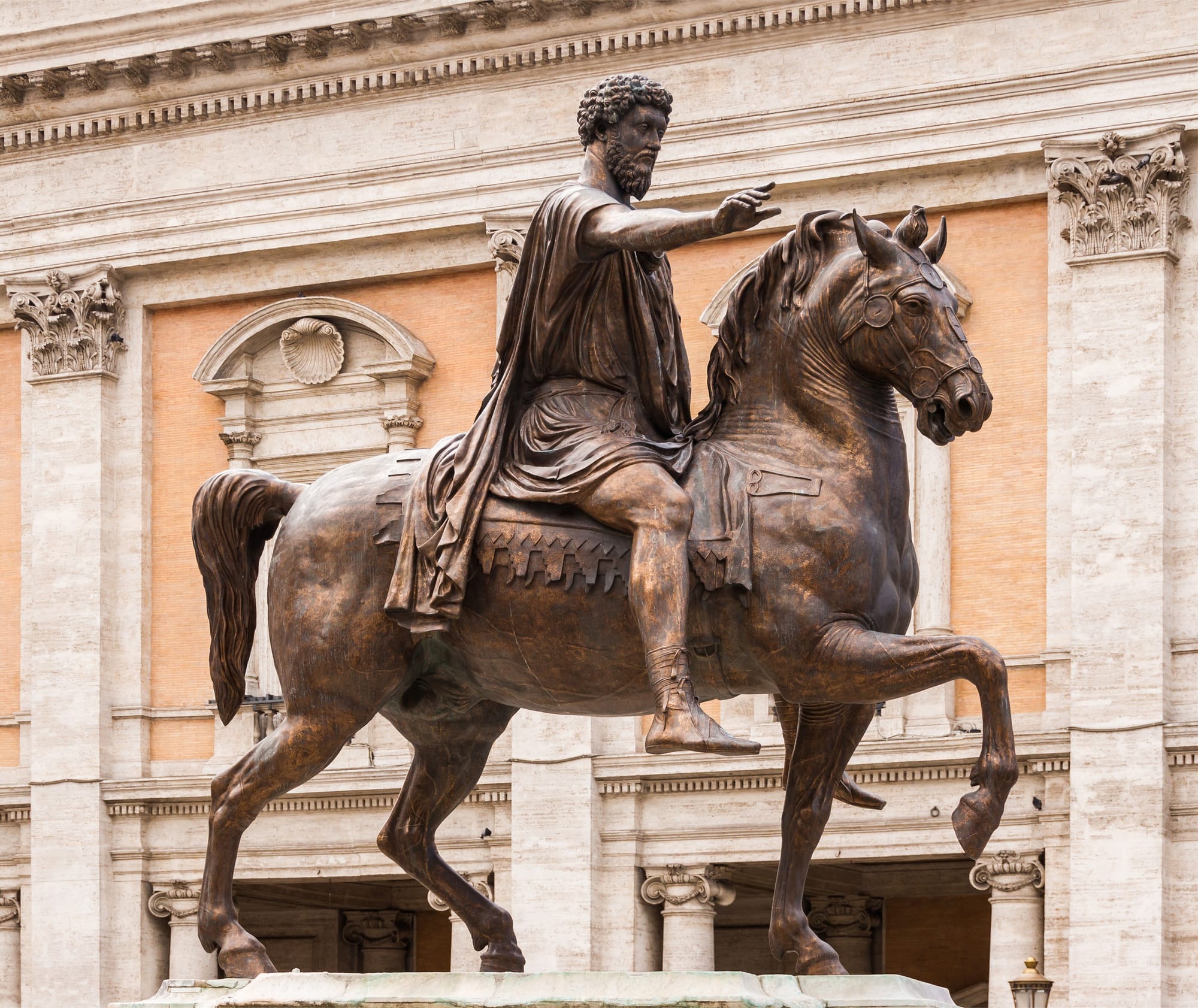
According to National Museums Scotland (NMS), new research shows that a huge monument to the emperor Antoninus Pius once stood in the Scottish Borders. Ahead of the exhibition Roman Scotland: Life on the Edge of Empire, which opens at the National Museum of Scotland this weekend, the statue has been rebuilt around the gilded bronze leg that survives. NMS says the sculpture is the only known example from Scotland.
A leg from a bog
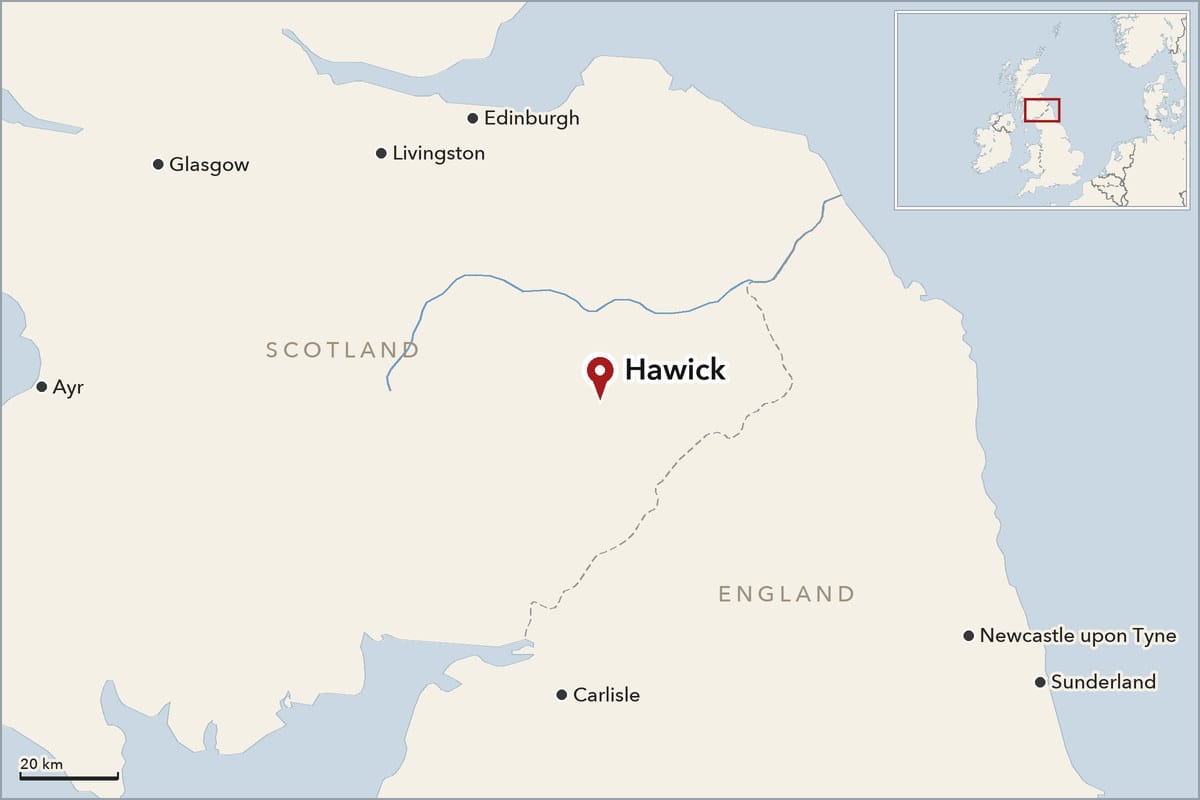
The lower leg, larger than life-sized and ending in a boot-clad foot, was found in a bog at Milsington, near Hawick, in 1820. NMS dates it to the AD 140s and counts it among the most striking Roman Britain treasures in its collection. For more than two centuries it was thought to be plunder from somewhere further south, possibly the major Roman town of York, Eboracum.
NMS says experts now believe the leg came from a statue of Pius on horseback, comparable to the well-known surviving monument to his successor Marcus Aurelius in Rome, put up to mark the conquest of southern Scotland. A broader study of statue fragments from the Roman frontier found that bronze imperial statues, equestrian ones among them, stood in frontier forts, which made a Scottish setting for this statue more plausible.
Taken down, not smashed
NMS says the manner of the leg's removal points to Romans deliberately taking down a prized sculpture as they pulled out of southern Scotland in the AD 160s or 180s, not to an act of local revenge. Examination of the top of the leg found no cut marks; it remains exactly as it was cast. Where the knee has no gilding, NMS says, the area was covered by a tunic or cloak, and lumps at the top filled the folds of the tunic and fixed the leg to it.
NMS sets this against statues wrecked on purpose after a battle or once an emperor's memory was condemned, or broken up for scrap, which it says usually leave irregular and far smaller pieces. NMS adds that careful removal and burial like this appears widely in Roman Scotland when the Antonine conquests were given up, citing Antonine Wall inscriptions and the Inveresk Mithras altars, which are in the exhibition too. A leg left exactly as it was cast is the kind of detail that makes the revenge explanation harder to hold.
Why Pius
According to the Independent, researchers concluded the statue was likely to show Antoninus Pius on horseback. NMS says only one emperor took particular notice of his Scottish victories: Antoninus Pius. It says his conquest of southern Scotland was the sole foreign campaign he marked with the title Imperator, a battle-honour meaning commander that signalled an emperor's victory. According to Britannica Online, as cited by the BBC, Antoninus Pius was emperor from AD 138 to 161 and succeeded Hadrian, and during his reign the Antonine Wall, a garrisoned barrier of 36 miles (58km), went up and pushed the Roman frontier 100 miles (160km) north of Hadrian's Wall.
Where is the rest?
Dr Fraser Hunter, NMS's principal curator of prehistoric and Roman archaeology, said: "This really turns on its head our understanding of Rome’s second attempt at conquering Scotland." He also said the find offers "a tantalising glimpse into the kind of grand monuments which once stood in southern Scotland". He ended on a question: "But it begs the question ... where is the rest of the statue?"
The exhibition
Roman Scotland: Life on the Edge of Empire runs at the National Museum of Scotland from 14 November 2026 to 18 April 2027. NMS says the exhibition looks at life on a frontier, taking in the soldiers who tried to conquer the land, the families and communities near each military base, and the local people whose lives and lands the invasion threatened. Tickets can be booked at nms.ac.uk/RomanScotland.
Sources
Cameron, L. (2026) 'Statue of Roman emperor once stood in Scottish Borders, research suggests', The Independent, 12 November 2026, available at: https://www.independent.co.uk/news/uk/home-news/scottish-borders-scotland-roman-national-museum-of-scotland-edinburgh-b3083523.html (Accessed: 12 November 2026).
National Museums Scotland News (n.d.) 'Huge gilded statue of Roman Emperor Antoninus Pius once stood in southern Scotland', National Museums Scotland News, available at: https://media.nms.ac.uk/news/huge-gilded-statue-of-roman-emperor-antoninus-pius-once-stood-in-southern-scotland (Accessed: 12 November 2026).
Rinaldi, G. (2026) 'Giant statue of Roman emperor once stood in the Scottish BordersBritish Broadcasting CorporationBritish Broadcasting Corporation', BBC News, 12 November 2026, available at: https://www.bbc.com/news/articles/cx5y139gyqzmo (Accessed: 12 November 2026).
Picture credits
- Top picture: A replica of the equestrian statue of Marcus Aurelius in Rome. Experts say the Milsington statue was similar to the surviving original. Photo: Jebulon, via Wikimedia Commons (CC0)
- Map: drawn from Natural Earth (public domain) and Wikidata.
