Archaeologists working for Egypt's Supreme Council of Antiquities have found a burial ground holding hundreds of coffins, some of stone and some of pottery, at Kom Abu Billo, a site in the governorate of Menoufia. Xinhua reported on 18 November that the Ministry of Tourism and Antiquities announced the find on Wednesday, and that it also includes human burials and gold artefacts in the province, north of Cairo. Xinhua's report spells the site Tell Abo Bellou.
Dating and setting
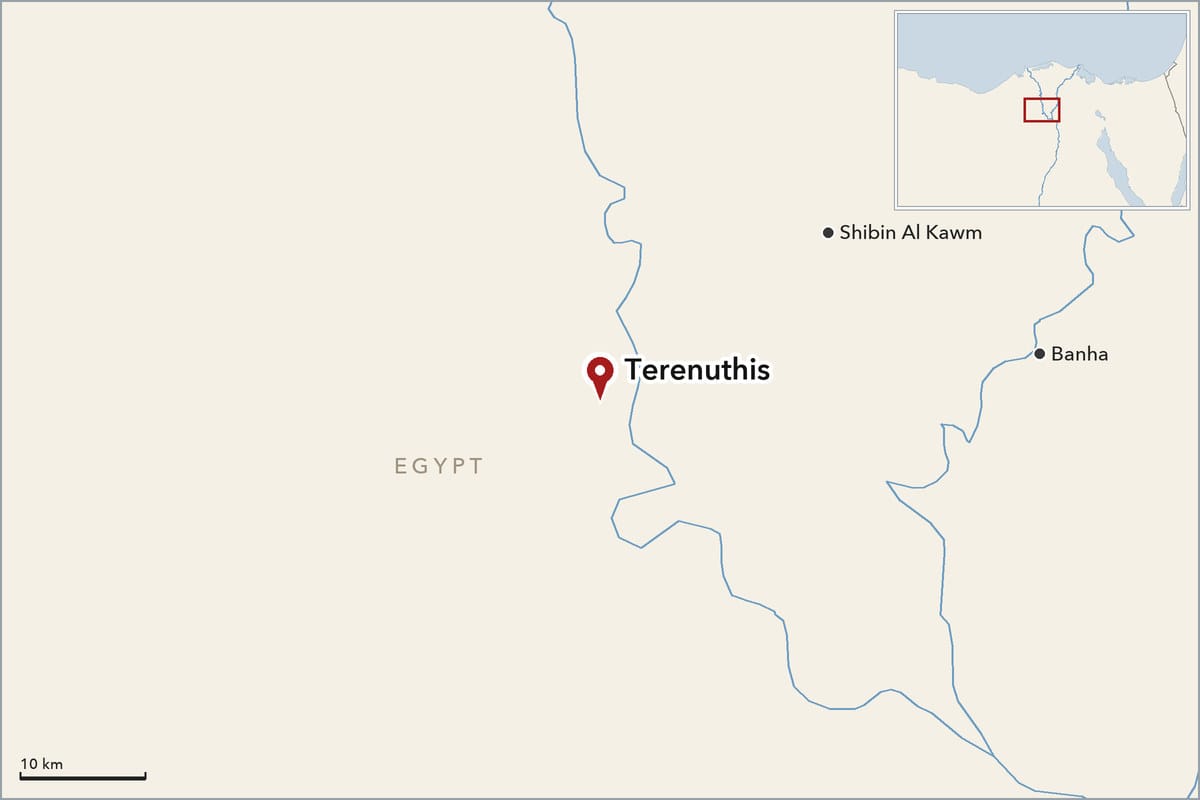
Mohamed Abdel Badie, head of the Egyptian Antiquities Sector, said initial studies dated the cemetery to the early Ptolemaic period, in the third and second centuries BC, with some burials from the end of the Late Period. Daily News Egypt reported that the dating draws on stratigraphy, pottery, coffin styles, burial customs and tomb architecture. According to the ministry, as La Brújula Verde reports it, the cemetery is in the area of ancient Terenouthis, today Tarrana, a city that stood where Wadi el-Natrun opens to the east; the valley has been worked since antiquity for natron, the natural salt embalmers used to dry out bodies. La Brújula Verde notes that Herodotus recounts in his Histories (II, 86) that embalmers submerged the body in natron for seventy days.
Earlier work at the site uncovered the remains of the city and a temple dedicated to the goddess Hathor as “Lady of Turquoise”. According to La Brújula Verde, blocks with reliefs survive from the temple, including one of the first Ptolemaic king, Ptolemy I. It adds that, because the Greek name Terenouthis recalls the Egyptian Ta-Renenutet, some specialists interpret it as the land of Renenutet, the serpent goddess of harvests.
The site has a longer history of excavation, according to La Brújula Verde, which cites the Kelsey Museum of the University of Michigan for the name Kom Abu Billo being an Arabic deformation of a Coptic name meaning the hill of Father Apollo. It says the museum's archaeologist Enoch Peterson excavated there in 1935 for five weeks, opened about forty tombs, and took more than 5,000 objects to Michigan, including almost 200 funerary stelae from the Roman period. It adds that Egyptian archaeologists excavated and mapped more than a thousand tombs and burials between 1969 and 1971, and that the French Institute of Oriental Archaeology (Ifao) maintains a project there today.
What was found
Burials take several forms: coffins of stone and of pottery, the remains of wooden coffins, mudbrick tombs with domed roofs, and one tomb with a limestone lining. Mostafa Rizk, director general of Menoufia antiquities, said the top layer of the site held hundreds of stone coffins, some missing their lids and others smashed by looting and quarrying in earlier times. According to Daily News Egypt, remains of pottery coffins were also found, some with stylised human features, others fully anthropoid, or shaped like a human body. The human remains inside were in poor condition, but traces of embalming materials and resins survived, as did layers of cartonnage and plaster painted yellow, red, blue and gold.
Among the finds are gold tongues, an earring, a gold necklace pendant and sheets of gold. The team also recovered scarabs of schist and of lapis lazuli, wedjat eyes and other small amulets, and many faience ushabti figurines, some carrying hieroglyphic inscriptions. Offering tables, small limestone heads, sphinx figurines and pieces of stone statues of the falcon god Horus came to light too, along with two falcon burials. Isis-Aphrodite appears on several terracotta pieces, among them part of a vessel lid on which she sits on a lotus flower nursing the infant Harpocrates. La Brújula Verde also describes several plaster-covered clay pieces bearing a scene of the facade of a royal palace with two pylons, crowned by two crouching lions facing each other, with falcon heads and the double crown of Upper and Lower Egypt.
Who was buried here
Hisham El-Leithy, secretary-general of the Supreme Council of Antiquities, said it was the first discovery at the site of so many burials and coffins in an open burial courtyard, with architectural features still extending beneath the sand and debris. He said a preliminary study of the grave goods suggests the cemetery was used mainly by members of the middle class. Abdel Badie said the burials reflect funerary practices tied to the deities Renenutet, Osiris, Isis and Hathor, whose worship was associated with the area at different times. Minister of Tourism and Antiquities Sherif Fathy said the variety of burial types, coffins and artefacts reflected the site's historical importance, according to Daily News Egypt.
The announcement's two headline judgements, the early Ptolemaic date and the middle-class users, both come from initial or preliminary studies. La Brújula Verde points out that the release speaks of hundreds of sarcophagi but gives no concrete figure, nor how many bodies have been recovered. Excavation, study and documentation at the site will continue.
Sources
Carvajal, G. (2026) 'Hundreds of Stone and Clay Sarcophagi Emerge from the Sand in the Nile Delta: They Were Not Pharaohs but Residents of a City of Salt', La Brújula Verde, 18 November 2026, available at: https://www.labrujulaverde.com/en/2026/11/hundreds-of-stone-and-clay-sarcophagi-emerge-from-the-sand-in-the-nile-delta-they-were-not-pharaohs-but-residents-of-a-city-of-salt/ (Accessed: 18 November 2026).
Daily News Egypt (2026) 'Egyptian archaeologists uncover cemetery with hundreds of coffins at Kom Abu Billo in Menoufia', Dailynewsegypt, 18 November 2026, available at: https://dailynewsegypt.com/2026/11/18/egyptian-archaeologists-uncover-cemetery-with-hundreds-of-coffins-at-kom-abu-billo-in-menoufia/ (Accessed: 18 November 2026).
Xinhua (2026) 'Egypt discovers ancient cemetery dating back to Ptolemaic Period', Big News Network.com, 18 November 2026, available at: http://www.bignewsnetwork.com/news/279441137/egypt-discovers-ancient-cemetery-dating-back-to-ptolemaic-period (Accessed: 18 November 2026).
Picture credits
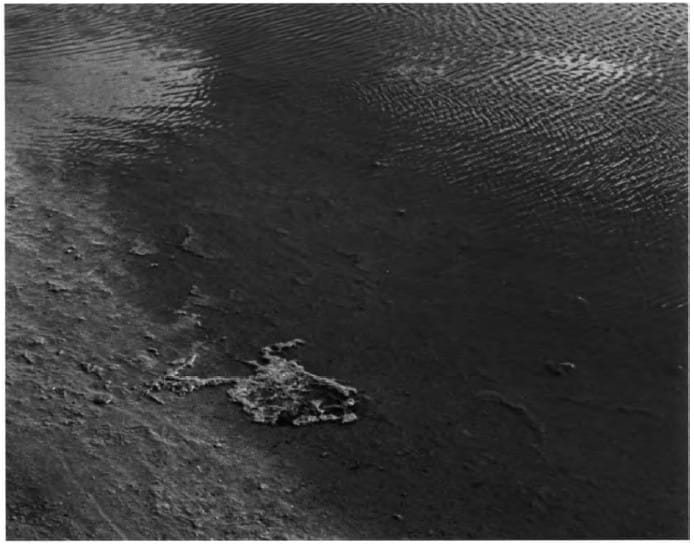
- Top picture: Wadi El Natrun, at whose eastern entrance the cemetery lies. Image: NASA (public domain) (source)
- Map: drawn from Natural Earth (public domain) and Wikidata.
