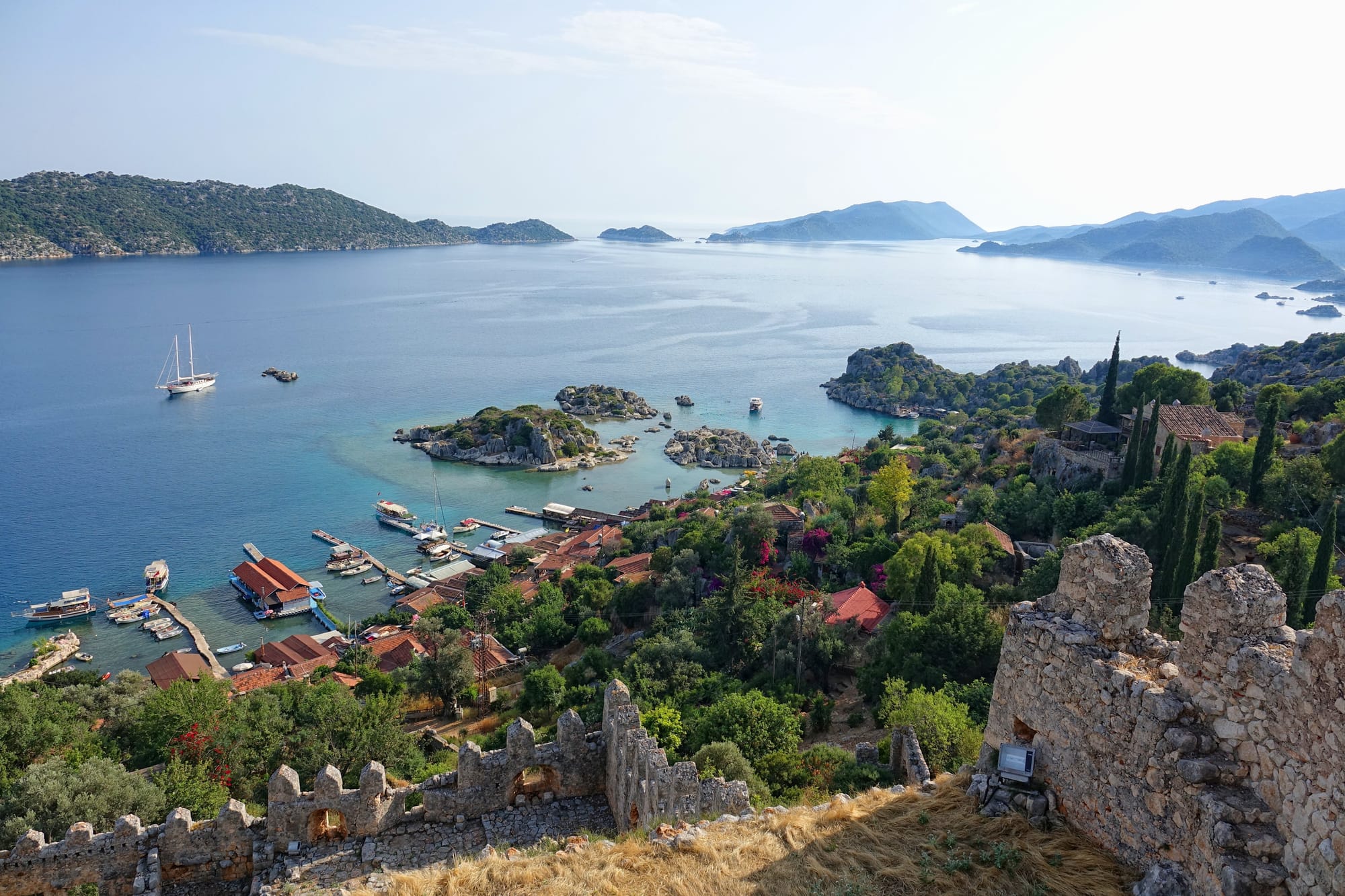
On 14 October 2026, Türkiye's Culture and Tourism Minister, Mehmet Nuri Ersoy, announced a wreck near Kekova Island, off Antalya. Türkiye Today reported that he described the discovery as evidence of what he called the world's oldest shipwreck. Hürriyet ran the same superlative in its headline. The excavators' published abstract, written before this year's excavation season, makes no ranking either way.
What the excavators actually published
The wreck has a published write-up: "Preliminary Report on the Early Bronze Age Shipwreck in the Kekova Region of Antalya", by Hakan Öniz and Ceyda Öztosun, published in the Journal of Maritime Archaeology on 24 July 2026. Öniz is at the Mediterranean Civilisations Research Institute, Akdeniz University.
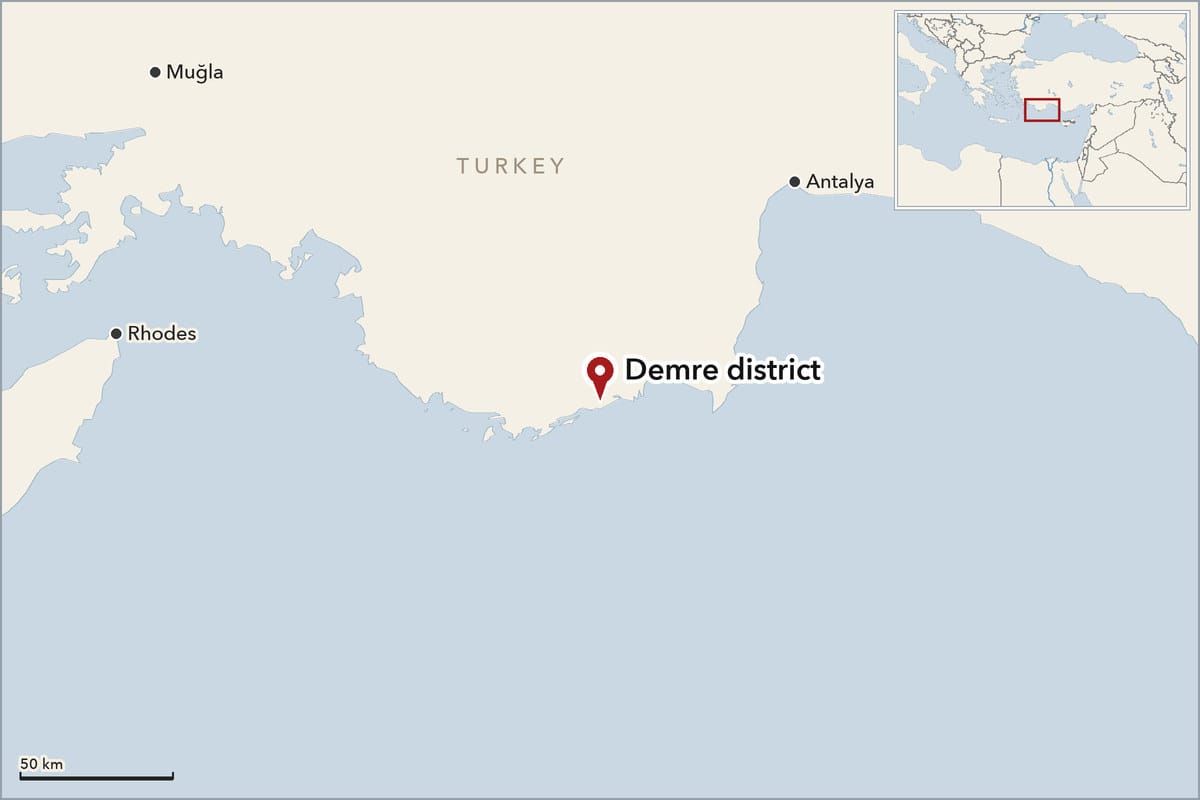
Its abstract says Akdeniz University surveyed the Kekova region, in the Demre district of Antalya, in 2024, and documented a shipwreck carrying Early Bronze Age amphorae. The amphorae are, in the abstract's words, "generally similar to Early Bronze Age Levantine types", with side handles and flat bases. Two amphorae were recovered for close study, one in 2024 and one in 2025.
The abstract's conclusion is hedged: "Current information suggests that the shipwreck is from a small vessel that sank while sailing east to west during the Early Bronze Age."
It never sets the wreck against any other. A preliminary report calls itself preliminary for a reason. The abstract says further remains are likely to be uncovered in planned 2026 excavations.
Where the 4,400 to 4,700 years comes from
Hürriyet reports that excavations began in 2026 under the Antalya Museum Directorate, with the Culture and Tourism Ministry's permission and Öniz as scientific lead. Its report says the amphorae recovered from the water were determined to be about 4,400 to 4,700 years old. Türkiye Today gives the same range and says the finds suggest the wreck belongs to the Early Bronze Age.
Neither Turkish report explains how that range was reached; the BBC reports Öniz as saying the amphorae's design matches amphorae unearthed in Egypt and the Middle East that are known to be 4,400 to 4,700 years old. The abstract calls the cargo Early Bronze Age amphorae.
What the minister said
Ersoy's statement, as Türkiye Today quotes it: "Clay analyses indicate that the amphorae were probably produced in workshops in the Jordan Valley. The discovery of similar examples in Egypt, Troy and Crete is of great importance for understanding the trade networks that connected different regions by sea."
Hürriyet and Türkiye Today carry the same claims, without naming any scientist behind them. Both say clay analyses point to Jordan Valley workshops. Both say similar amphorae have been found near the pyramids at Giza, Saqqara and Abusir in Egypt, and at Troy and Crete. Türkiye Today says researchers believe the vessel may have set sail from a port on the Levantine coast and been heading for Troy or Crete.
The abstract supports part of this. It calls the amphorae generally similar to Levantine types and says current information suggests an east-to-west voyage. It does not name the Jordan Valley or give a clay provenance.
The anchors
Three stone anchors were found around the site: two with three holes and one with a single hole. Here the abstract is blunt: "It is not yet known which, if any, of these anchors belong to the wreck." Accounts that present the anchors as the ship's own, as the BBC's photo caption does, go further than the excavators' published abstract, which was written before this year's excavation season.
The goat-and-churn story
The most quotable detail in the coverage is an amphora with nine markings and two holes in its body. Hürriyet says examinations indicate it may have been a churn amphora for making cheese or butter. Türkiye Today says researchers suggest this, and that it raises the possibility that sailors carried goats, milked them and made dairy products at sea. Neither report names who made the suggestion.
The abstract describes the two recovered amphorae as differing in technical characteristics, clay composition and intended use. It says no other amphora of one of these types has yet been found at the site, without saying what that one was for. The other, it says, resembles amphorae used commercially to carry agricultural products such as wine and olive oil, with two parallel lines made with a pointed tool and a zigzag pattern. The abstract does not mention nine markings, holes or a churn. The full paper has a section on the amphora symbols that the abstract does not summarise; until its reading is known, the churn reading is a suggestion in the news coverage, and should be treated as one.
A verdict
The find itself looks solid. There is an Early Bronze Age wreck off Kekova, with Levantine-style amphorae, a published preliminary report and a named excavation team backed by the Culture Ministry. That is enough to make it worth following.
"World's oldest" is another matter. It comes from the minister's announcement and from the BBC, which attributes it to archaeologists without quoting any of them saying so. The BBC does offer a comparison: it names the previous record holder as a wreck off Dokos, in southern Greece, dated to about 4,200 years ago. The excavators' published abstract makes no such comparison. Until the full excavation is published, the careful phrasing is the one the abstract itself uses: current information suggests a small vessel, sailing east to west, in the Early Bronze Age.
The report's acknowledgements thank the Ministry of Culture and Tourism, the ministry's Legacy for the Future project, AXA Insurance Company and the Mediterranean Archaeology Association for supporting the excavations and research.
Sources
Francis, A., Morelle, R. and Church, K. (2026) 'World's oldest shipwreck found off coast of Turkey', BBC News, 14 October 2026, available at: https://www.bbc.co.uk/news/articles/c6gr80rk1yyko (Accessed: 17 October 2026).
Hürriyet Haber Merkezi (2026) 'Bakan Ersoy duyurdu: Dünyanın en eski batığı Kekova'da bulundu', Hürriyet, 14 October 2026, available at: https://www.hurriyet.com.tr/gundem/bakan-ersoy-duyurdu-dunyanin-en-eski-batigi-kekovada-bulundu-43340873 (Accessed: 17 October 2026).
Öniz, H. and Öztosun, C. (2026) 'Preliminary Report on the Early Bronze Age Shipwreck in the Kekova Region of Antalya', Journal of Maritime Archaeology, 21, article 41, 24 July 2026, available at: https://link.springer.com/article/10.1007/s11457-026-09532-3 (Accessed: 17 October 2026).
Türkiye Today Newsroom (2026) 'World's oldest shipwreck uncovered off Türkiye's Mediterranean coast', Türkiye Today, 14 October 2026, available at: https://www.turkiyetoday.com/culture/worlds-oldest-shipwreck-uncovered-off-turkiyes-mediterranean-coast-3230269 (Accessed: 17 October 2026).
Picture credits
- Top picture: Kekova Island, off the Antalya coast. A view of the area, not of the wreck. Photo: Bjørn Christian Tørrissen, CC BY-SA 4.0, via Wikimedia Commons
- Map: drawn from Natural Earth (public domain) and Wikidata.
