The House of the Carbonized Furniture at Herculaneum reopened to the public from Thursday 9 July 2026. The Parco Archeologico di Ercolano describes it as a house that spent almost thirty years closed to visitors. The house is one of the domus being brought back into the visitor route as part of a wider restoration programme.
A bed and a table, charred in 79 AD
The house takes its name from a small table and a high-backed bed that still kept traces of fabric and the remains of the rope netting that held the wooden slats. Napolike reports that both pieces were charred by the eruption of 79 AD. The park says they were found in the room called the oecus Cyzicenus, which opens onto the garden through a large window. They were brought to light in 1932 and 1933, during the excavations directed by Amedeo Maiuri.
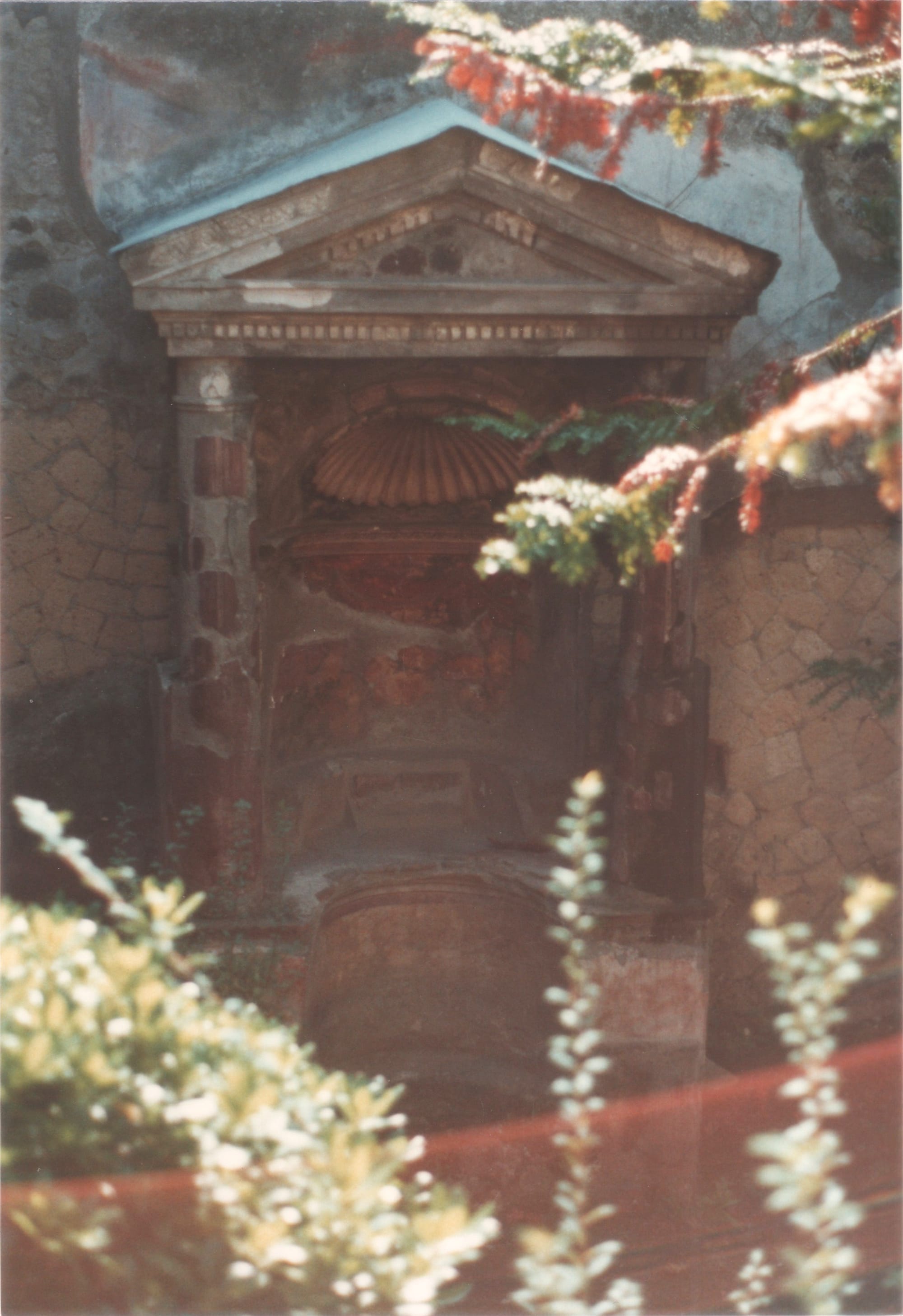
The park says the house was built in the Republican era and that its rooms are arranged around the atrium and a garden at the back, where a small temple-shaped lararium received the family's devotions. On the upper floor, a columned loggia overlooked the atrium from the house's first building phase, and the walls, decorated in the Fourth Style, show signs of several phases of renewal. The triclinium, to the right of the entrance, keeps a mosaic floor with a marble emblem and still-life decoration, and the tablinum has a mosaic with a marble inset and traces of its frescoed ceiling.
More than ten years of restoration
According to the park, the reopening follows a restoration that began more than ten years ago with urgent work to rebuild roofs and secure decorated surfaces. The work was done under a public-private partnership between the park and the Packard Humanities Institute, which operates through the Packard Institute for Cultural Heritage and has been active at Herculaneum for twenty-five years. Architect Rossella Di Lauro of PHI-IPBC said the most recent work continued the earlier phase, giving priority to unresolved problems such as rebuilding some wooden floors, replacing damaged lintels and restoring the columns facing the atrium on the upper floor above the tablinum roof. She said the column work relied on accurate three-dimensional surveys and careful dismantling and controlled reassembly, in close cooperation with conservator-restorers.
Di Lauro said the iron lintel cases that hold exceptional pieces of charred wood were replaced with new wooden structures that still act as protective cases, with the carefully restored fragments placed back inside. She said this design was chosen to make future monitoring and maintenance of the wooden finds easier. The park says wall paintings, decorated ceilings and floors long damaged by invasive vegetation were secured and stabilised and, where possible, cleaned and retouched. It describes the reopening of the atrium and surrounding rooms as a first step, with the garden and the restoration of the lararium to come.
The furniture itself, and what comes next
The charred wood that gave the house its name is now on display on the mezzanine floor of the Herculaneum Antiquarium, according to the park. A small table from this house is among the objects shown there. Park director Federica Colaiacomo said the reopening is about more than recovering a building, describing it as returning a human story of everyday gestures, a bed and a table, that the eruption froze in time.
The house is part of a project titled Restauro conservativo delle strutture e delle superfici decorate delle domus più importanti di Ercolano, which provides for reopening six of the site's most important domus. The park's July announcement said the Casa del Colonnato Tuscanico and the Casa del Sacello di Legno had already reopened in March 2025, and that other domus would follow in autumn 2026. On 5 November the park announced that the Casa dell'Atrio a Mosaico and the Casa a Graticcio had also become accessible after decades of closure. ANSA reported on 6 November that the programme, called Progetto Domus, is financed with 5 million euros from the Vesuvio-Pompei-Napoli institutional development contract.
Jane Thompson, who has managed the public-private collaboration for the Packard foundations since it began in 2001, said in the park's 5 November statement that the work meant dealing not only with ancient material but also with restorations made during Maiuri's open-air excavation. She added that the centenary of Maiuri's open-air excavation would be celebrated next year.
Sources
Agenzia ANSA (2026) 'Riaprono nel parco archeologico di Ercolano due domus chiuse per decenni', Agenzia ANSA, 6 November 2026, available at: https://www.ansa.it/sito/notizie/cultura/arte/2026/11/06/riaprono-nel-parco-archeologico-di-ercolano-due-domus-chiuse-per-decenni_b678a6dd-9f14-4945-bc8c-c9c74be470f2.html (Accessed: 18 November 2026).
Celli, M. (2026) 'Herculaneum: After 30 years, the House of Carbonized Furniture reopens: the restored domus.', Napolike.com, 10 July 2026, available at: https://www.napolike.com/ercolano-riapre-casa-mobilio-carbonizzato (Accessed: 18 November 2026).
Parco Archeologico di Ercolano (2026) 'Ercolano, dopo il restauro riaprono al pubblico la Casa dell’Atrio a Mosaico e la Casa a Graticcio', Parco Archeologico di Ercolano, 5 November 2026, available at: https://ercolano.cultura.gov.it/ercolano-dopo-il-restauro-riaprono-al-pubblico-la-casa-dellatrio-a-mosaico-e-la-casa-a-graticcio/ (Accessed: 18 November 2026).
Parco Archeologico di Ercolano (n.d.) 'A ERCOLANO TORNA ALLA LUCE, DOPO QUASI TRENT’ANNI DI SILENZIO, LA CASA DEL MOBILIO CARBONIZZATO', Parco Archeologico di Ercolano, available at: https://ercolano.cultura.gov.it/a-ercolano-torna-alla-luce-dopo-quasi-trentanni-di-silenzio-la-casa-del-mobilio-carbonizzato/?lang%3Den (Accessed: 18 November 2026).
Picture credits
- Top picture: The lararium of the House of the Carbonized Furniture at Herculaneum, photographed in 1982. Photo: Dave Cooper, CC BY-SA 4.0, via Wikimedia Commons
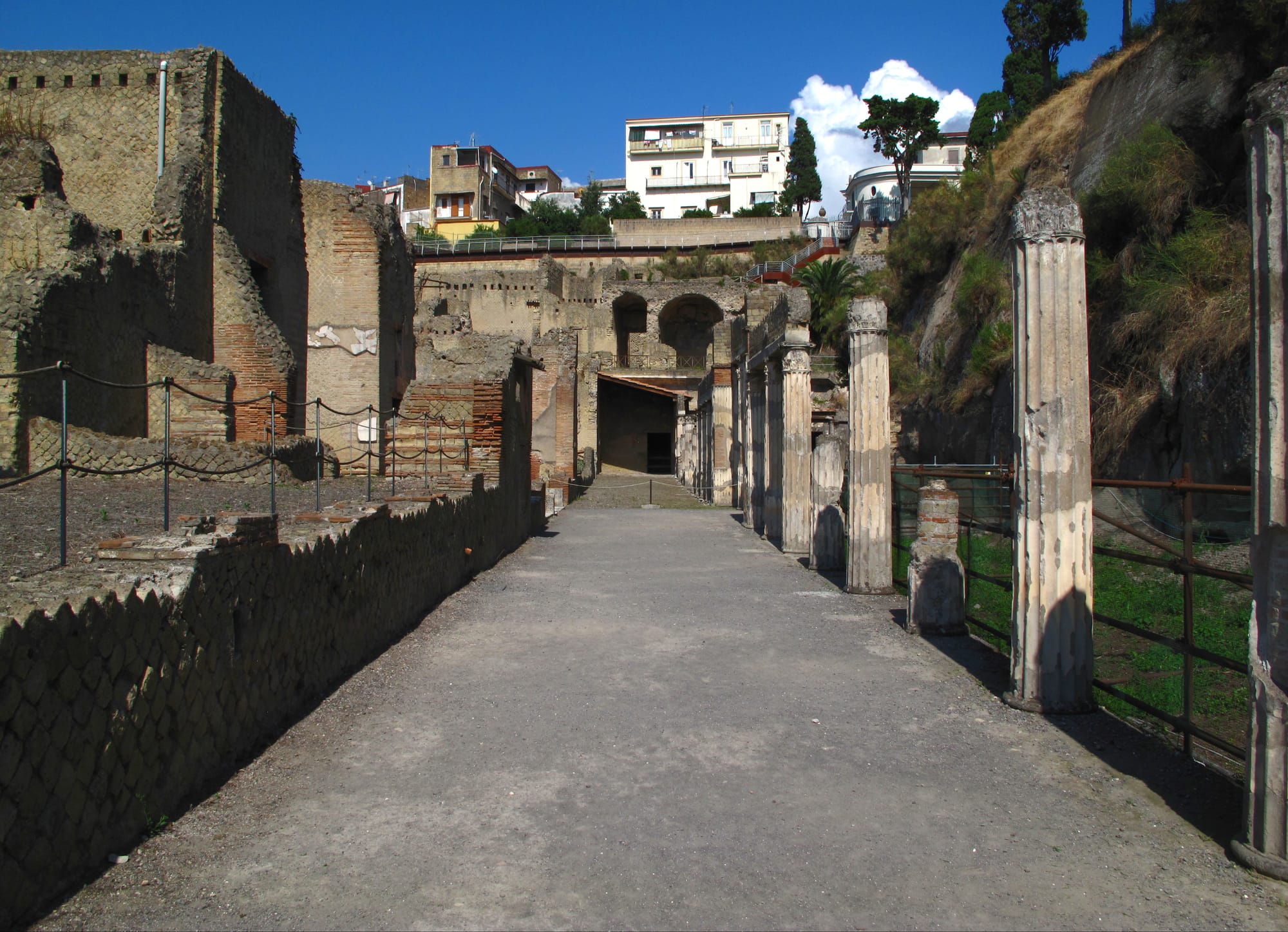
- The excavated town of Herculaneum. Herculaneum archaeological site — photo by Rutger van der Maar, CC BY 2.0 (source)
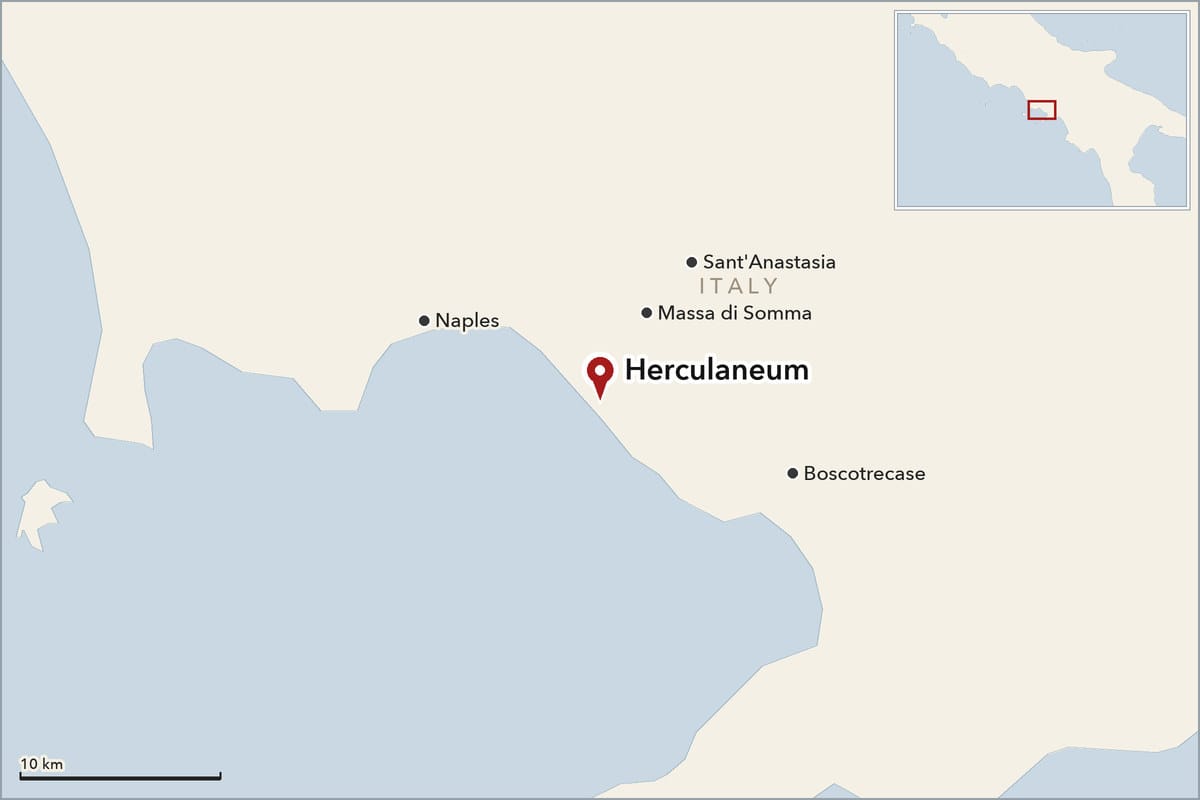
- Map: drawn from Natural Earth (public domain) and Wikidata.

