Researchers have narrowed the search for the lost harbour of the ancient Greek city of Gela to a buried coastal inlet in southern Sicily, Greek Reporter reported on 2 November 2026. The study behind the report, in the journal Heritage, was published on 22 January 2026. Its authors write that the available data show marine environments persisted in the Conca sector during the Greek age, which allows them to hypothesise an ancient harbour there.
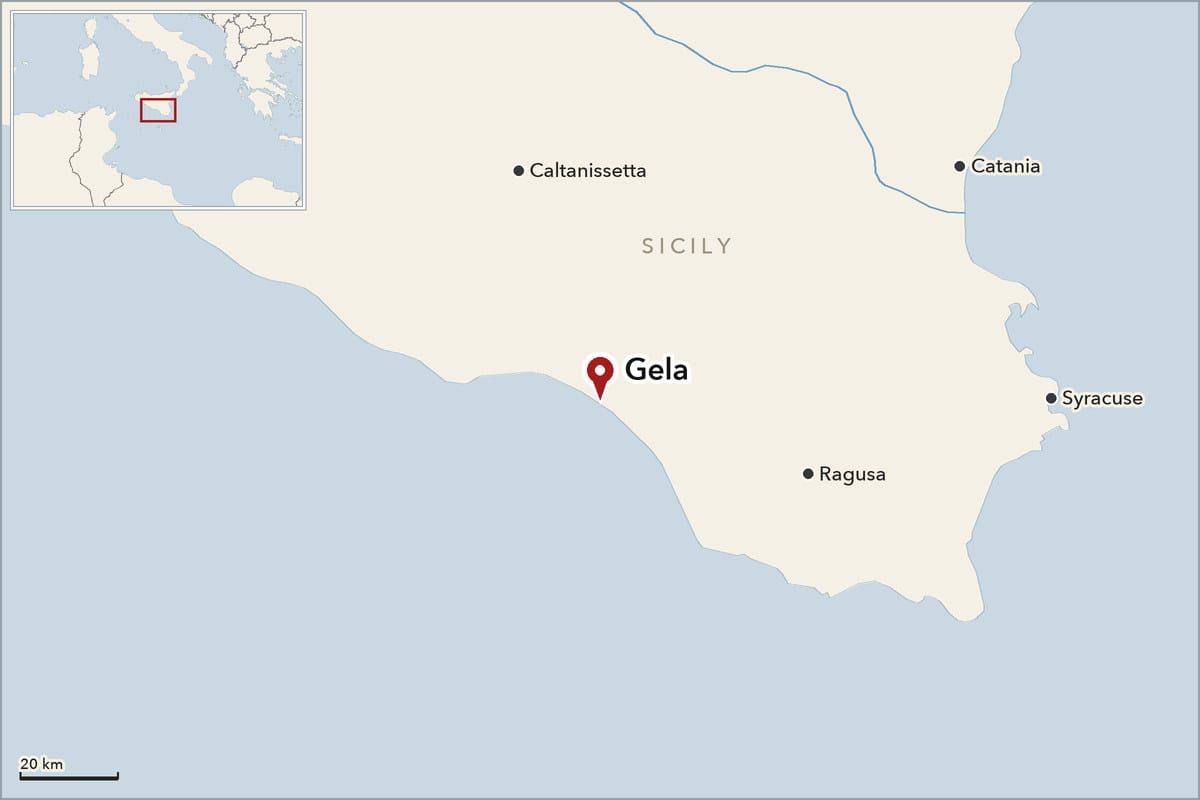
Where the inlet was
The area, known as Conca (Italian for Basin), lies very close to the ancient city and was identified through historical and modern maps and aerial photographs. The study places it behind the eastern end of the hill, between the hill and the final stretch of the Gela River. The Greek city itself stood on a marine terrace about 45 m above sea level, with an elongated shape 4 km long, running parallel to the sea. Sediment cores drilled at Conca show that marine environments once reached it: the study identified a marine embayment and its later silting in all of them.
The study estimates the Greek-age marine environments lie between 4.5 and 7 m below the current ground level.
What the team did
The work belongs to a research project called M.I.R.A.GE., run by researchers from several universities and partly funded by EniMed S.p.A. of Gela. The study combines geomorphology, stratigraphy, paleoecology, radiocarbon dating and archaeology. According to Greek Reporter, researchers drilled five new boreholes, which the study says reached a depth of 10 m, and reviewed records from 25 earlier holes. Greek Reporter adds that they combined those findings with historical maps, aerial photographs from 1931 and 1954, and evidence from a 2019 archaeological trench.
The cores contain sands and silty clays with shell fragments, and the foraminifera and ostracods in them indicate deposition in shallow marine waters. Radiocarbon dating of buried wood and charcoal places some deposits in the eighth century BCE, near the time Greek settlers established Gela. Pottery dating to about the sixth century BCE was recovered at 7.50 m in one borehole, in the layer identified as upper shoreface deposits. The area was occupied by deeper marine (lower shoreface) environments between 4.4 and 2.8 ka (thousand years ago), which progressively gave way to shallower (upper shoreface) ones until the Greek age.
Why a harbour here
The study describes Gela as one of the most important Greek colonies in the Mediterranean, positioned at the crossroads of major maritime trade routes and rich in cereals thanks to the Gela River's alluvial plain. Greek Reporter says settlers from Rhodes and Crete founded it in 689-688 B.C., and that ancient accounts indicate its rulers maintained a military fleet.
Greek Reporter says the basin offered a sheltered setting near the settlement, protected from waves and river floods. It adds that earlier studies had generally focused on the Gela River's mouth as the likely port location. Similar sheltered harbour settings have been proposed at Camarina and Selinunte, according to Greek Reporter.
How the inlet disappeared
During the Roman period, these marine environments were significantly reduced by repeated alluvial sedimentation from the Gela River, turning the area into fluvial-marshy environments. The basin narrowed during the Hellenistic period and became increasingly marshy in Roman times, and the nearby Margi channel also carried sediment into the area. A later interval of windblown sand deposition, related to climatic conditions with high aridity, contributed to the silting of the Conca basin.
What comes next
The study says further investigations, using geophysical methods and additional boreholes, are planned to identify buried archaeological targets and to better define the inland extension of the embayment. The authors' own wording is a hypothesis, and with no archaeological structure yet identified at Conca, that is the right weight to give it.
Sources
icaroecology.com (n.d.) 'Type of the Paper (Article', icaroecology.com, available at: https://www.icaroecology.com/wp-content/uploads/2026/03/aiello-et-al-2026.pdf?lang=en (Accessed: 11 November 2026).
Moeed, A. (2026) '2,700-Year-Old Lost Harbor of Ancient Greek Naval Power Found in Sicily', GreekReporter.com, 2 November 2026, available at: https://greekreporter.com/2026/11/02/lost-harbor-ancient-greek-city-sicily/ (Accessed: 11 November 2026).
Picture credits
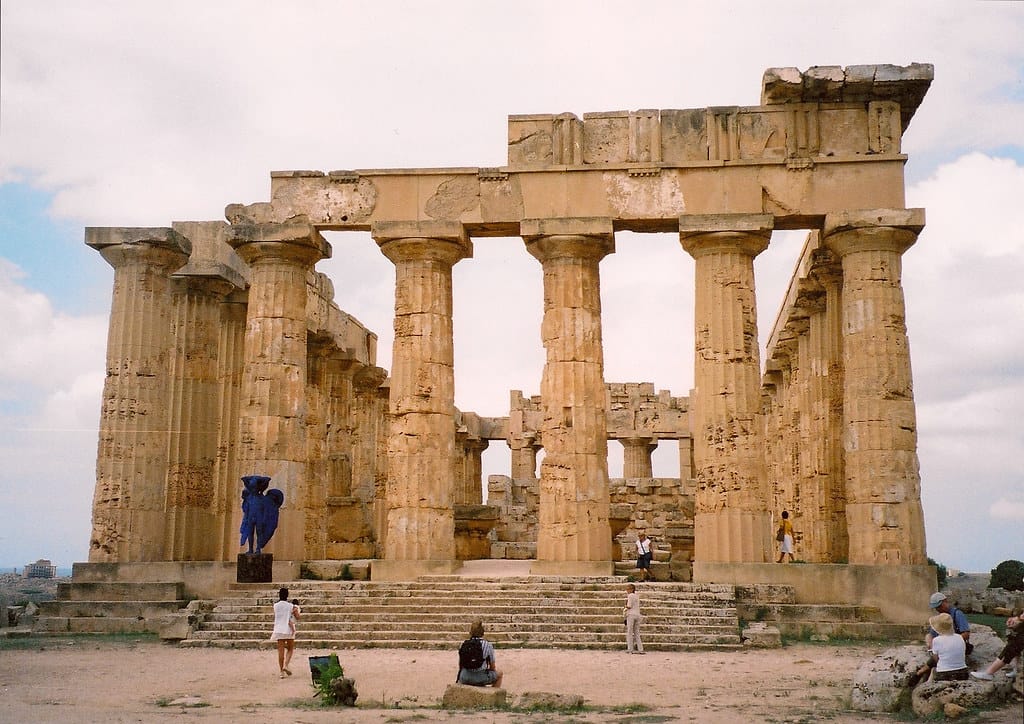
- Top picture: Selinunte, another ancient Greek city on Sicily's southern coast. Image: Temple E, Selinunte: Alun Salt, CC BY-SA 2.0 (source)
- Map: drawn from Natural Earth (public domain) and Wikidata.