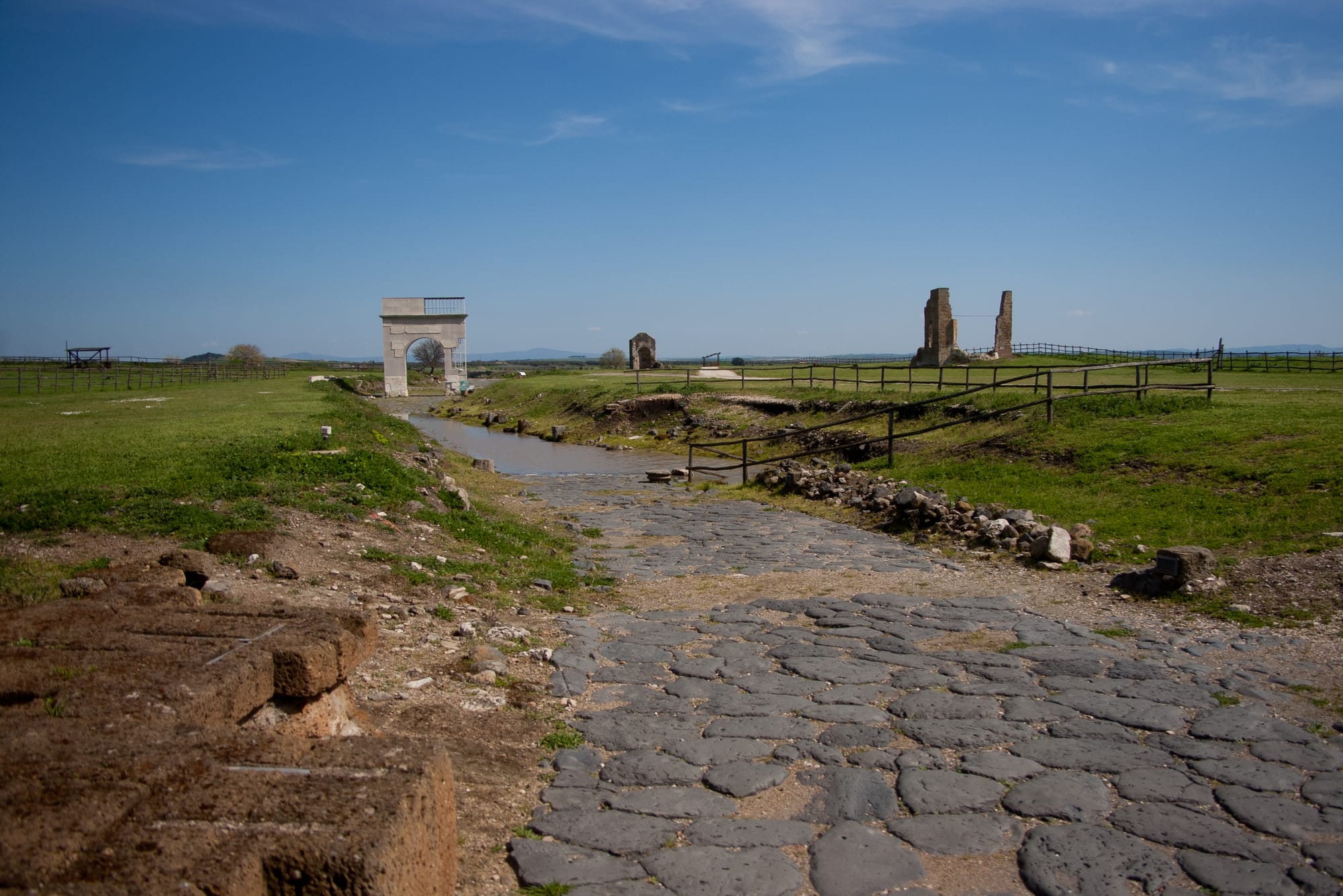
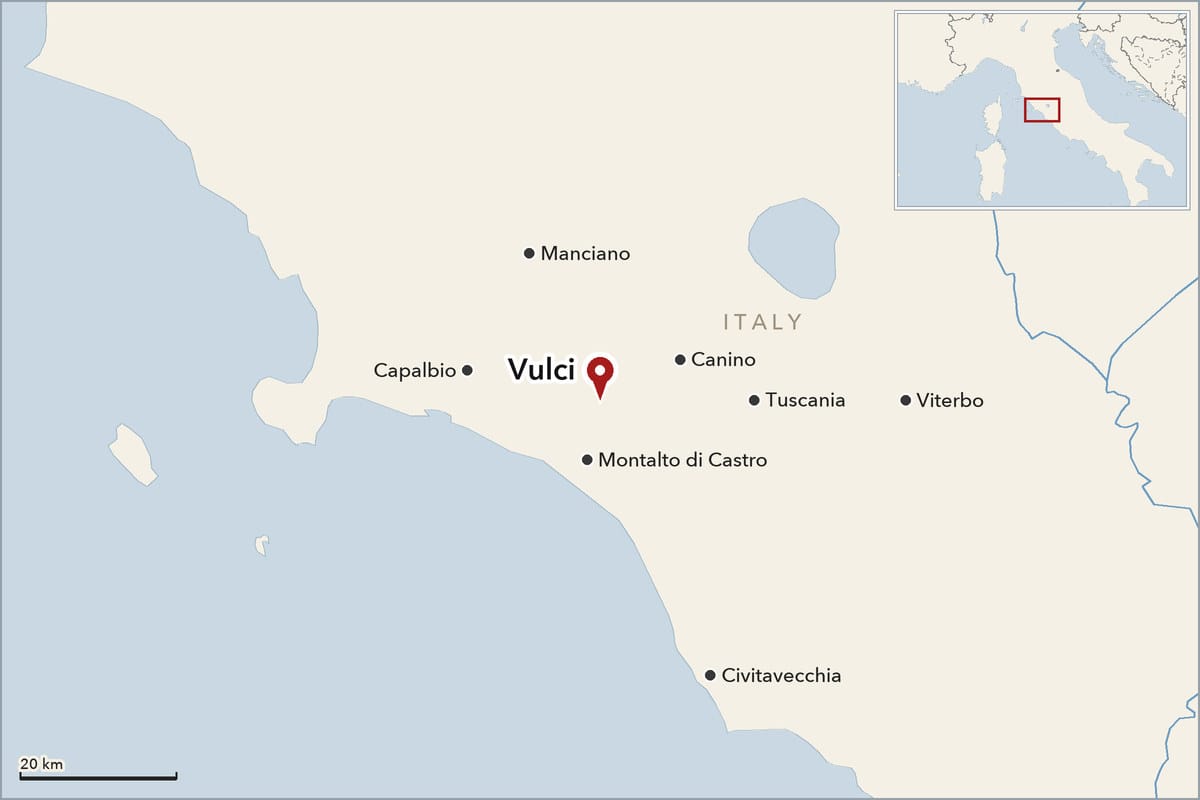
On 22 September 2026, the Soprintendenza for Viterbo and Southern Etruria (SABAP-VT-EM) announced that the 2026 excavation season at Vulci had found a large Etruscan tomb. It lies in the Polledrara necropolis, on the territory of the ancient city. The excavators call it the Tomba della Camera di pietra, or Tomb of the Stone Chamber. They date it to the late seventh century BC, the Orientalizing period.
A mound that was identified but never finished
The tomb sits inside the circular enclosure of the Gsell Tumulus. According to the Soprintendenza's statement, the École française de Rome had already found that mound in 1889 but never excavated it completely. Live Science's account names the archaeologist Stéphane Gsell and says he outlined what he took to be the grave's perimeter but never found the tomb itself, because he ran out of time and money to dig further.
Gsell had put the tumulus at about 31 metres across and likened it to a "new Cuccumella", a reference to the largest Etruscan burial mound previously found at Vulci. Live Science gives the Cuccumella's diameter as roughly 70 metres. Citing the Etruscan Times, it reports that the project's initial calculations suggest the new tomb may be similar in size, or perhaps larger. Christian Mazet, co-director of the project, whom Live Science describes as an archaeologist at the British Museum, told the Etruscan Times, as quoted by Live Science: "This is the burial. We are absolutely certain of it."
What the chambers held
The excavators were able to explore all three burial chambers, according to Storie & Archeostorie, which cites the Soprintendenza. The main chamber was cut into the natural deposits of the ancient course of the River Fiora, and its retaining walls are built of nenfro blocks. The Soprintendenza says the tomb was repeatedly broken into by clandestine diggers during the twentieth century, yet its internal architecture survived remarkably well. Storie & Archeostorie adds that the collapse of the roofs sealed off several areas, leaving deposits and objects where they were originally placed.
The finds it lists include:
- Attic and Corinthian pottery
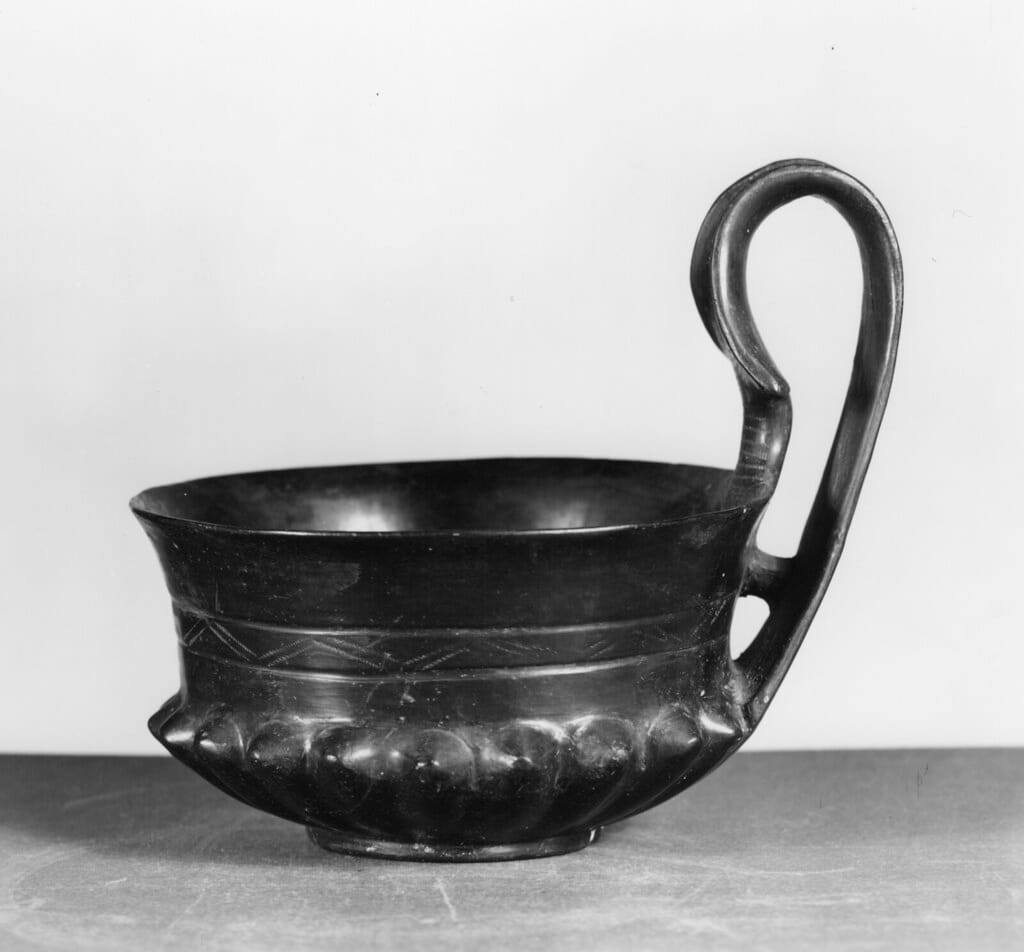
- local decorated impasto vessels and bucchero
- weapons
- chariot components
- gold and bronze sheets
- bone and ivory objects
- items of personal ornament and dress, including women's footwear
Reports differ on the footwear. Live Science describes a rare pair of women's shoes, while Storie & Archeostorie refers to a single women's shoe. The version of the Soprintendenza's statement republished by Tusciaweb does not mention footwear.
Storie & Archeostorie describes what remained in the side chambers as particularly significant. A bronze tripod was found with a lamp of alabaster-like gypsum, probably from the area of Naucratis or Rhodes. Alongside them was an elaborate banquet service in Polledrara Ware, a local polychrome ware, made up of phialai, olpai, hydriai and dinoi. There were also bucchero vessels, a grater for preparing wine and a large polychrome bowl in the Ionian Wild Goat Style. Storie & Archeostorie says this assemblage gives new evidence on funerary ritual, wine consumption and Vulci's trade and cultural links in the eastern Mediterranean.
What it says about Vulci's elite
The Soprintendenza describes the find as significant for understanding Vulci's aristocracy in the late seventh century BC, which it calls one of the city's most prosperous periods and one of its most intense openings to the Mediterranean. Live Science, again drawing on Mazet's interview with the Etruscan Times, reports that the discovery of weapons, chariot parts, gold objects and high-quality ceramics means "there is no doubt that this is a tomb of the very highest rank", and quotes him as saying: "Everything tells us that it is one of the most monumental at Vulci."
Storie & Archeostorie also links the discovery to the Tomb of Isis, found in 1839 by the Bonapartes near the Gsell Tumulus. Its contents are now in the British Museum. Storie & Archeostorie says the chronological and cultural similarities between the two tombs could help reconstruct funerary rituals, art production and the exchange networks of Vulci's elites.
A cold case in the field
The Roman Files is mostly about Rome, but this find is close kin to the cases we reopen. Live Science notes that Vulci's cemeteries are known for wealthy tombs, thousands of them uncovered in the nineteenth century, and that the Etruscans began to decline in the fourth century BC with the rise of Rome. It also says their language is still only partly understood, so much of what we know comes from sites like this one. The "Return to Vulci" project, begun in 2023, aims to reconstruct the history of the great nineteenth-century discoveries by combining fieldwork with archive study and with objects held in Italian and international collections. It is directed by Laura Maria Michetti, Alessandro Conti and Christian Mazet. It is also linked to "Vulci nel Mondo", an online database that gathers Vulci finds scattered across the world's museums.
My view is that this is what a good second look at an old excavation can do. The 1889 work marked the edge of the mound, and 137 years later a monumental tomb inside it has been excavated.
Both Storie & Archeostorie and Live Science report that the tomb and the tumulus enclosure were covered over at the end of the season to protect them. Excavation is due to resume in 2027, and study and publication of the recovered material will continue.
Sources
Killgrove, K. (2026) 'Ancient Etruscan "tomb of the very highest rank" discovered north of Rome, and it contains weapons, jewelry and a rare pair of women's shoes', Live Science, 24 September 2026, available at: https://www.livescience.com/archaeology/archaeologists-discover-tomb-of-the-very-highest-rank-in-2-700-year-old-etruscan-cemetery (Accessed: 10 October 2026).
Percivaldi, E. (2026) 'Scoperta a Vulci: dalla necropoli della Polledrara riemerge la Tomba della Camera di Pietra', Storie & Archeostorie, 22 September 2026, available at: https://storiearcheostorie.com/2026/09/22/vulci-tomba-camera-di-pietra-pollelrara/ (Accessed: 10 October 2026).
Soprintendenza Archeologia Belle Arti e Paesaggio per la provincia di Viterbo e per l'Etruria meridionale (2026) 'Scoperta a Vulci la Tomba della Camera di pietra', published by Tusciaweb, 22 September 2026, available at: https://www.tusciaweb.eu/2026/09/scoperta-vulci-la-tomba-della-camera-pietra/ (Accessed: 10 October 2026).
Picture credits
- Top picture: The Etruscan city of Vulci. Photo: Robin Iversen Rönnlund, CC BY-SA 3.0 (Wikimedia Commons)
- Bucchero, the black ware that appears among the finds from the tomb. This is an example, not an object from the new excavation. Photo: museado (source)
- Map: drawn from Natural Earth (public domain) and Wikidata.
