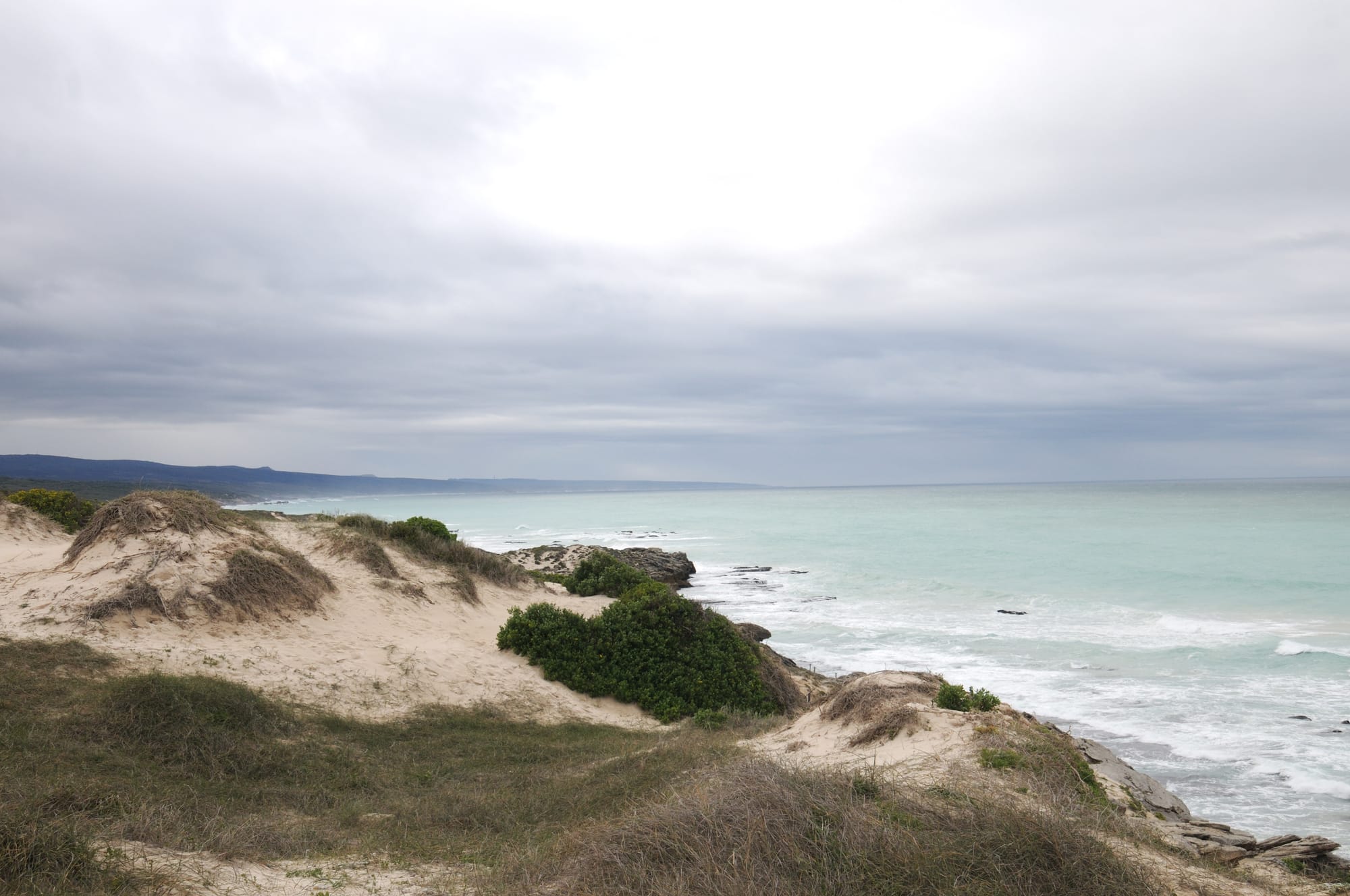
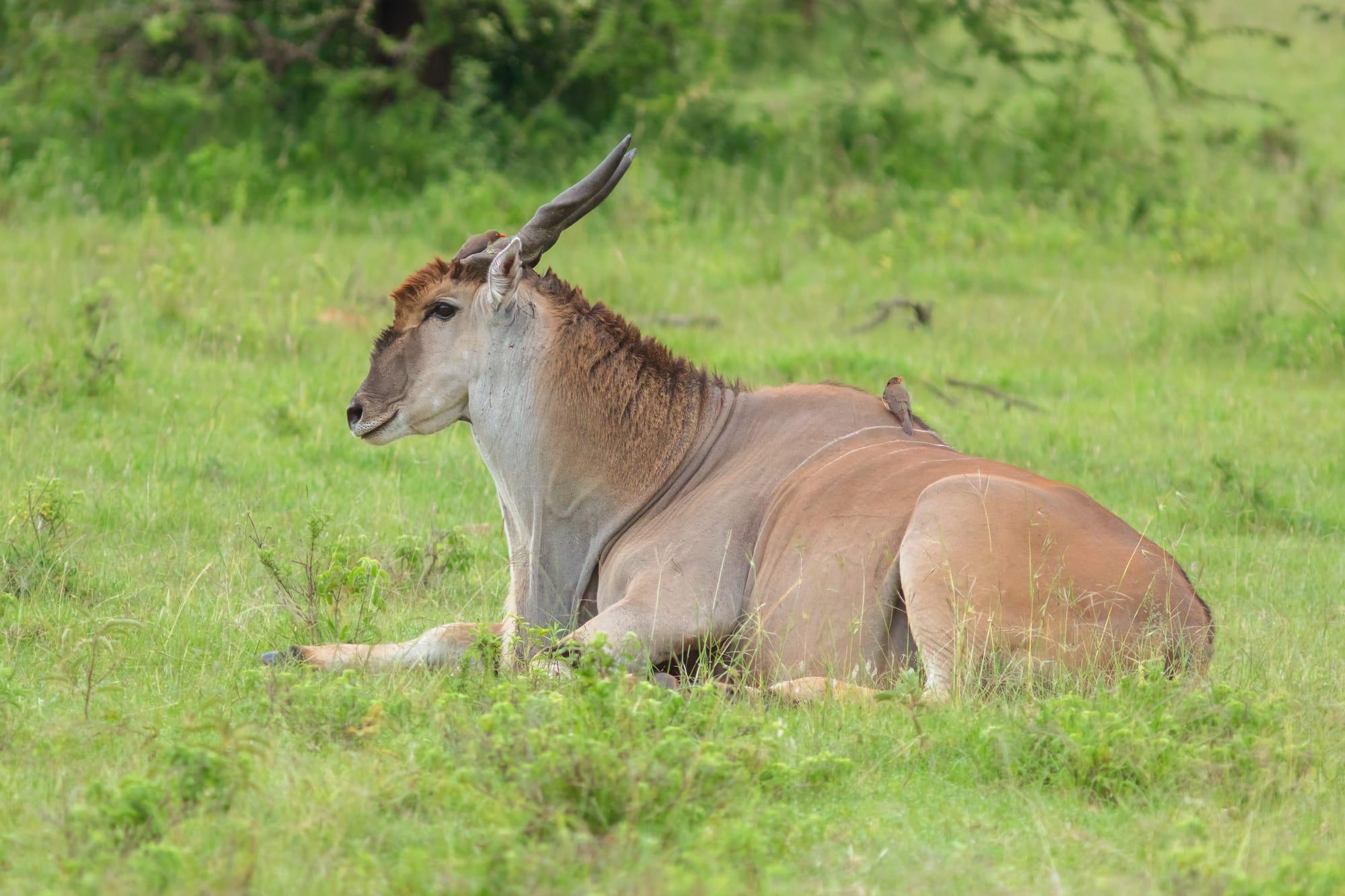
Anthropology.net describes a working assumption about Middle Stone Age ochre that most of its readers share: "The red powder survives, whatever it was mixed with does not." A team from Kyushu University, the University of Bergen and the University of Copenhagen now reports that it has found protein from the common eland, an antelope, in an ochre-rich surface about 60,000 years old on South Africa's southern coast.
The work is published in Proceedings of the Royal Society B. Kyushu University issued a news release about it, which Popular Archaeology republished on 21 October 2026.
What the team found
The samples came from Klipdrift Shelter, a Middle and Later Stone Age site within the coastal cliffs of the De Hoop Nature Reserve. The researchers worked on archived sediment samples rather than fresh excavation.
Anthropology.net reported on 22 October that two of five archived sediment samples yielded type I collagen, one from layer PBD and one from layer PBE. In each case the collagen matched the common eland, Taurotragus oryx. The same report places the samples in the Howiesons Poort deposits, in an ochre-rich layer excavated between 2011 and 2013 whose extent was never mapped. According to Anthropology.net, its size now comes from photographs and site notes: possibly more than a metre long and 40 cm wide, with surviving pieces 5 to 7 mm thick.
How proteins were pulled from sediment
The team used palaeoproteomics, which examines ancient proteins preserved in material from archaeological sites. According to the Kyushu University release, the proteins were extracted from the sediments and analysed by liquid chromatography-tandem mass spectrometry (LC-MS/MS). The resulting protein fragments were compared with large protein databases and a custom collagen reference database to identify the species they came from.
Discover Magazine's Stephanie Edwards compared the matching to identifying a book from surviving snippets of text. The release says the result shows that palaeoproteomics can recover and identify ancient proteins from archaeological sediments, even in African environments where ancient DNA rarely survives.
Two readings, and a cautious one
The release says the eland collagen suggests that either animal-derived materials were deliberately mixed with the ochre, or ochre-treated eland hides were present at the site. Archaeology Magazine, on 26 October, reported the same two possibilities.
According to Anthropology.net, the authors call a human origin most probable, but say the single case cannot support ritual significance for eland.
Discover was explicit about the limits. It wrote that the collagen "doesn't establish a particular recipe, prove hide treatment, or demonstrate that the activity carried symbolic meaning."
Why it matters
The Kyushu University release says: "Until now, evidence of organic components mixed with ochre has been extremely rare, especially in Africa." It adds that the finding gives a new way to investigate how early humans used ochre and other organic materials in daily, technical and potentially symbolic activities.
My view is that the restraint is the strongest part of the story. Eland collagen in two of five archived samples is a narrow result, and the authors, as Anthropology.net reports them, decline to stretch it into ritual. What it does offer is a method: proteins read from sediment where DNA is unlikely to survive, applied to archived samples from a surface excavated more than a decade ago.
Sources
Anthropology.net (2026) 'Eland Collagen Found in 60,000-Year-Old Ochre Surface', Anthropology.net, 22 October 2026, available at: https://www.anthropology.net/p/eland-collagen-found-in-60000-year (Accessed: 26 October 2026).
Archaeology Magazine (2026) '60,000-Year-Old Animal Proteins Mixed With Ocher Identified in South Africa', Archaeology Magazine, 26 October 2026, available at: https://archaeology.org/news/2026/10/26/60000-year-old-animal-proteins-mixed-with-ocher-identified-in-south-africa/ (Accessed: 26 October 2026).
Edwards, S. (2026) 'Rare Antelope Proteins Linked to 60,000-Year-Old Ochre Point to Hidden Aspects of Early Human Behavior', Discover Magazine, 22 October 2026, available at: https://www.discovermagazine.com/rare-antelope-proteins-linked-to-60-000-year-old-ochre-point-to-hidden-aspects-of-early-human-behavior-49843 (Accessed: 26 October 2026).
Kyushu University (2026) 'Invisible eland identified from 60,000-year-old ochre-rich sediment', Popular Archaeology, 21 October 2026, available at: https://popular-archaeology.com/article/invisible-eland-identified-from-60000-year-old-ochre-rich-sediment/ (Accessed: 26 October 2026).
Picture credits
- Top picture: Coastal dune landscape with fynbos vegetation at Koppie Alleen in De Hoop Nature Reserve. Image: Josep M. Gracia, CC BY-SA 4.0, via Wikimedia Commons
- A common eland, a large plains antelope of East and Southern Africa. Image: Diego Delso, CC BY-SA 4.0, via Wikimedia Commons

