The National Museum of Korea has finished excavating Tomb 160 at the Duurlig Nars site in eastern Mongolia, working with the Institute of Archaeology of the Mongolian Academy of Sciences and the National Museum of Mongolia. The excavation ran for four years from 2023. The museum says Tomb 160 is the largest Xiongnu tomb identified in Mongolia. The museum announced on 6 November that it had completed the dig and released its findings.
What came out of the chamber
From the central part of the tomb, the museum says, 413 objects were recovered, including a glass cup presumed to be Roman glass, jade reflecting Han funerary culture, and silver horse ornaments of the same kind as those from Lelang tombs in Pyongyang. The museum says it is the first time artefacts of this quality have been identified in eastern Mongolia.
The glass cup is transparent and has a handle. The museum says it may have been made in territory of the Roman Empire, and it plans a compositional analysis to establish where. La Brújula Verde adds that if chemical analysis confirms its composition, it would be an object from a world governed in that date range by emperors such as Trajan and Hadrian. UNN, in its write-up of the story, adds that the objects may have reached Mongolia through intermediaries rather than through direct contact with the Roman Empire.
The silver horse ornament is a harness pendant made by hammering a thin silver sheet into a gourd shape. It resembles ornaments from Lelang tombs, including Tomb 219 at Seogam-ri in Pyongyang, which the National Museum of Korea holds, but this one has a crystal set at its centre. With it was a round gold ornament, which had gold leaf and red and blue material beneath the crystal so that light and colour show through softly. The museum says such ornaments have been identified in a Xiongnu tomb for the first time.
Fifteen pieces of jade lay in overlapping layers on the coffin floor. They take as their motif the bi, a Han funerary jade, but unlike the typical round disc their shapes are irregular and their surfaces carry very fine carving.
A vast tomb, a small chamber
Including the passage that runs south from it, Tomb 160 is about 73 metres long. The team removed nine layers of stacked stone down to 14.5 metres, which the museum says let them confirm the structure of a top-tier Xiongnu tomb from start to finish. A lacquered carriage buried directly above the centre is, the museum says, another symbol of high status.
The central part, where the occupant was buried, is two layers of wooden outer coffin around an inner coffin. Despite the grand exterior, the museum says, it is unexpectedly small and shallow, only about 14.5 metres deep to the tomb floor. Xiongnu tombs of comparable size in central Mongolia reach 22 metres. The same feature appears in a satellite burial nearby that was surveyed in 2019.
The museum dates Tomb 160 to the late first to second century AD, when Xiongnu power was waning, and suggests that its shrunken central chamber could hint at how Xiongnu society was changing in that period. Teeth and hair recovered from inside the coffin are, in the museum's words, another key to that question. If DNA analysis reveals the occupant's sex and age, and their relationship to those buried in the satellite graves, the museum says a clearer picture of Xiongnu society would emerge.
The Xiongnu and the site
La Brújula Verde describes the Xiongnu as a confederation of nomadic peoples who dominated the Mongolian steppes between the 3rd century BC and the 2nd century AD, with tradition crediting Modu with unifying them. It says he took power around 209 BC and early in his reign defeated Gaozu, the first emperor of the Han dynasty. It adds that from 133 BC to AD 89 the two empires fought a long series of wars, and that Chinese chronicles say Han armies and their allies punished the northern Xiongnu harshly in AD 89 and 91 and that the Xianbei moved into their space.
La Brújula Verde places Duurlig Nars in Khentii province, which it calls the land from which Genghis Khan emerged about a thousand years later. According to the museum, as reported by La Brújula Verde, it is the largest Xiongnu tomb complex in eastern Mongolia, with around 300 graves. The same outlet reports that in 2019, while excavating six satellite tombs of Tomb 160, the team found silver belt ornaments shaped like human faces, and that above the mound they found a burial from the 13th or 14th century with a birch-bark hat.
The museum says the Xiongnu had close ties with ancient societies on the Korean Peninsula such as Gojoseon and Lelang, and that it has surveyed the Mongolian steppe for nearly 30 years since 1997 because understanding them is part of tracing how ancient Korean culture took shape. In July, UNESCO inscribed Xiongnu tomb sites including Duurlig Nars on the World Heritage List, which the museum says its work helped lay the groundwork for. The Mongolian archaeologist Gelegdorj Eregzen of the Institute of Archaeology signed the aerial photographs of Tomb 160 in the UNESCO dossier. In a 2024 article in Studia Archaeologica he noted that 14 sites with this type of large aristocratic Xiongnu tomb were already known.
What the museum says comes next
The museum said the finds will be brought to South Korea within the year for conservation and scientific analysis, with two Mongolian researchers taking part as conservation trainees. It plans to turn its 3D record of the whole excavation into digital content. The findings were to be presented for the first time at the 50th national conference of the Korean Archaeological Society on 6 and 7 November, and later published as an excavation report after comprehensive research.
Mongolian President Ukhnaa Khurelsukh visited the site on 21 August while the dig was under way. The museum says it was the first time a Mongolian president had visited an excavation in person, and that he described the joint Korea-Mongolia survey as a clear symbol of friendship and cooperation between the two countries and their peoples.
In its press release, the museum says the excavation shows that the Xiongnu of 2,000 years ago were connected to a wide exchange network reaching from Rome to the Korean Peninsula, and that it expects the work to widen the field of Korean archaeology to Eurasia.
Sources
Carvajal, G. (2026) 'Roman Glass, Chinese Jade and Korean-Linked Silver Found in Mongolia’s Largest Xiongnu Tomb', La Brújula Verde, 11 November 2026, available at: https://www.labrujulaverde.com/en/2026/11/roman-glass-chinese-jade-and-korean-linked-silver-found-in-mongolias-largest-xiongnu-tomb/ (Accessed: 14 November 2026).
museum.go.kr (n.d.) '국립중앙박물관소식·참여보도 자료상세', museum.go.kr, available at: https://www.museum.go.kr/MUSEUM/contents/M0701040000.do?arcId=24085&catCustomType=post&catId=93&cp=1&schM=view&sv (Accessed: 14 November 2026).
museum.go.kr (n.d.) '국립중앙박물관소식·참여보도 자료상세', museum.go.kr, available at: https://www.museum.go.kr/MUSEUM/contents/M0701040000.do?schM=view&catCustomType=post&catId=93&arcId=24085&cp=1&sv= (Accessed: 14 November 2026).
Seoul Economic Daily (2026) 'From Rome to the Korean Peninsula: Inside a Xiongnu Imperial Tomb', Seoul Economic Daily, 6 November 2026, available at: https://en.sedaily.com/culture/2026/11/06/from-rome-to-the-korean-peninsula-inside-a-xiongnu-imperial (Accessed: 14 November 2026).
Ukrainian National News (UNN) (2026) 'An ancient tomb with Roman glass and unique gold ornaments was found in Mongolia', Ukrainian National News (UNN), 14 November 2026, available at: https://unn.ua/en/news/an-ancient-tomb-with-roman-glass-and-unique-gold-ornaments-was-found-in-mongolia (Accessed: 14 November 2026).
Picture credits
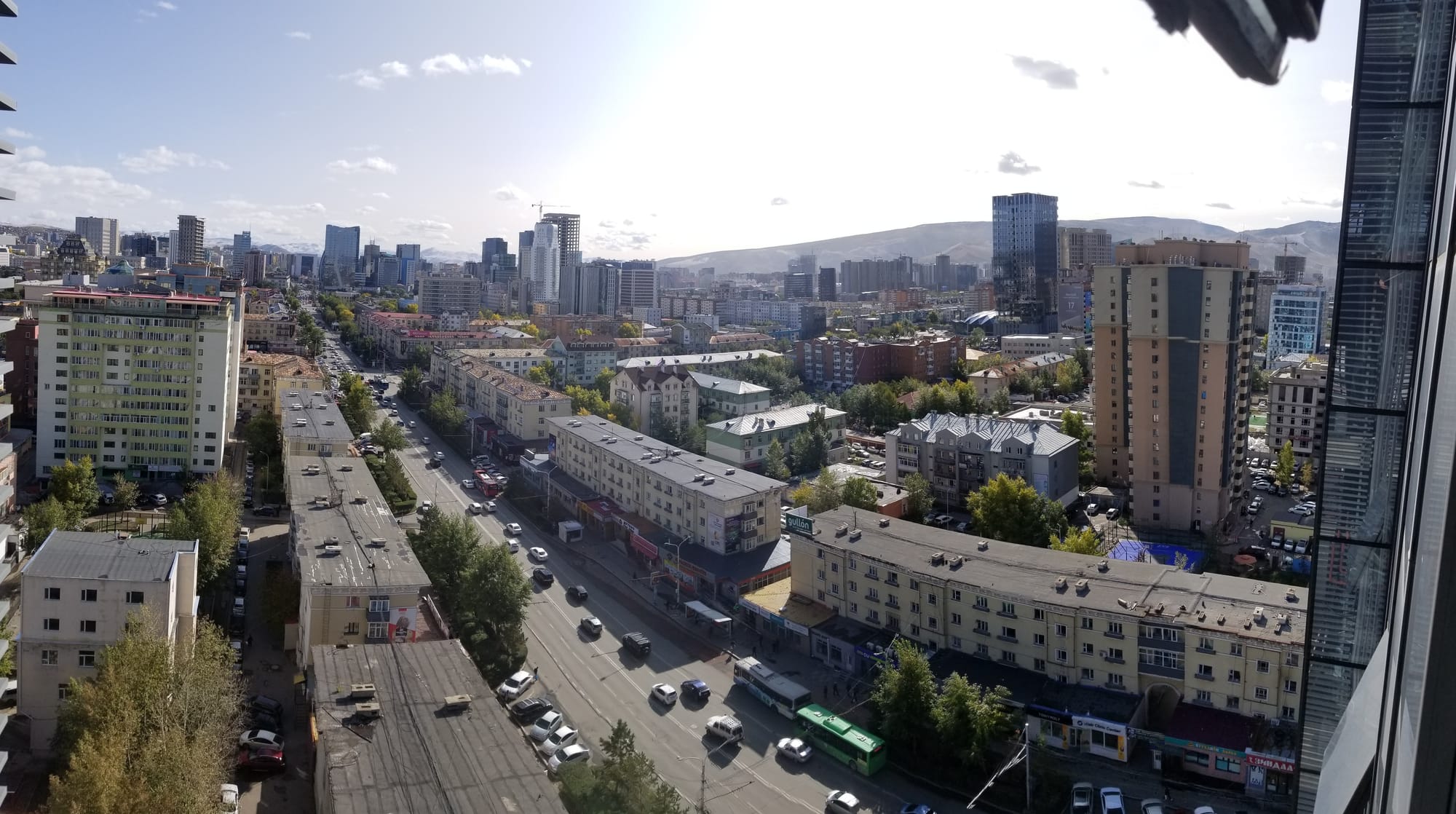
- Top picture: Ulaanbaatar. La Brújula Verde puts Duurlig Nars about 500 kilometres (310 miles) to its north-east. Photo: MN5 (source)
