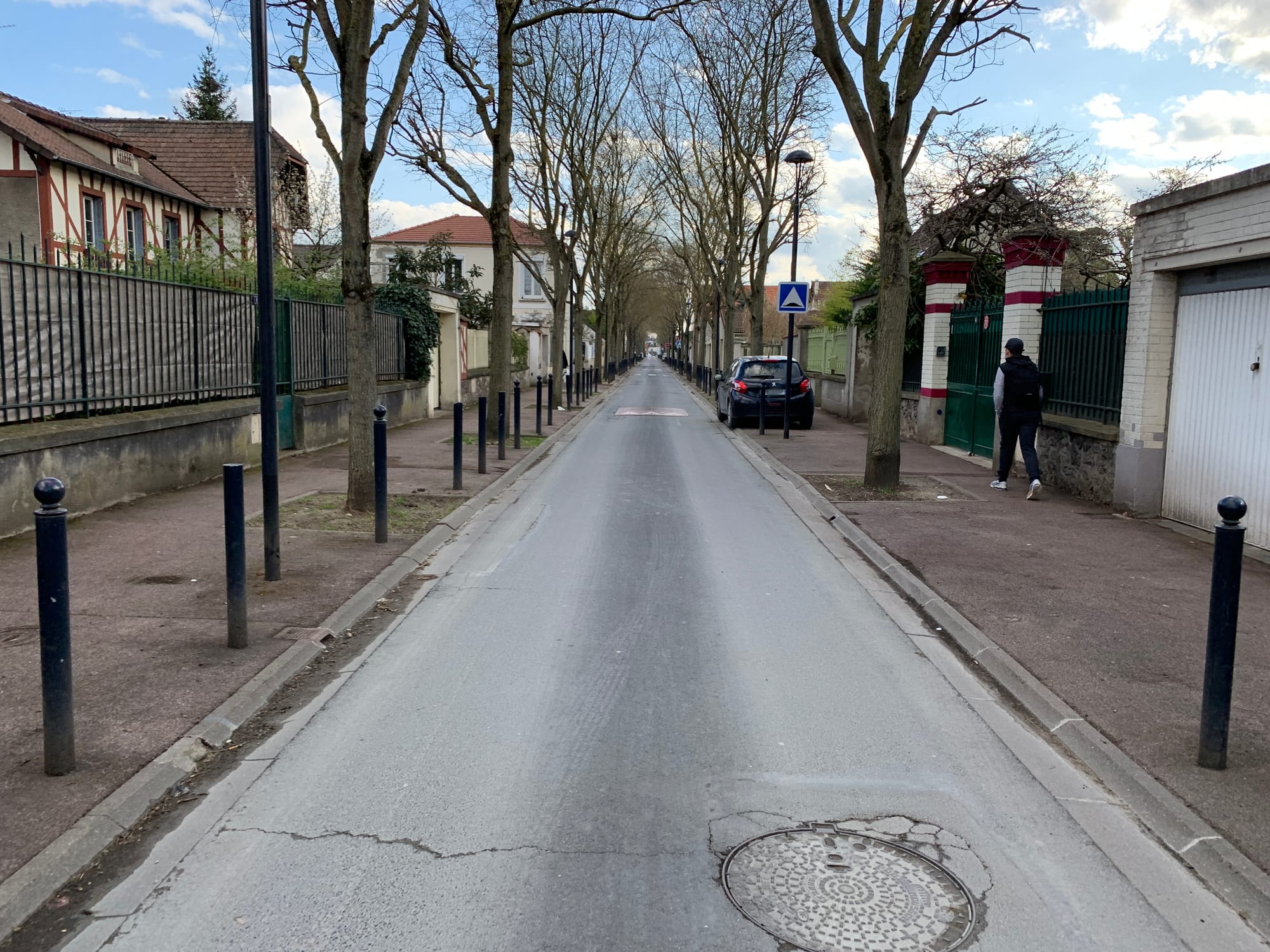
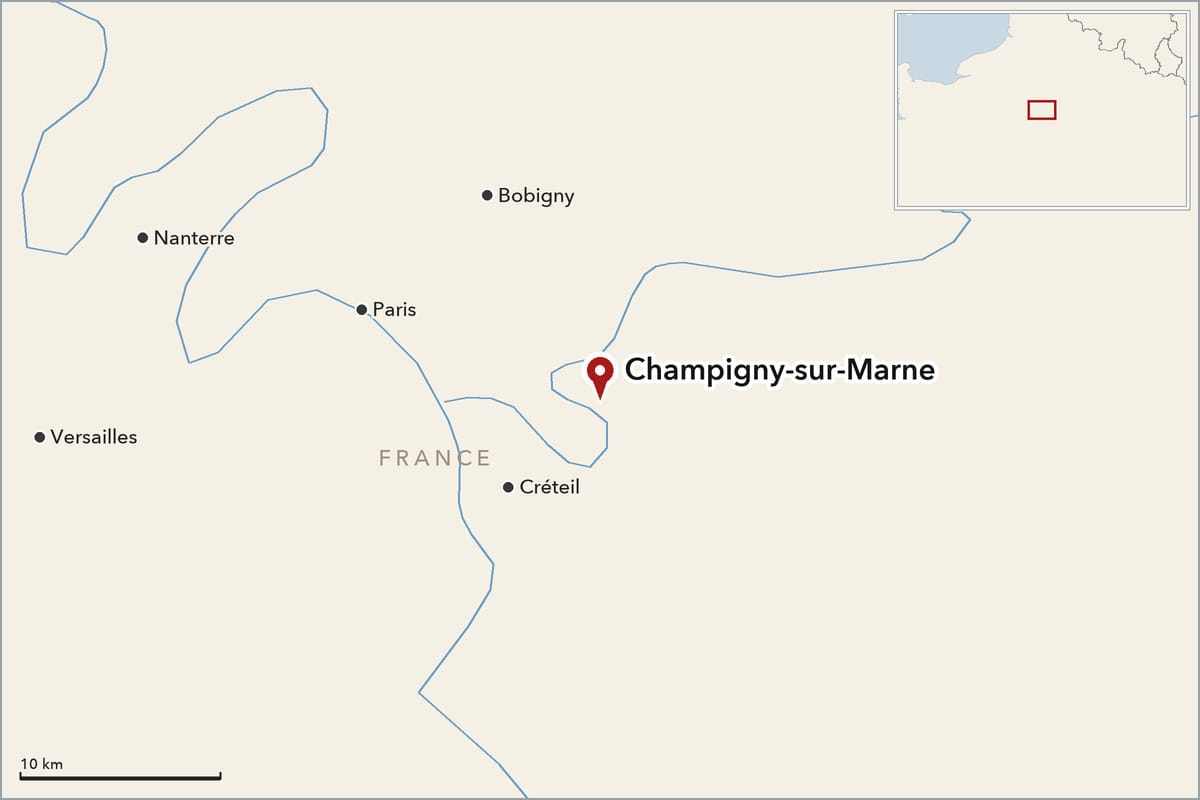
On Monday 2 November 2026, France's national preventive archaeology institute, Inrap, announced a burial site at Champigny-sur-Marne in the Val-de-Marne. Its post described "un rare ensemble funéraire du Néolithique moyen", a rare funerary complex of the Middle Neolithic, dated to 4750–4300 BCE. The site comprises 30 megalithic blocks, one of them a statue-menhir, 11 graves and wooden structures.
What was found
The dig took place between numbers 134 and 148 of the rue de Verdun, ahead of a property development.
The statue-menhir is the headline object. The stone is about three metres long and weighs nearly ten tonnes. It bears an engraved belt and small hollows, which are deliberately cut cupules. Possible traces of black and white pigments suggest the monument may once have been painted.
It was found lying flat in the pit that once held it. Arkeonews reports that Inrap reads this as a snapshot of abandonment after the monument fell, and that the cause of the fall is unknown.
The graves
Most of the dead lay in large pits, Arkeonews reports, and postholes near the skulls suggest wooden markers may once have identified the graves. Actu.fr, quoting Inrap, makes the same point about one grave: a posthole at skull height must have signalled its position. Burial goods named by Arkeonews include stone blades, projectile points and a sandstone axe made from local material, plus worked bone objects in two graves.
One burial stands out. An adult was found in a seated position in a narrow, well-like circular pit, with the lower legs and feet encased in calcite. As of 3 November, Arkeonews said Inrap had not established why this person was buried differently, and Ancientist likewise said the reason for the seated position remained unknown.
A mound with no grave, and an early cement
In the south-east of the excavation, Arkeonews describes a dome-like build-up of brown silt covering about 30 square metres. A small stele, broken in two, stood above an arrangement of pits, palisaded ditches, stone blocks and wooden posts. The structure resembled a burial mound but had no grave beneath it. Arkeonews says its purpose is uncertain, and that researchers have raised the possibility that it was a landmark in the landscape.
Arkeonews also reports that archaeologists identified a hardened material made from local carbonate-rich sandy and silty sediments mixed with gravel and water. Once dry, it acted as a primitive cement, and was found along grave edges, in the pits supporting standing stones and in the dome-like structure.
What happens next
Actu.fr quotes Inrap as saying the remains will yield information on age, sex, health, diet, provenance and mobility, for a period still poorly documented in Île-de-France. Arkeonews says ancient DNA and isotope studies are planned. Arkeonews also describes such a large funerary complex as unusual in the region, where burials of this period are more often found in isolation.
My view: this is a monument that turned up because a planned property development led Inrap to dig the site. What the stone meant to the people who raised it, and why it came down, is for the planned analyses and the specialists' reports to say.
Sources
Buyukyildirim, O. (2026) '6,500-Year-Old Cemetery in France Reveals a 10-Ton Human-Shaped Standing Stone', Arkeonews, 3 November 2026, available at: https://arkeonews.net/6500-year-old-cemetery-in-france-reveals-a-10-ton-human-shaped-standing-stone/ (Accessed: 4 November 2026).
Grotteria, A. (2026) 'Archéologie : un très rare site funéraire vieux de 6000 ans découvert à Champigny-sur-Marne', actu.fr, 4 November 2026, available at: https://actu.fr/ile-de-france/champigny-sur-marne_94017/archeologie-un-tres-rare-site-funeraire-vieux-de-6000-ans-decouvert-a-champigny-sur-marne_65007437.html (Accessed: 4 November 2026).
Inrap (2026) 'À Champigny-sur-Marne (Val-de-Marne), l'Inrap a mis au jour un rare ensemble funéraire du Néolithique moyen (4750-4300 avant J.-C.), composé de 30 blocs mégalithiques, dont une statue-menhir, de 11 tombes et de structures en bois', X, 2 November 2026, available at: https://x.com/Inrap/status/2117290971901628751 (Accessed: 4 November 2026).
Rafiel, Z. (2026) '6,500-Year-Old Cemetery Near Paris Reveals Human-Shaped Menhir and Seated Burial', Ancientist, 3 November 2026, available at: https://ancientist.com/6500-year-old-cemetery-near-paris-reveals-human-shaped-menhir-and-seated-burial/ (Accessed: 4 November 2026).
Picture credits
- Top picture: Champigny-sur-Marne, Val-de-Marne. Photo: Chabe01, CC BY-SA 4.0 (source)
- Map: drawn from Natural Earth (public domain) and Wikidata.
