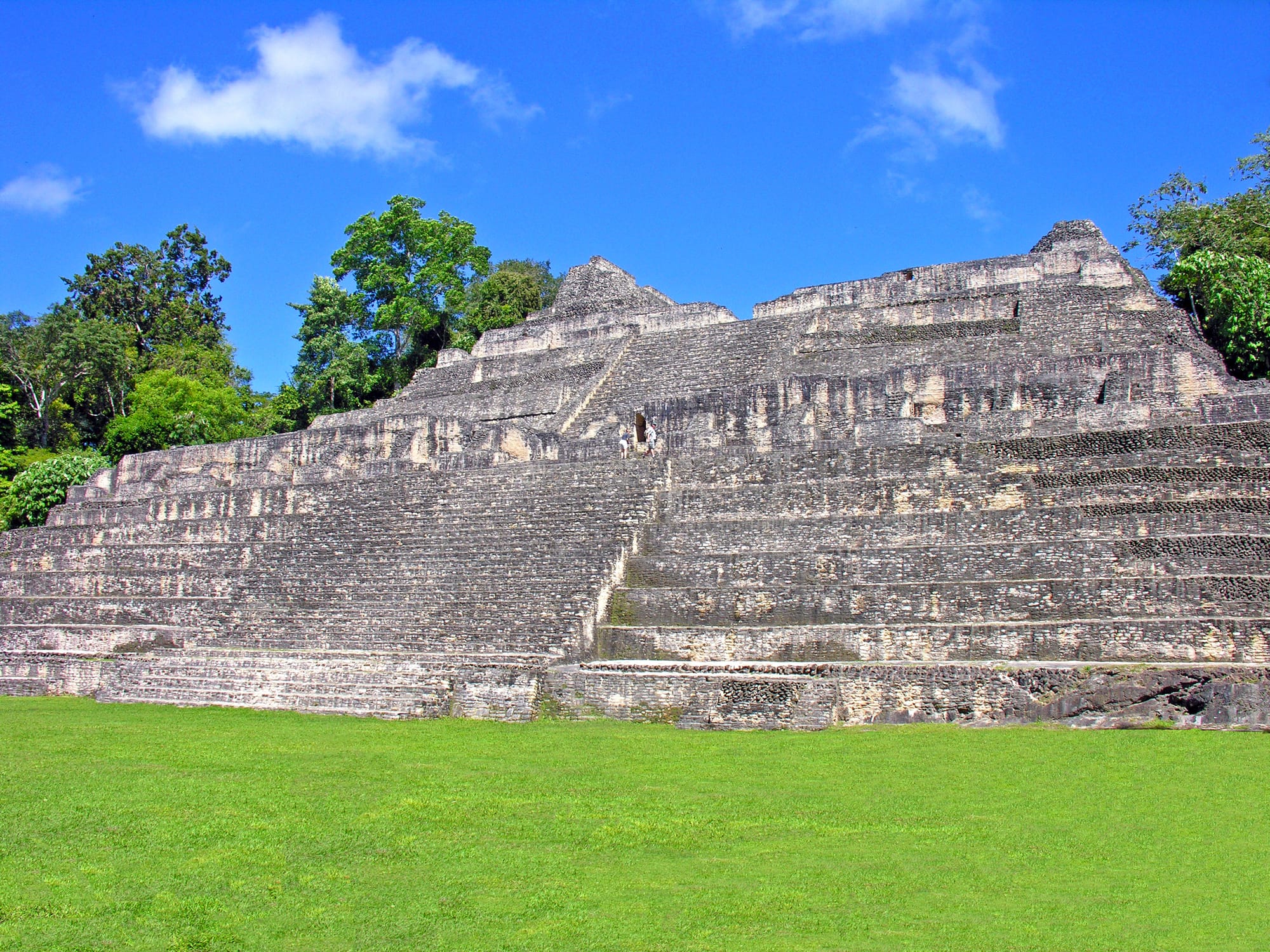
In 1937 a woodcutter named Rosa Mai was cutting through the forest on the Vaca Plateau in Belize, looking for mahogany and chicle. According to the University of Houston, he found carved stones and enormous mounds that he suspected were hiding archaeological secrets. Major excavation of the site, Caracol, began about 50 years later, led by two young archaeologists: Diane and Arlen Chase.
Four decades on, the Chases say they have found the tomb of the city's first ruler. They also argue that it changes how we should picture the relationship between Caracol and the great Mexican city of Teotihuacán.
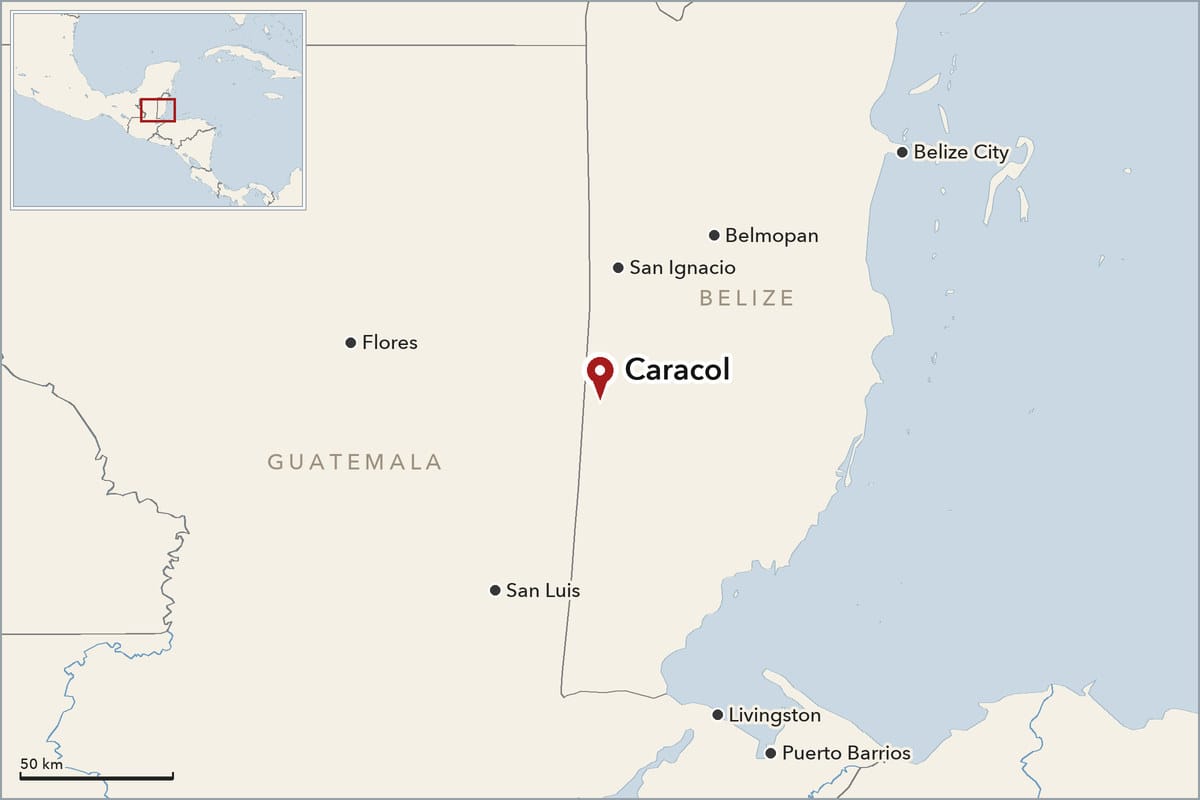
Two archaeologists who stayed put
The Chases married in 1975 and both hold doctorates in anthropology, according to the University of Houston. They obtained their permit to excavate at Caracol from the Belize Institute of Archaeology in 1985. The university says they have not missed an excavation season there since.
Their early methods were basic. They explored on foot with machetes, then mapped by hand with transits and tape measures, before introducing LiDAR (light detection and ranging) to the Maya region to produce 3D maps of the ground.
Diane Chase says one of the reasons for the project's contributions is that they stayed at one site: "we just kept asking questions," she told the University of Houston.
The university also lists the project's backers. The Government of Belize secured funds to consolidate the ancient structures and, most recently, to build a paved road to the site. Numerous institutions and individuals have funded the research, among them the Alphawood Foundation of Chicago.
A city that wasn't supposed to matter
The University of Houston says the Chases dated relics and read hieroglyphs at Caracol, and concluded that the city was a major political power. By their account it dominated the southern Yucatán Peninsula from 560 to 680 AD and was abandoned by 900 AD. The university adds that other researchers had dismissed Caracol as a peaceful backwater town. That is the kind of settled view a long dig exists to test.
The Caracol Archaeological Project, the Chases' own site, says the urban area had a radius of about 10 kilometres in AD 650, covered more ground than present-day Belize City, the country's largest metropolitan area, and supported more than twice the modern city's population – over 100,000 people.
The centrepiece is Caana, which the University of Houston describes as a royal palace, ceremonial centre and seat of power built between 600 and 700 AD. According to the university, the Chases gave it the name Caana, which means "Sky Place" in the Maya language. NICH describes the Caana complex as the tallest building in Belize.
In 1986 the Chases found a carved stone altar at Caracol that records the city's 562 AD victory over Tikal. The university says this overturned the myth of Tikal's invincibility.
The founder's tomb
In the January 2025 field season, the team uncovered the tomb of Te K'ab Chaak, according to NICH. NICH describes him as the founder of Caracol's royal dynasty, who ascended the throne around 331 AD, and says the dynasty lasted nearly five centuries. The University of Houston says he acceded in 331 AD and was buried at the base of a royal family shrine. NICH places the tomb beneath a royal shrine in the Northeast Acropolis.
The burial goods, as the University of Houston lists them, were:
- eleven pottery vessels
- carved bone tubes
- jadeite jewellery
- a mosaic jadeite mask
- Pacific spondylus shells
- other perishable materials
NICH adds that some pottery shows deities, rulers and bound captives. Arlen Chase was the first to look inside, and saw red cinnabar on the walls and a large cross-shaped niche in the back wall.
The Chases are specific about why the find matters. Diane Chase says they had found numerous tombs of royal family members, but this was "the first one that matches with hieroglyphic records to be a ruler," and the first dynastic ruler. The University of Houston calls it the first identifiable ruler's tomb in more than four decades of work at Caracol. NICH's statement is worded more broadly, calling it the first confirmed royal tomb ever excavated at the site. The Chases' own account is the narrower one.
Arlen Chase also read the grave goods as a verdict on the man. "This guy is a one-percenter," he said, pointing to the many vessels and three sets of jade ear flares. He said Early Classic rulers asserted that they oversaw everything, kept distant from the rest of the population, and that this changed at Caracol after successful warfare against Tikal, when rulers began to share wealth with the general population. "But not this person," he said.
What it does to Teotihuacán
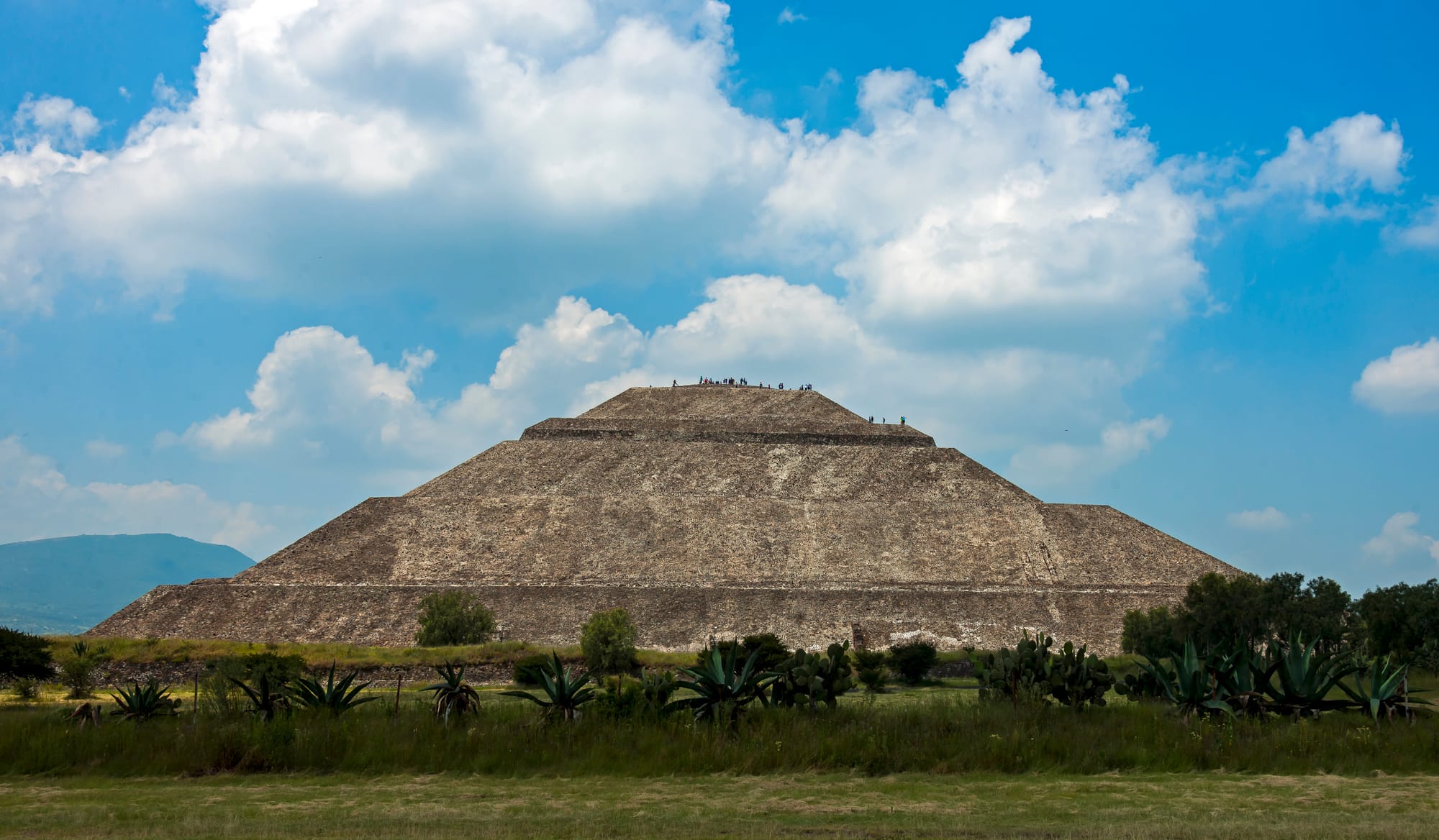
This is the part with the largest claim attached. The University of Houston says Teotihuacán was previously thought to have dominated the Maya region beginning in 378 AD. The Chases date the tomb to 350 AD, 28 years earlier. The university says the pottery in the tomb matched the Early Classic period, which let researchers date it to around 350 AD.
Arlen Chase's reading is blunt. He said the assumption had been that Teotihuacán dominated everything, including the Maya, because nothing else in Mesoamerica at the time was like it. "This discovery says they didn't dominate everything," he said. "They were simply another political player of that time."
That does not mean the two worlds were unconnected. NICH says artefacts recovered include green obsidian blades from Pachuca, Teotihuacano-style atlatl points and Mexican-style cremation practices. It says they point to strong cultural exchange and political interaction with Teotihuacán, which it puts more than 1,200 kilometres away. NICH reads this as showing that Caracol's early rulers were part of a pan-Mesoamerican diplomatic network. The University of Houston says people moved back and forth between Caracol and Teotihuacán.
In my view, that is the right way to hold it. The Chases are not erasing Teotihuacán; they are cutting its role from overlord to one player among several. It is also the interpretation of the team that dug the tomb.
The team's publications page lists a 2025 paper under the title "The Tomb of Te' Kab Chaak at Caracol, Belize: Context, Contents, Dating, and Implications," in Research Reports in Belizean Archaeology 19. Its authors are Arlen F. Chase, Diane Z. Chase, Maureen Carpenter, Adrian S.Z. Chase and Melissa Badillo.
What was still to come
NICH said in July 2025 that the Institute of Archaeology would keep working with the University of Houston team on further analyses of the skeletal remains and artefacts. These included ancient DNA testing, isotopic analysis and reconstruction of the jadeite mask. NICH said the work would help piece together more of Te K'ab Chaak's life and the beginnings of Caracol.
Dr Melissa Badillo, Director of the Institute of Archaeology, called the find "one of the most important discoveries in recent memory."
Sources
Caracol Archaeological Project (n.d.) 'History', Caracol Archaeological Project, available at: https://caracol.org/about/history/ (Accessed: 26 October 2026).
Caracol Archaeological Project (n.d.) 'Publications: Caracol, Santa Rita Corozal, Tayasal and Other Archaeological Publications', Caracol Archaeological Project, available at: https://caracol.org/drs-chase/publications/ (Accessed: 26 October 2026).
Fickman, L. (2025) 'The Chase(s) of a Lifetime', University of Houston, 10 July 2025, available at: https://stories.uh.edu/2025-caracol-chase/index.html (Accessed: 26 October 2026).
Fickman, L. (2025) 'Maya History, Rewritten', University of Houston magazine, Fall 2025, available at: https://stories.uh.edu/magazine/magazine/fall-2025/maya-history-rewritten/index.html (Accessed: 26 October 2026).
National Institute of Culture and History (2024) 'Caracol', NICH, 13 June 2024, available at: https://nichbelize.org/ia-sites/caracol/ (Accessed: 26 October 2026).
National Institute of Culture and History, Institute of Archaeology (2025) 'Uncovering the Royal Origins of Caracol', NICH, 9 July 2025, available at: https://nichbelize.org/uncovering-the-royal-origins-of-caracol/ (Accessed: 26 October 2026).
Picture credits
- Top picture: Caana at Caracol, Belize. Photo: Dennis G. Jarvis, CC BY-SA 2.0, via Wikimedia Commons
- Teotihuacán, in central Mexico. Photo: Daniel Case, CC BY-SA 3.0, via Wikimedia Commons
- Map: drawn from Natural Earth (public domain) and Wikidata.

