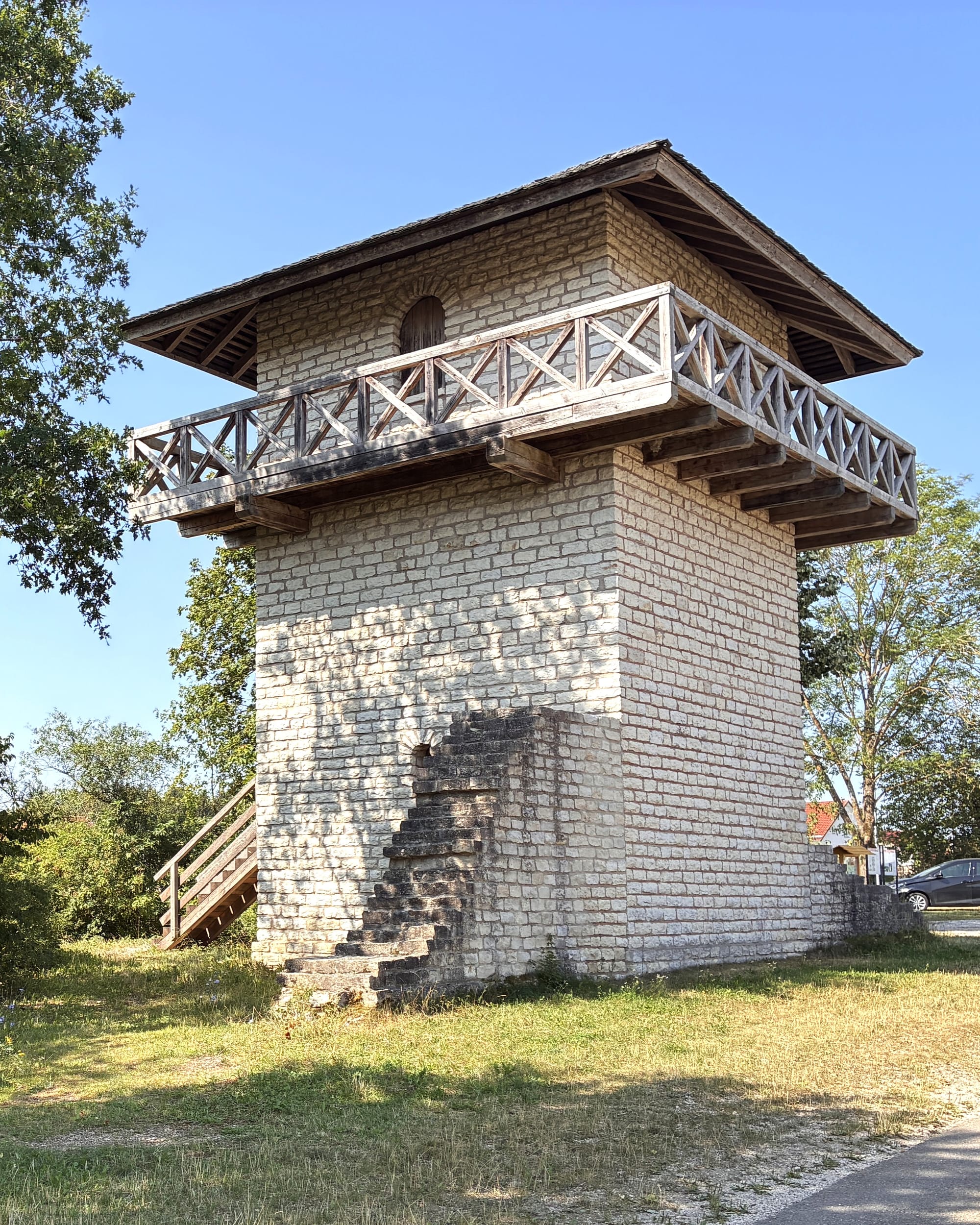
A study published in Nature on 29 April 2026 reports 258 ancient genomes from the former Roman frontier of southern Germany, analysed alongside 2,500 ancient and 379 modern genomes. Its title is Demography and life histories across the Roman frontier in Germany 400–700 ce. Professor Joachim Burger, a geneticist at Johannes Gutenberg University Mainz, is senior author, according to EL PAÍS English. The paper frames the period as one in which Central Europe saw the dissolution of Roman rule, the spread of Christianity and new settlement patterns.
What the paper reports
The authors report a major demographic shift that coincided with the late fifth-century collapse of Roman state structures. In their account, a founding population of northern European ancestry mixed with genetically diverse Roman provincial groups. They write that genetic structure persisted through the sixth century, and that by the early seventh century admixture had formed a population resembling modern Central Europeans. Pedigree reconstruction and a method called filia, which infers the ancestry of unsampled relatives, indicate widespread intermarriage and minimal cultural differentiation, according to the paper.
Where the samples come from
The team investigated Row-Graves from two regions: the Danube-Isar area in Upper and Lower Bavaria, focused on Weilheim and Altheim, and the Rhine-Main area, mainly Büttelborn and Mömlingen. The paper describes Altheim as notable for its securely dated early fifth century layers and extensive archaeological study. It says the Rhine-Main area belonged to the province of Germania Superior until the late third century, when the border moved west to the Rhine. The Danube-Isar region, it says, belonged to Rhaetia Secunda until the collapse of the Western Roman Empire.
The paper says the team sequenced 221 Early Medieval genomes, with a focus on the northern frontier zone of the Roman Empire in present-day southern Germany, plus genomes from nearby Late Antique sites (Azlburg, Kemathen and Pförring) and from key sites across Europe and beyond.
Family life and life expectancy
Using a method it calls Chronograph to refine the chronology of genealogically linked individuals, the team estimates a generation time of 28 years. It puts life expectancy at 39.8 years for women and 43.3 years for men, and reports high infant mortality. It also estimates that nearly one quarter of children lost at least one parent by age 10, yet most still grew up with grandparents. Pedigrees, the authors write, reveal a society centred on nuclear families that practised lifelong monogamy, strict incest avoidance, flexible lineage continuation and no levirate unions. They say this indicates continuity with Late Roman social practices that later shaped the European family.
What the researchers say
"People from the northern regions had already migrated south in small groups long before the fall of the Western Roman Empire and had gradually adopted Roman customs," said Jens Blöcher, a population geneticist at Johannes Gutenberg University and one of the study's two first authors, in a statement quoted by EL PAÍS English. The other first author, Leonardo Vallini, adds that Roman administrative practices may have contributed to the northerners living separately, according to the same report: "Land was often allocated to newly arrived groups under specific conditions, including restrictions on marriage, to manage integration and maintain control." EL PAÍS English reported that the results "challenge the image of waves of barbarian invaders bringing down the Roman frontier".
Sources
Blöcher, J., Vallini, L., Velte, M. et al. (2026) 'Demography and life histories across the Roman frontier in Germany 400–700 ce', Nature, 29 April 2026, available at: https://www.nature.com/articles/s41586-026-10437-3?error=cookies_not_supported&code=c2fed5c8-5d4f-402a-a9ff-8a1e16c1d80b (Accessed: 15 November 2026).
Criado, M. Á. (2026) 'Genetics reveals that the fall of the Roman Empire shaped Europe’s population', EL PAÍS English, 29 April 2026, available at: https://english.elpais.com/science-tech/2026-04-29/genetics-reveals-that-the-fall-of-the-roman-empire-shaped-europes-population.html (Accessed: 15 November 2026).
Picture credits
- Top picture: A reconstructed watchtower on the Roman Limes. The Upper Germanic-Raetian Limes marked the border of the Roman Empire until the second half of the third century CE, according to the paper's map caption. Photo: Heinrich Stürzl, CC BY-SA 4.0, via Wikimedia Commons
